Industry news
-
10-08-2026
ARTICLE NO.177 | Why Your Sliding Door Gets Harder to Open Over Time
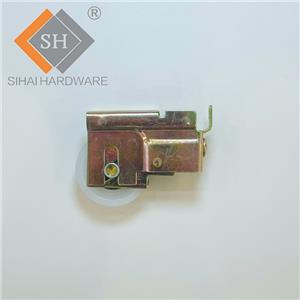
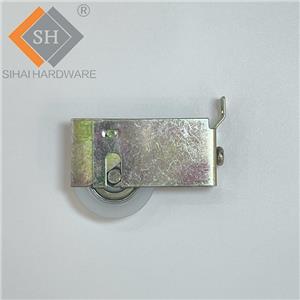
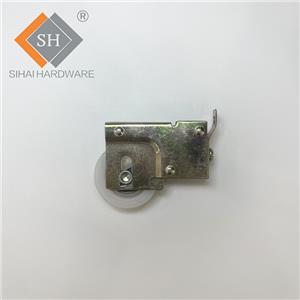
A sliding door that once glided at a touch can gradually become a daily struggle. What began as effortless movement becomes a firm push, then a two-handed shove, and eventually a door that refuses to budge without real force. This decline is rarely sudden. It accumulates over months and years, each cycle adding an almost imperceptible amount of resistance until the door reaches a point where the user can no longer ignore it. The causes are specific and mechanical, rooted in the small components that carry the door's weight and guide its movement. Understanding why the door gets harder to open is the first step toward making it easy again.
-
08-08-2026
ARTICLE NO.176 | How to Store Spare Window Stays Without Damaging Them
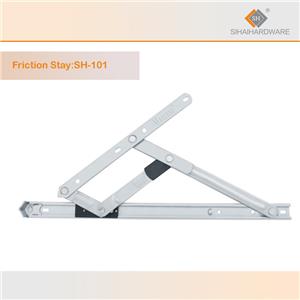
A spare window friction stay kept in a storeroom or van is an insurance policy against future hardware failure. When a window stay wears out or is damaged, having a replacement on hand eliminates the delay of ordering and waiting for delivery. But a stay that has been improperly stored can arrive at its installation date in worse condition than the one it replaces. Corrosion, mechanical damage, and contamination can all occur during storage, silently degrading the stay until it is no longer fit for service. Proper storage is simple, costs almost nothing, and ensures that the spare stay performs as intended when it is finally called into service.
-
06-08-2026
ARTICLE NO.175 | Why Your Window Stay Is Hard to Move After Painting
Painting a window frame is a routine maintenance task that can unexpectedly disable the hardware. The window friction stay is particularly vulnerable because its mechanism operates with tight clearances and depends on clean, uncontaminated surfaces to function. A single careless pass with a paintbrush can deposit paint where it does not belong, transforming a smoothly operating stay into a stiff, jerky, or completely immovable mechanism. Understanding where paint causes problems, how to prevent paint contamination, and what to do when paint has already found its way into the stay can save both the hardware and the window from permanent damage.
-
04-08-2026
ARTICLE NO.174 | How Corrosion Products Accelerate Friction and Wear in Stainless Steel Stays
Stainless steel is chosen for a window friction stay precisely because it resists corrosion. The chromium oxide layer that forms spontaneously on its surface protects the underlying metal from the oxidation that rapidly degrades ordinary steel. Yet stainless steel is not immune to corrosion, and when it does corrode, the products of that corrosion become agents of accelerated wear. The very substances that signal corrosion has begun—the rough, discoloured patches on the track, the orange staining around rivet heads—are not passive indicators of damage. They are active participants in a self-reinforcing cycle that increases friction, concentrates stress, and progressively destroys the precision surfaces on which the stay depends.
-
02-08-2026
ARTICLE NO.173 | How to Choose a Handle That Matches Your Door Thickness
A door handle must do more than look right and feel comfortable in the hand. It must fit the door on which it is installed, and the most critical dimension in that fit is the door thickness. A handle designed for a 35-millimetre door will not necessarily work on a 44-millimetre door, and attempting to force the fit creates problems ranging from poor operation to complete functional failure. Matching the handle to the door thickness is not complicated, but it requires understanding which dimensions matter, how the spindle interacts with the door, and what adjustments are available when standard sizes do not align.
-
31-07-2026
ARTICLE NO.172 | Why Your Handle Turns but the Door Won't Open
You press the lever down. The handle moves through its full arc with normal resistance. The familiar click of the latch retracting reaches your ears. Yet when you push or pull, the door refuses to budge. The handle has done its job—or at least it has gone through the motions—but somewhere between the lever and the latch, the mechanical chain has broken. This situation is both frustrating and diagnostically specific. The fact that the handle moves normally narrows the possible causes to a defined set of mechanical failures, each located at a different point in the path from hand to bolt.
-
29-07-2026
ARTICLE NO.171 | The Static Load Capacity of a Window Stay vs. Its Dynamic Load Capacity Under Wind Gusts
A window friction stay is rated to hold a sash of a certain weight at a certain opening angle. This rating, typically expressed in kilograms, appears straightforward. A stay rated for 20 kilograms should hold a 20-kilogram sash. But this number represents static load capacity—the ability to support a stationary sash under calm conditions. The real world is rarely calm. Wind gusts impose loads that are fundamentally different from the steady weight of the sash, and a stay that is perfectly adequate under static conditions can fail dramatically when subjected to the dynamic forces of a storm. Understanding the distinction between these two loading regimes is essential for anyone who specifies, installs, or relies on friction stay hardware.
-
27-07-2026
ARTICLE NO.170 | Why Some Window Stays Have an Extra Arm (And What It Does)
A casual glance at two different window friction stay designs might suggest that one is simply a more complex version of the same basic mechanism. One stay has a single connecting arm between the sliding shoe and the sash bracket. The other has a second, thinner arm running parallel to the first. This extra arm is not a reinforcement, not a redundancy, and not a manufacturing afterthought. It is a secondary stabilising link that fundamentally changes how the stay controls the sash throughout its range of motion. Understanding what this extra arm does reveals why it appears on higher-quality hardware and why its presence is a reliable indicator of a stay designed for precision and durability.
-
25-07-2026
ARTICLE NO.169 | The Difference Between a Roller and a Guide (They Work Together)
A sliding door moves along its track with apparent simplicity, but two distinct types of hardware make this motion possible. The weight of the door is carried by rollers, while its lateral position is controlled by guides. These two components are often confused with each other, and the confusion leads to misdiagnosed problems. A door that is difficult to slide may have perfectly functional rollers and badly worn guides. A door that rattles in its track may need guide adjustment, not roller replacement. Understanding what each component does—and does not do—is the first step toward correct maintenance and specification.
-
23-07-2026
ARTICLE NO.168 | Why New Rollers Make Your Door Feel Like a Different Door
A sliding door that has been in service for years develops a characteristic feel. It may require a firm push to start moving, rumble slightly as it travels, or hesitate at certain points along the track. Over time, this behaviour becomes normalised—the occupants adapt to the door's quirks, unconsciously applying extra force where needed and avoiding the speeds that cause the most noise. Then the rollers are replaced, and the transformation is immediate. The same door, with the same glass, in the same frame, suddenly glides at the touch of a finger. This dramatic change reveals how much of a sliding door's perceived quality resides not in the door itself but in the small roller assemblies that carry its weight.