ARTICLE NO.115|Manufacturing Processes for Friction Stays: Stamping, Machining, Heat Treatment
ARTICLE NO.115| Manufacturing Processes for Friction Stays: Stamping, Machining, Heat Treatment
Introduction
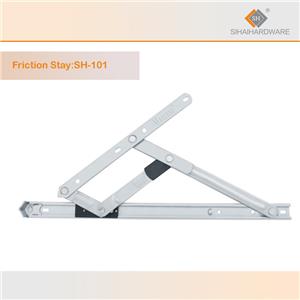
Friction stay hinges are essential components within the broader category of window and door hardware. They control sash movement, provide holding torque, and contribute directly to safety and durability. Manufacturers of window hinges and window friction stay hingesrely on a combination of metalworking processes—chiefly stamping, machining, and heat treatment—to produce components that meet strength, tolerance, and corrosion-resistance requirements. This article outlines those core manufacturing steps, explains why each is used, and highlights how the chosen processes affect final products such as window hinges, window friction stay hinges, window handles, and related window and door hardware.
1. Material selection and incoming inspection
Before fabrication begins, raw-material choice sets the foundation for performance. Common base metals for window hinges and window friction stay hinges include mild steel (often plated), stainless steel (for corrosion resistance), and occasionally brass or specialty alloys for decorative or high-wear parts. Aluminum alloys may be used for some housing or carrier components in window and door hardware assemblies.
Incoming inspection verifies chemical composition, thickness, surface quality, and flatness. Material traceability and certification are especially important when producing branded window hinges, friction stays, and window handles for building projects that require documented performance and compliance.
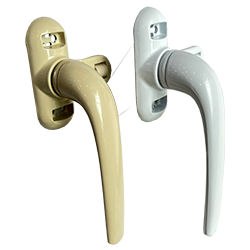
2. Stamping: high-volume shaping and forming
Overview
Stamping is a primary process for producing many parts of window hingesand window friction stay hinges because it is fast, repeatable, and well-suited to high-volume output. Stamping includes blanking, piercing, bending, and progressive die operations that transform sheet or strip metal into precise hinge leaves, arms, and other flat components.
Why stamping is used for window and door hardware
- Volume and cost efficiency: Progressive dies can produce thousands of identical parts per hour, lowering per-part cost for common hinge leaves and mounting plates used in window hingesand window handles.
- Consistency: Dies enforce tight dimensional control, which is critical for the fit and operation of window friction stay hinges.
- Forming capability: Stamping operations can integrate bends, embosses, and local strengthening features into a single operation—useful for hinge geometry and locating features.
Key stamping operations for friction stays and related hardware
- Blanking and piercing: Cutting the basic profile and creating screw holes, slots, and locating holes for window hinges and window handles.
- Bending and flanging: Producing the required flange geometry for hinge leaves and arms that mate with frames and sashes.
- Coining and embossing: Adding local stiffening ribs, surface features, or identification marks without additional machining.
- Progressive die workflows: Combining multiple steps (cut, pierce, bend) in one progressive die to produce complex parts for window friction stay hinges with minimal handling.
Tooling considerations
- Die design precision: Accurate die geometry is essential to maintain tolerances for parts that will later be assembled into moving window friction stay hinges.
- Tool materials and maintenance: High-strength tool steels, pre-hardened dies, and planned maintenance schedules extend tooling life and reduce downtime in window and door hardware production.
- Strip layout and material utilization: Efficient nesting reduces material waste and cost for producing window hingesand window handles.
3. Machining: precision features and mating surfaces
Overview
While stamping produces most flat and formed parts, machining (including milling, turning, drilling, and broaching) is used where tight tolerances, complex 3D geometries, or high-strength features are required. Machining is common for pivot pins, rivets, bushings, and specially contoured components in window friction stay hinges and higher-end window and door hardware.
Why machining is used
- Tight tolerances: Pivot bores, shaft shoulders, and bearing surfaces in window hinges and window friction stay hinges often require precision beyond stamping capability.
- Complex geometries: Turned pins, precision rivets, and machined carriers for friction pads need lathe or CNC machining.
- Material flexibility: Machining can produce components from bar stock, forgings, or heat-treated blanks where stamping isn’t appropriate.
Common machined components in window friction stay hinges and window hardware
- Hinge pins and pivot shafts: Turned and ground to provide accurate rotational axes in window hingesand window handles.
- Bushings and spacers: Machined to tight internal and external diameters for low-tolerance assembly.
- Cam or eccentric adjustment parts: CNC-milled parts used in adjustable friction mechanisms.
- Mounting plates and bracket finishing: Secondary machining to add tapped holes or fine features to stamped parts.
Assembly implications
- Press fits and interference fits: Machined pins and bushings are used to create controlled press fits for durable rotary joints in window hinges and window friction stay hinges.
- Riveting and clinching: Machined components are often assembled with stamped parts using rivets, cold-formed fasteners, or screws typical in window and door hardware production.
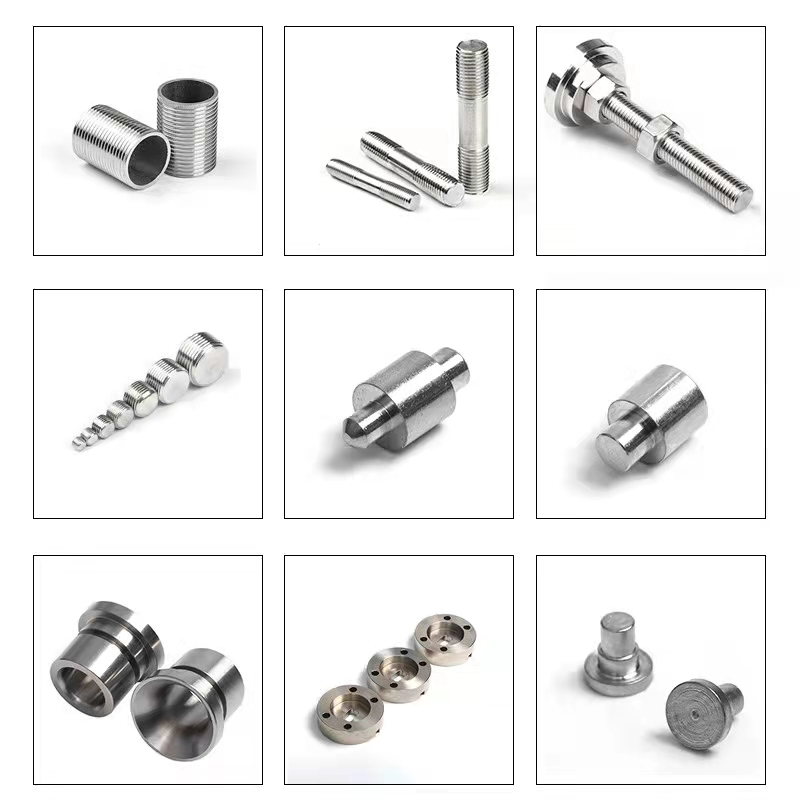
4. Heat treatment: strength, toughness, and wear resistance
Overview
Heat treatment alters the microstructure of steel and some other alloys to produce properties needed for durable, fatigue-resistant window hinges and window friction stay hinges. Processes include annealing, hardening (quenching and tempering), and stress relieving. For components such as hinge pins, cams, and friction pads’ mating surfaces, heat treatment is critical to prevent wear and maintain performance over cycles.
Why heat treatment matters for window and door hardware
- Wear resistance: Hardened surfaces on pivot pins and cams reduce wear between mating surfaces in window hinges and window handles.
- Fatigue strength: Proper tempering and grain refinement increase fatigue life—important for window friction stay hinges that undergo thousands of opening cycles.
- Dimensional stability: Stress relieving after forming and machining reduces deformation during later processing and assembly.
Typical heat treatment steps
- Annealing: Used to soften stamped components for secondary forming or to relieve spring steels before final hardening.
- Hardening and tempering: Applied to pins, bushings, and other load-bearing parts to achieve a balance of hardness and toughness for window hinges and friction stay hinges.
- Carburizing or case hardening: Applied to parts requiring a hard wearing surface with a tough core, such as pivot journals where surface wear is a concern.
- Stress relieving: Performed after welding, brazing, or heavy forming to stabilize parts used in window and door hardware.
Process controls and testing
- Hardness testing (Rockwell, Vickers) confirms target hardness ranges for treated parts.
- Microstructure checks (metallographic) and tensile testing are used when high reliability is required for structural window hinges and window friction stay hinges.
- Residual stress measurement and dimensional checks ensure parts retain fit for assembly into window handlesand hardware.
5. Surface finishing and corrosion protection
Although not requested in the headline processes, finishing is integral to the manufacturing chain for window hinges and window friction stay hinges. Coatings and finishes—zinc plating, passivation, powder coating, or stainless material selection—affect both appearance and longevity for window and door hardware and window handles. Proper pre-treatment and adhesion testing are routine steps before final assembly.
6. Quality control and lifecycle testing
Window hinges and window friction stay hinges are safety- and performance-critical. Manufacturers apply a suite of inspections and tests:
- Dimensional inspection (CMM, gauges) after stamping and machining.
- Torque and friction testing for assembled friction stays to ensure consistent holding characteristics.
- Cycle testing (millions of cycles for some specs) to validate long-term durability of window hinges and window handles.
- Corrosion testing (salt spray, humidity chambers) to validate finishes and material choices for window and door hardware.
7. Assembly, packaging, and aftermarket parts
Final assembly integrates stamped leaves, machined pins, heat-treated components, friction pads, and window handles into finished window hinges and window friction stay hinges. Manufacturers may supply complete window and door hardwarekits with handles, locks, and fasteners matched for compatibility. Spare parts such as replacement friction pads, pins, or handles are often produced using the same manufacturing lines to ensure interchangeability.
Conclusion
Producing reliable window hinges and window friction stay hinges requires a coordinated set of manufacturing processes: stamping for high-volume shaped parts, machining for precision components, and heat treatment for strength and wear resistance. Each process contributes distinct capabilities—speed and repeatability from stamping, precision from machining, and desirable material properties from heat treatment. When combined with appropriate surface finishes, quality control, and thoughtful assembly, these processes deliver durable window and door hardware and window handlesthat meet the demanding life-cycle expectations of modern buildings.