Industry news
-
22-05-2026
ARTICLE NO.138 | 10,000 Cycles to Failure: The DIN Standard That Separates Cheap Handles from Good Ones
The door and window handle is among the most frequently touched components in any building. Every entry, every ventilation adjustment, every security check involves a direct physical interaction with this hardware. Yet despite this constant use, handle failure remains one of the most common complaints reported by building occupants and facility managers. A handle that wobbles, jams, or snaps off entirely is more than an inconvenience—it represents a security vulnerability, a potential safety hazard, and a failure of the specification process. The difference between a handle that fails within two years and one that performs flawlessly for two decades often comes down to a single, underappreciated benchmark: the DIN EN 13126 series endurance test, which mandates a minimum of 10,000 cycles without functional degradation.
-
20-05-2026
ARTICLE NO.137|Window Friction Stay Hinges for Coastal/Hot Climates: Longevity for Saudi Arabia & Vietnam
Coastal and hot climates demand more from window hardware than normal indoor or inland conditions. Salt air, humidity, temperature swings, and frequent daily ventilation can quickly shorten the life of the wrong components. For shop buyers and distributors supplying Saudi Arabia and Vietnam, longevity depends on selecting a complete system—especially the right window friction stay hinges matched with window hinges, supporting components, and proper installation hardware. At Sihai Hardware, we help customers build long-lasting ventilation setups where window hinges, window friction stay hinges, friction hinges, and door and window hardware work together as one.
-
18-05-2026
ARTICLE NO.136 | The Fatigue Threshold: How Many Cycles Before Your Continuous Hinge Fails?
The Corner Brace in architectural hardware is typically associated with static reinforcement—a rigid bracket resisting racking, shear, and torsional deformation. Yet in automated doors, high-traffic entrances, and industrial access panels, Corner Braces endure cyclic loading far beyond static design assumptions. Every opening and closing cycle introduces stress fluctuations that can initiate and propagate fatigue cracks over time. Unlike a visible hinge that announces wear through slowness or noise, a Corner Brace under cyclic loading accumulates invisible fatigue damage until catastrophic fracture occurs. Understanding how many cycles these components can endure, what factors accelerate failure, and how design influences fatigue life is essential for any engineer specifying hardware for high-cycle applications.
-
16-05-2026
ARTICLE NO.135 | Why Cheap Window Stays Rust First at the Rivets
The window friction stay is expected to perform reliably for years in demanding environmental conditions. Exposed to driving rain, coastal salt spray, and condensation cycling, it must maintain both structural integrity and calibrated frictional characteristics. Yet field experience consistently reveals a predictable failure pattern in budget-grade hardware: corrosion initiates not evenly across the component, but with remarkable selectivity at the rivet connections. Rivet heads, shanks, and the immediately surrounding metal become anodic sites where rust blooms while adjacent areas remain relatively unaffected. This localisation is neither random nor unavoidable—it is the direct consequence of specific engineering decisions made to reduce manufacturing cost.
-
14-05-2026
ARTICLE NO.134 | The Hidden Valve: How Hydraulic Damping Controls a Floor Spring's Closing Speed
The Floor Spring is among the most technically sophisticated components concealed within modern architecture. Buried beneath the finished floor, it silently controls the movement of heavy glass and timber doors through millions of open-close cycles without maintenance access. While the external pivot and connecting spindle are all that remain visible above floor level, the true engineering complexity resides in a miniature hydraulic system hidden within the cemented body. At the heart of this system lies a network of precision valves that govern every phase of the door's movement—how quickly it closes, how gently it latches, and how firmly it resists being thrown open by wind or misuse. Understanding how these hidden valves operate, and how their calibration determines real-world door performance, is essential for anyone who specifies, installs, or maintains these remarkable devices.
-
12-05-2026
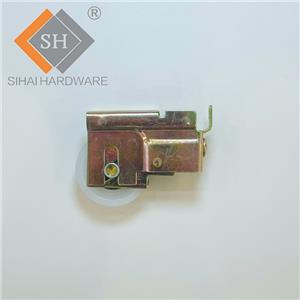
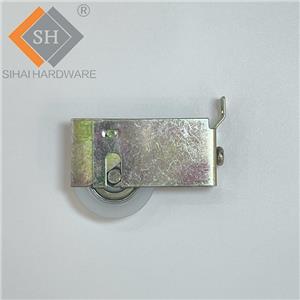
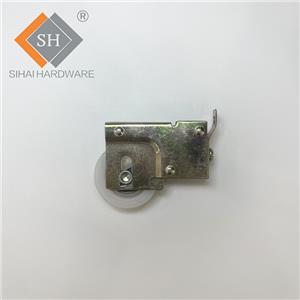
The Roller in Sliding Window Systems: Mechanics, Wear Dynamics, and Performance Optimization
The roller assembly, hidden within the bottom rail of a sliding window sash, bears the entire weight of the glazed panel while enabling effortless horizontal movement. When functioning correctly, users take its performance for granted. When it fails—through wear, corrosion, or misalignment—the window becomes difficult to operate, the track sustains damage, and the entire system loses functional integrity. Understanding roller design, material selection, and degradation mechanisms is essential for those who demand longevity from sliding window installations.
-
08-05-2026
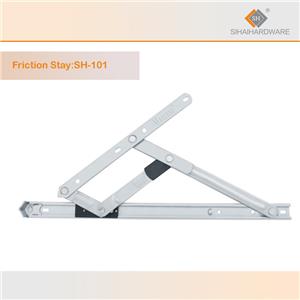
ARTICLE NO.132 | Three Signs Your Window Friction Stay Is Secretly Failing
The window friction stay is engineered to perform invisibly. Unlike a broken handle or cracked pane that announces failure clearly, the friction stay degrades gradually, accumulating damage over months or years before the occupant notices anything wrong. By the time the window slams shut or refuses to stay open, deterioration has been underway for a considerable period. Recognizing early indicators is essential to prevent cascading damage to the frame, the glass unit, and potentially to people. Three specific signs, each traceable to a distinct mechanical degradation pathway, provide reliable early warning.
-
06-05-2026
ARTICLE NO.131|Complete Window & Ventilation System: Window Friction Stay Hinges + Hardware by Sihai Hardware (14 Inch Model)
A complete window & ventilation system needs more than a single component. For smooth opening, stable ventilation angles, and reliable long-term use, the best results happen when window hinges, window friction stay hinges, friction hinges, and door and window hardware are selected and installed as one matching setup. At Sihai Hardware, our focus is to help shop buyers and distributors offer dependable performance to their customers—especially with our main model: 14 inch friction stay hinges.
-
05-05-2026
ARTICLE NO.130 | The Mechanical Secret of Window Stays: Why the Brace Angle Locks at 45°
The window friction stay is a deceptively simple component—push the sash open, and it holds; pull it closed, and it releases. Yet within this everyday action lies a precision-engineered mechanical system refined over decades. Among the many parameters governing its performance, one remains remarkably consistent across manufacturers and national standards: the brace arm locks at approximately 45 degrees when the sash reaches full extension. This is no arbitrary convention. The 45-degree orientation represents a mathematically optimal convergence of force resolution, buckling resistance, and wear minimization.
-
02-05-2026
ARTICLE NO.129 | Corner Brace: Structural Mechanics, Load Path Optimization, and Failure Prevention
ARTICLE NO.129 | Corner Brace: Structural Mechanics, Load Path Optimization, and Failure Prevention The Corner Brace is one of the most structurally significant yet frequently overlooked components in architectural hardware. Whether employed in timber frame construction, aluminum window fabrication, or steel framing systems, the Corner Brace performs a deceptively simple function: it reinforces a right-angled joint against racking, shear, and torsional deformation.