News
ARTICLE NO.147|Essential Door Hardware: Hinges, Locks, and Handles Explained
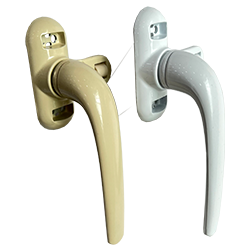
Whether you’re equipping a home, a shop, or a commercial building, door hardware is what makes everyday access smooth, secure, and long-lasting. But in real installations, customers often ask about windows at the same time—so the best approach is to understand how door hardware works alongside the matching window parts: window hinges, window friction stay hinges, window handles, friction hinges, and window locks. Below is a practical explanation of the three essentials—hinges, locks, and handles—and how they connect to window performance.
09-06-2026-
Contact us today to start a cooperation conversation! — Guangdong Sihai Hardware Precision Manufacturing Co., Ltd
A Warm Invitation We warmly welcome customers, distributors, architects, contractors, and importers to connect with us. If you are looking for high-quality window friction stay hinges or glass door hardware, we would love to talk—whether it’s for new orders, OEM/ODM cooperation, or project sourcing. Let’s build durable and reliable door/window systems together. Contact us today to start a cooperation conversation! — Guangdong Sihai Hardware Precision Manufacturing Co., Ltd
13-05-2026 -
SIHAI HARDWARE COMPANY Achieves ISO 9001 Certification — Elevating Quality and Reliability in Window Friction Stay Hinges
GuangDong, China — 2025/05— SIHAI HARDWARE COMPANY, a leading manufacturer of window friction stay hinges, is proud to announce that it has been awarded ISO 9001:2015 certification. This certification recognizes the company’s commitment to a robust quality management system, continuous improvement, and customer satisfaction across all aspects of design, production, and delivery
09-04-2026 -
SIHAI HARDWARE MANUFACTORY Achieves Breakthroughs in Stainless Steel Window Hinge Technology and Project Collaborations
China 2025/10/29 – SiHai Hardware, a leading source manufacturer of stainless steel window hinges and related hardware, today announced significant advancements in its product line and a substantial increase in project collaborations during the second half of this year. The company's commitment to innovation and quality has solidified its position as a trusted partner in the construction and fenestration industries.
29-10-2025 -
Staying Ahead of Industry Trends: How SiHai Hardware Manufactory's Partnerships Fostered Adaptation and Innovation
As a leading manufacturer of window hardware accessories, SiHai Hardware Manufactory has consistently demonstrated its ability to stay ahead of industry trends and adapt to changing market conditions. This remarkable feat can be attributed to the company's strategic approach to forging partnerships and collaborations with key industry players.
30-05-2024 -
Propelling Growth through Strategic Partnerships: How SiHai Hardware Manufactory's Collaborations Shaped Its Success
As a leading manufacturer of window hardware accessories, SiHai Hardware Manufactory has established a reputation for innovation and quality. Driven by a passion for excellence, the company has consistently sought to forge strategic partnerships and collaborations that have significantly impacted its growth and market position.
25-05-2024 -
Unveiling Our Success: A Journey of Excellence in the Construction Exhibition Circuit
We are thrilled to share the remarkable success and achievements of our esteemed company as a leading manufacturer of door and window accessories in the construction industry. Over the years, we have actively participated in numerous prestigious construction exhibitions held throughout the country from 2019 to 2024. This article serves as a testament to our commitment and highlights the significant milestones we have accomplished during these exhibitions.
16-05-2024
-
ARTICLE NO.187 | How to Prevent Your Window Stay From Scratching the Window Frame
A window friction stay is designed to hold a sash open and control its movement, not to damage the frame it is mounted to. Yet scratches on the frame surface, particularly along the path where the stay operates, are a common complaint in windows that have been in service for several years. These scratches are not merely cosmetic. They remove the protective finish from the frame, exposing the underlying metal or timber to corrosion and moisture ingress. Preventing them requires understanding what causes the stay to contact the frame in the first place, and addressing those causes before the damage accumulates.
31-08-2026 -
ARTICLE NO.186 | Why a Window Stay With a Heavier Gauge Material Lasts Longer
The thickness of the stainless steel in a window friction stay is not simply a matter of how solid the hardware feels in the hand. It is a fundamental engineering parameter that determines how the stay resists bending, how it distributes stress, and how long it will survive under cyclic loading. Two stays that appear identical in design and are manufactured from the same grade of stainless steel can have dramatically different service lives if one uses heavier gauge material. Understanding why thicker material lasts longer reveals the mechanical principles that govern friction stay durability.
29-08-2026 -
ARTICLE NO.185 | How to Match a Replacement Window Handle to Your Window Profile
Replacing a broken or worn window handle seems straightforward—remove the old one, buy a new one, screw it into place. The reality is more complicated. Window handles are not universal. They are designed to fit specific window profiles, specific spindle lengths, and specific locking mechanisms. A handle that looks identical to the original may fail to operate the lock, may not fit the mounting holes, or may leave the window unable to close properly. Matching a replacement handle to the window profile requires understanding the critical dimensions and features that determine compatibility.
27-08-2026 -
ARTICLE NO.184 | How to Choose a Window Handle That Can Withstand Daily Use
A window handle in a busy home or commercial space is operated dozens of times each day. Every turn cycles the spindle, stresses the return spring, and tests the connection between the handle and the lock mechanism. A handle chosen without consideration for this daily grind will loosen, stiffen, or fail entirely within a few years. A handle chosen for durability will still feel precise after a decade. The difference lies in the materials, the construction, and the details that are easy to overlook when browsing a catalogue.
25-08-2026 -
ARTICLE NO.183 | How to Prevent Your Concealed Hinge From Rusting in Humid Weather
A concealed hinge lives in a hidden environment. The frame cavity that hides concealed window hinges from view also traps moisture, creating conditions that can promote corrosion even in hardware that appears well-protected. In humid weather, the risk intensifies. The warm, moisture-laden air penetrates the frame cavity, condenses on cooler metal surfaces, and lingers in the narrow gaps where the hinge components meet. Preventing rust in these conditions requires an understanding of how moisture interacts with the hidden hinge, and a maintenance strategy that addresses the environment rather than just the hardware.
22-08-2026 -
ARTICLE NO.182 | How Does a Concealed Hinge Hold a Heavy Door Without Being Seen
A heavy door exerts constant downward force, pulling at its hinges every moment it hangs in place. A surface-mounted hinge displays its load-bearing structure openly—thick leaves, visible screws, and a substantial knuckle that make its strength obvious. Concealed window hinges must achieve the same load capacity while remaining entirely hidden within the frame profile. This requirement—to be strong yet invisible—drives a fundamentally different approach to hinge engineering. The concealed hinge cannot simply be a surface hinge relocated into a cavity. It must be designed from the outset to carry heavy loads through geometry and materials that leave nothing visible when the window is closed.
20-08-2026