ARTICLE NO.113 | The Unseen Foundation: How Floor Springs Hold Heavy Doors in Place
ARTICLE NO.113 | The Unseen Foundation: How Floor Springs Hold Heavy Doors in Place
There is a door you pass through every day. Perhaps it is the entrance to your office building, the glass door at your favorite shop, or the heavy entryway to a hotel lobby. You push it open, walk through, and let it close behind you. The door swings smoothly, pauses for a moment at the center, then gently returns to its closed position. You do not think about it. You never do.
But beneath that door, hidden in the floor, a mechanism is working. It has been working all day, every day, for years. It has held the weight of the door, controlled its swing, ensured it closes softly and securely. It is called a floor spring, and it is one of the most overlooked yet hardest-working components in any building.
What Lies Beneath
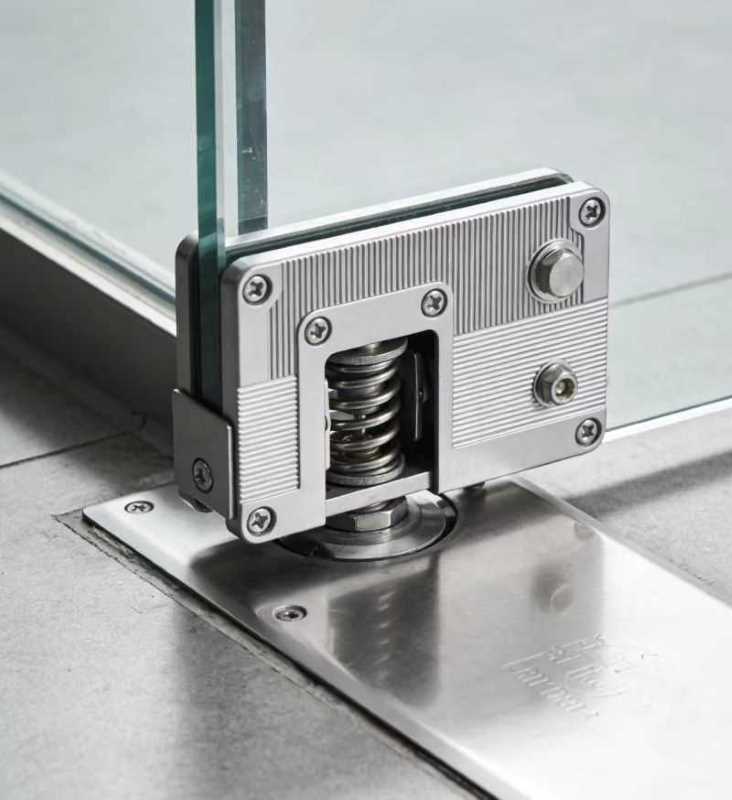
A floor spring is exactly what its name suggests: a spring mechanism installed into the floor, beneath a door. Unlike surface-mounted hinges that are visible on the door frame, the floor spring is concealed. Only a small cover plate hints at its presence. But inside that unassuming housing is a sophisticated system of springs, hydraulic fluid, and precision valves that work together to control the movement of the door.
The floor spring bears the entire weight of the door. For heavy glass doors, which can weigh hundreds of kilograms, this is no small task. It must support that weight consistently, without sagging or misalignment, year after year. At the same time, it must allow the door to swing open smoothly and close with controlled force, never slamming, never failing to latch.
The Mechanics of Controlled Movement
When you push open a door, you are not just moving the door itself. You are compressing springs, forcing hydraulic fluid through tiny passages, and engaging a system designed to resist and regulate motion. The floor spring is calibrated to provide just the right amount of resistance—enough to prevent the door from swinging freely in the wind, but not so much that opening becomes a struggle.
As the door approaches its fully open position, the spring mechanism prepares to reverse direction. When you release the door, the stored energy in the spring is released, but in a controlled manner. Hydraulic fluid flows through adjustable valves, determining how quickly the door returns. This is why a properly functioning floor spring allows a heavy door to close slowly and gently, without slamming.
Most floor springs also include a latching action in the final few degrees of closure, ensuring the door pulls fully shut against its frame or magnetic lock. This combination of smooth swing, controlled return, and positive latching is what makes a door feel effortless to use.
The Importance of Quality
Not all floor springs are created equal. The demands placed on these mechanisms are immense. A door at a busy building entrance may be opened and closed thousands of times each day. The spring must withstand this constant cycling without losing its calibration. The hydraulic seals must remain intact, preventing leaks that would cause the door to close too quickly or lose its smooth action. The materials must resist corrosion, especially in environments where water, salt, or cleaning chemicals are present.
Quality floor springs are constructed from cast iron or stainless steel, with internal components machined to precise tolerances. They use high-grade hydraulic fluid that remains stable across a wide range of temperatures. The adjustment valves allow fine-tuning of closing speed and latching action, giving installers the ability to match the door's behavior to its specific environment.
Inferior floor springs, by contrast, may use thinner castings, lower-quality seals, and less precise internal mechanisms. They may work adequately for a time, but eventually, they begin to fail. The door closes too quickly, slamming shut. Or it closes too slowly, failing to latch. Or it begins to sag, scraping against the frame or the floor. What was once an invisible, reliable mechanism becomes a source of frustration and, potentially, danger.
Choosing the Right Floor Spring
Selecting a floor spring involves more than simply picking one off the shelf. Several factors must be considered:
Door Weight and Size: Floor springs are rated for specific weight ranges. A spring that is too weak for a heavy door will fail prematurely. A spring that is too strong may make the door difficult to open.
Frequency of Use: Doors that see high traffic require springs designed for heavy-duty cycling. Commercial-grade floor springs are built to withstand hundreds of thousands of operations.
Environmental Conditions: For exterior doors or doors in coastal areas, corrosion resistance is critical. Stainless steel components and sealed hydraulic systems are essential.
Opening Angle: Some floor springs are designed for doors that open 90 degrees, while others can accommodate up to 180 degrees of swing. The application dictates the choice.
Aesthetic Considerations: Since floor springs are concealed, aesthetics are less of a concern than with exposed hardware. However, the cover plate should match the surrounding floor finish.
Installation and Maintenance
Proper installation is critical to the performance of a floor spring. The spring must be precisely positioned to align with the door's pivot point. It must be securely anchored into the floor structure, not just the surface layer. The cover plate must sit flush with the floor, creating a clean appearance and a safe walking surface.
Maintenance, while minimal, is important. Floor springs should be inspected periodically for signs of oil leaks, which indicate seal failure. The closing speed and latching action should be checked and adjusted as needed, especially after the first few months of use when the mechanism has settled in. A well-maintained floor spring can last for decades, providing reliable service with little more than occasional adjustments.
The Cost of Neglect
When a floor spring fails, the consequences are immediately apparent. A door that slams shut is not only annoying but also dangerous, capable of injuring someone who happens to be in its path. A door that fails to close properly compromises security and energy efficiency, letting conditioned air escape and allowing unauthorized entry. A door that sags or drags creates wear on the frame and the floor, potentially causing damage that requires expensive repairs.
Replacing a failed floor spring is not a simple task. It often requires removing the door, cutting into the floor, and carefully installing a new unit. The labor costs can far exceed the cost of the spring itself. This is why choosing quality from the start is not just a matter of performance—it is a matter of avoiding future expense and disruption.
Conclusion
The next time you walk through a heavy glass door, take a moment to notice how it moves. The smooth swing, the controlled return, the gentle closure. What you are experiencing is the work of a floor spring—a mechanism hidden beneath your feet, working tirelessly to make that simple act possible.
Floor springs are easy to overlook. They are out of sight, and when they work properly, they are also out of mind. But they bear enormous responsibility. They hold the weight of heavy doors. They protect against slamming injuries. They ensure doors close securely, maintaining safety and energy efficiency. They do all of this without complaint, without recognition, for years on end.
Choosing a quality floor spring is not about buying a component. It is about investing in reliability, safety, and peace of mind. It is about knowing that the door you walk through every day will work as it should, every time, without fail.