ARTICLE NO.132 | Three Signs Your Window Friction Stay Is Secretly Failing
ARTICLE NO.132 | Three Signs Your Window Friction Stay Is Secretly Failing
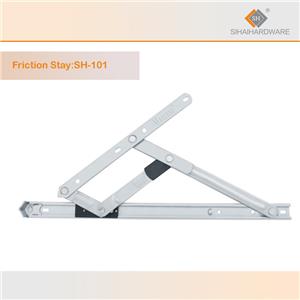
The window friction stay is engineered to perform invisibly. Unlike a broken handle or cracked pane that announces failure clearly, the friction stay degrades gradually, accumulating damage over months or years before the occupant notices anything wrong. By the time the window slams shut or refuses to stay open, deterioration has been underway for a considerable period. Recognizing early indicators is essential to prevent cascading damage to the frame, the glass unit, and potentially to people. Three specific signs, each traceable to a distinct mechanical degradation pathway, provide reliable early warning.
Sign One: Inconsistent Holding Force Across the Opening Arc
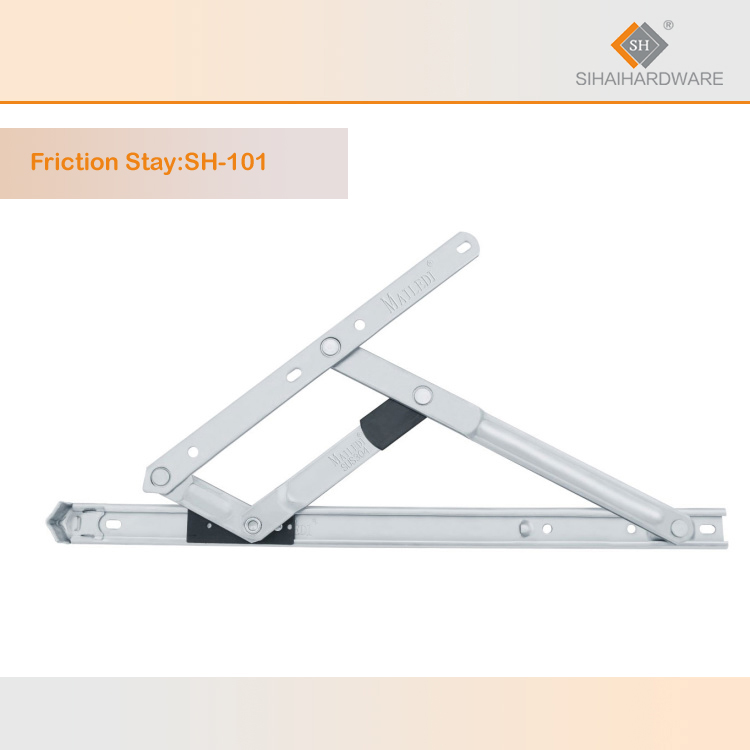
A healthy window friction stay maintains uniform resistance throughout its travel. The friction pad, pressed against the track by a calibrated spring mechanism, generates consistent normal force that translates into predictable holding torque. When failure begins, this uniformity breaks down. The characteristic symptom is positional inconsistency: the sash holds at certain angles but drifts at others. This occurs because the friction pad has developed uneven wear—the material wears most rapidly at positions corresponding to habitual ventilation settings. If the user routinely opens the window to approximately 100 millimetres, that track location experiences disproportionately higher cycles. The pad develops a polished depression there, reducing local friction by 15 to 30 percent. The result is a stay that holds at 50 millimetres and 150 millimetres but drifts from the 100-millimetre position—a definitive indicator of advanced pad wear.
Sign Two: Audible Change in Operating Sound
A properly functioning window friction stay produces a smooth, muted sliding sound with perhaps a faint click at detent positions. When failure begins, this acoustic signature changes in diagnostically significant ways. A grinding or gritty sound indicates abrasive particles—airborne dust, construction debris, or corrosion products—embedded in the friction pad, acting as a lapping compound that scores the track. A squeaking or stick-slip sound at low speeds occurs when static friction significantly exceeds kinetic friction, causing the shoe to alternately grip and release. This is often the first sign of lubricant depletion. A sharp metallic clicking at random travel points typically indicates a loose rivet in the connecting arm—the rivet shank impacts its hole wall as load direction reverses. Maintenance technicians can perform qualitative assessment by operating the window slowly with a hand on the frame; increased vibration at specific track locations strongly indicates localised pad degradation.
Sign Three: Visible Deformation of Arm or Track
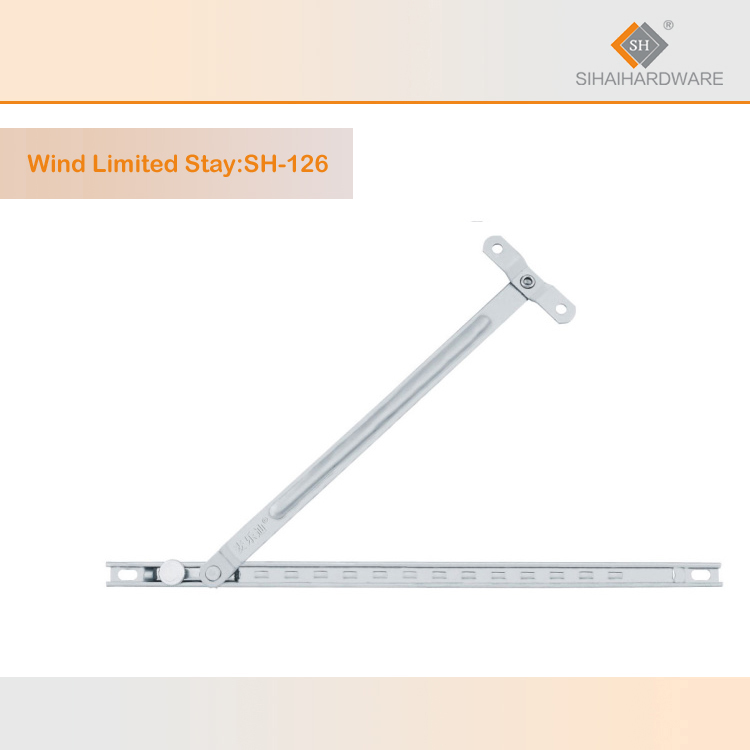
The most structurally serious sign of window friction stay failure is visible geometric deformation. Bowing of the connecting arm indicates compressive overload beyond buckling capacity, typically from windstorms when the open sash is subjected to gust loads exceeding design limits. Once an arm has yielded, its axial capacity is permanently reduced by 40 to 60 percent—it may hold under tension but offers compromised compressive resistance. Flaring or widening of the track slot, measurable as an increase of 0.5 millimetres or more, allows the shoe to tilt within the track, causing uneven pad contact and accelerated asymmetric wear. Fastener loosening at track-to-frame or bracket-to-sash connections, indicated by even a 0.3-millimetre gap, means the stay assembly flexes under load as anchorage degrades. Any window friction stay exhibiting visible arm deformation should be replaced immediately regardless of apparent function. The deformation proves a load event exceeded design capacity, and residual strength is indeterminate without destructive testing.
Assessment Framework and Conclusion
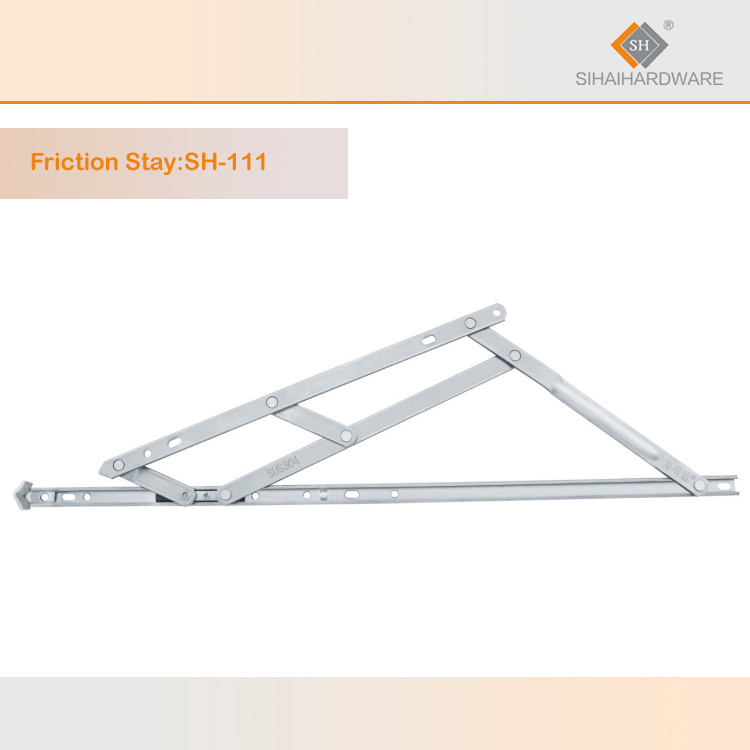
Evaluating a window friction stay against these three signs provides a practical maintenance framework. If only positional inconsistency is present, cleaning the track and applying manufacturer-specified lubricant may temporarily restore performance, though replacement within 12 to 18 months should be planned. If changed sound signature accompanies positional inconsistency, degradation has progressed to lubricant breakdown or early-stage fastener loosening; replacement at the next maintenance interval is warranted. If visible deformation is present, immediate replacement is the only appropriate action. Given that a single failed friction stay can result in a wind-driven sash impact sufficient to shatter a sealed double-glazed unit or cause injury, proactive replacement costs are negligible compared to the consequences of undetected failure. The window friction stay communicates its condition clearly to those who know what to observe and listen for.