Industry news
-
29-06-2026
ARTICLE NO.157 | How Does a Small Wheel Carry a Heavy Glass Door? The Rolling Principle
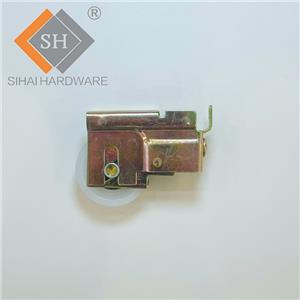
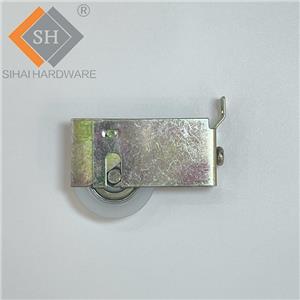
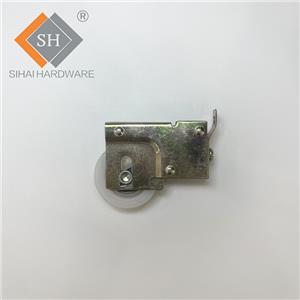
A glass door weighing 100 kilograms glides silently along an aluminium track, supported by four small wheels no larger than a coin. The contrast between the substantial mass of the door and the diminutive size of the roller wheels seems to defy common sense. A heavy object placed on a small point of contact should sink, crush, or seize. Yet millions of sliding doors operate smoothly for decades on rollers that fit in the palm of a hand. The explanation lies not in the strength of the roller alone, but in the fundamental physics of rolling contact—a principle that distributes immense loads across tiny areas while converting sliding friction into dramatically lower rolling resistance.
-
27-06-2026
ARTICLE NO.156 | Can a Window Stay Be Too Long for Your Window Frame?
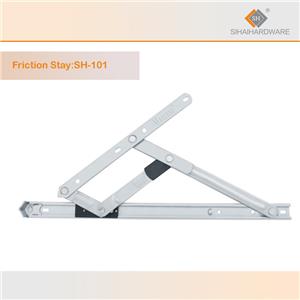
A window friction stay is often chosen by matching its length to the window sash dimensions. A wider sash calls for a longer stay, or so the standard guidance suggests. But this relationship has limits, and exceeding them creates problems that are easy to miss during specification and immediately obvious once the window is installed. A stay that is too long will not simply perform poorly—it may not fit within the frame profile at all, or it may create interference that damages both the stay and the window. Understanding the constraints that govern maximum stay length is essential for anyone selecting hardware for new windows or troubleshooting problems with existing installations.
-
25-06-2026
ARTICLE NO.155 | How to Test Window Stay Friction Without Installing It on the Window
A window friction stay is designed to be tested after installation, with the sash attached and the full system operating as it would in daily use. Yet there are many situations where testing before installation is valuable. A contractor receiving a bulk delivery needs to verify that the stays match the specification before committing to installation. A maintenance technician troubleshooting an intermittent problem wants to isolate whether the stay or the sash is at fault. A quality inspector requires a quick, repeatable method to check multiple units. Testing a friction stay without the window is entirely possible, and with the right technique, it provides reliable data about the stay's condition and performance.
-
23-06-2026
ARTICLE NO.154 | Can You Fix a Loose Hinge by Changing Just the Screws?
A door that sags, scrapes the floor, or rattles in its frame often traces its problem to a loose hinge. The immediate and instinctive repair is to tighten the existing screws. When that fails—as it frequently does—the next step is to replace the screws with longer, thicker, or differently threaded alternatives. This approach sometimes works, but just as often provides only temporary relief before the same looseness returns. Understanding what actually happens when hinge screws loosen, and what role the surrounding structure plays, reveals whether a screw change alone can solve the problem or whether deeper intervention is required. In many cases, the hinge itself is not the root cause. The frame corner, reinforced by a Corner Brace, is where the real story begins.
-
21-06-2026
ARTICLE NO.153 | How to Clean a Window Stay Without Ruining Its Friction Performance
A window friction stay operates on a simple but delicate principle: a friction pad presses against a stainless steel track with a precisely calibrated force, generating the resistance that holds a window open at any angle. Cleaning this mechanism would seem straightforward—remove the dirt and apply fresh lubricant. Yet many well-intentioned cleaning attempts end with a stay that performs worse than before. The wrong cleaner dissolves the friction pad material. The wrong lubricant turns the track into a slip surface with no holding power. Aggressive scrubbing scores the track and creates new wear points. Cleaning a friction stay correctly requires understanding what must be removed, what must be preserved, and what must never touch the mechanism at all.
-
19-06-2026
ARTICLE NO.152 | Can a Bent Window Stay Be Straightened? The Honest Answer
Discovering a bent arm on a window friction stay is a moment of frustration. The window no longer closes properly, the sash sits crooked in its frame, or the mechanism binds at a particular point in its travel. The immediate question is whether the bent component can be straightened and returned to service, or whether the entire stay must be replaced. The honest answer depends on understanding what bending does to the metal, where the bend has occurred, and what hidden damage may already exist. In most cases, straightening is a temporary fix at best and a safety risk at worst.
-
17-06-2026
ARTICLE NO.151 | How Dust and Dirt Slowly Kill Your Window Handle's Smooth Operation
The window handle is touched thousands of times over its service life. Each turn of the lever engages a precise sequence of mechanical movements—the spindle rotates, the locking points retract, the sash releases from its seals. When the handle operates smoothly, this sequence is so effortless that users never think about it. When it becomes stiff, gritty, or resistant, the entire experience of using the window deteriorates. The most common cause of this gradual decline is not a manufacturing defect or a material failure. It is the slow, relentless accumulation of dust and dirt inside the mechanism. Understanding how these tiny particles infiltrate, where they settle, and what damage they cause reveals why regular cleaning is not optional for long-term handle performance.
-
15-06-2026
ARTICLE NO.150 | How Many Rivets Does a Good Window Stay Need? Counting the Strong Points
The rivets in a window friction stay are easy to overlook. They are small, unadorned, and look much the same whether they are holding together a premium stainless steel assembly or a budget imitation. Yet the number of rivets, their placement, and their material quality tell a detailed engineering story about how the stay was designed to perform and how long it can be expected to last. Counting rivets is not a matter of more being automatically better, but understanding why each one exists reveals what separates a durable stay from one that will loosen and fail within a few seasons.
-
13-06-2026
ARTICLE NO.149 | How Much Weight Can a Floor Spring Handle? Reading the Size Numbers
A Floor Spring buried beneath a grand hotel entrance may control a door weighing three hundred kilograms. Another unit, identical in appearance but installed under a lightweight office door, manages only a fraction of that mass. The difference lies in the size number stamped on the unit—a code that tells the full engineering story if you know how to read it. Understanding floor spring sizing is not merely a matter of matching numbers. It requires knowing what the size designation actually represents, how door weight relates to door width, and why selecting the wrong size creates problems that go far beyond a door that closes too fast or too slow.
-
11-06-2026
ARTICLE NO.148 | Can You Overtighten a Window Stay? What Happens When You Do
The instinct to tighten something that feels loose is deeply ingrained. When a casement window develops a wobble or fails to hold its position, the natural response is to reach for a screwdriver and tighten every visible fastener on the window friction stay. This approach often seems to work at first—the window feels firmer, the stay holds better—but the apparent fix can set in motion a chain of mechanical consequences that accelerates wear and may ultimately destroy the stay. Overtightening is not just possible; it is one of the most common causes of premature friction stay failure. Understanding what happens when fasteners are torqued beyond their design limits explains why restraint, not force, is the correct approach to window stay maintenance.