ARTICLE NO.125|Test Methods for Friction Stays: Cycle Testing, Static Load Tests, Corrosion (Salt Spray), and Torque/Friction Measurement
Test Methods for Friction Stays: Cycle Testing, Static Load Tests, Corrosion (Salt Spray), and Torque/Friction Measurement
Introduction
To ensure safe and long-lasting performance, manufacturers and quality teams test friction stays through multiple verification methods. These tests confirm that window hinges, window friction stay hinges, and friction hinges can withstand real-world loads, repeated opening cycles, environmental exposure, and long-term wear. Because friction stays are part of broader window and door hardware systems, testing must also validate that related components—including corner pieces and joint pieces—perform correctly when assembled.
This article covers practical test methods typically used for friction stays, with a focus on cycle testing, static load testing, corrosion tests (including salt spray), and torque/friction measurement.
1) Cycle testing (durability and fatigue performance)
Cycle testing is one of the most important qualification methods for window friction stay hinges because these devices experience repeated motion: opening, holding, and closing thousands of times over their service life.
What cycle tests verify
Holding stability over time: Whether friction hinges maintain consistent resistance and do not “loosen” as friction materials wear.
Smooth operation: Whether window hinges continue to move without binding, grinding, or abnormal friction increases.
Component integrity: Whether joint pieces and attachment interfaces remain tight and do not degrade due to fatigue cracking or deformation.
Hardware system behavior: Since window and door hardware is a combined assembly, cycle tests confirm that the entire system—rather than only the stay mechanism—remains functional.
Typical test setup
Representative assemblies are installed using production fasteners and torque settings.
Test specimens open to defined angles and close back under controlled conditions.
Test frequency (cycles per hour), load profile, and dwell time at open angles are recorded.
Pass/fail indicators
Maximum allowed changes in holding torque (or friction torque) for window friction stay hinges
No structural failure of corner pieces or joint pieces
No unacceptable surface damage or loss of function in friction hinges
2) Static load tests (strength and resistance to deformation)
While cycle testing focuses on durability, static load tests validate strength—i.e., the ability of window hinges and window friction stay hinges to resist high loads without permanent deformation or failure.
What static load tests verify
Maximum load resistance: Ensuring friction hinges can resist loads similar to wind pressure and user handling forces.
Preventing runaway opening/closing: Confirming that holding behavior remains stable under a fixed high load.
Load path integrity: Checking how forces transmit through window and door hardware, including attachment points and adjacent elements like corner pieces.
Joint piece durability: Ensuring joint pieces (connectors, link parts, and interface components) do not slip or deform beyond tolerance.
Typical test forms
Applied moment tests: A bending moment is applied at the sash opening position; displacement is measured.
Pull/push tests: Forces are applied to simulate worst-case opening forces or accidental impact.
Deflection measurement: Using dial gauges, LVDTs, or other displacement sensors.
Common evaluation outcomes
Acceptable deflection limits without permanent set
No fractures, cracking, or loss of alignment in window friction stay hinges
No excessive loosening or movement at the interfaces between joint pieces and the main hardware
3) Corrosion tests (salt spray / humidity exposure)
Friction stays and window hinges operate in environments exposed to moisture and airborne contaminants. Therefore, corrosion testing is critical—especially for metal-based systems that include plated or treated parts.
Salt spray testing (corrosion resistance)
Salt spray (salt fog) tests evaluate how well coatings and surface finishes protect window and door hardware over time.
What salt spray tests verify
Whether critical components—especially friction hinges interfaces—suffer corrosion that changes friction characteristics.
Whether window friction stay hinges experience pitting, rusting, or coating failure that leads to seizure or reduced holding torque.
Whether joint pieces and attachment hardware develop corrosion-related loosening.
Whether corrosion spreads into areas around corner pieces, since those zones can trap moisture.
Typical salt spray evaluation steps
Expose assembled samples (or corrosion-critical subassemblies) under controlled temperature and salt concentration.
Inspect after specified intervals (e.g., staged time periods).
Measure coating integrity and look for corrosion products.
Evaluation criteria
Maximum allowed corrosion severity on functional surfaces
No coating loss that affects friction contact behavior
No impairment of assembly function in window hinges and window friction stay hinges
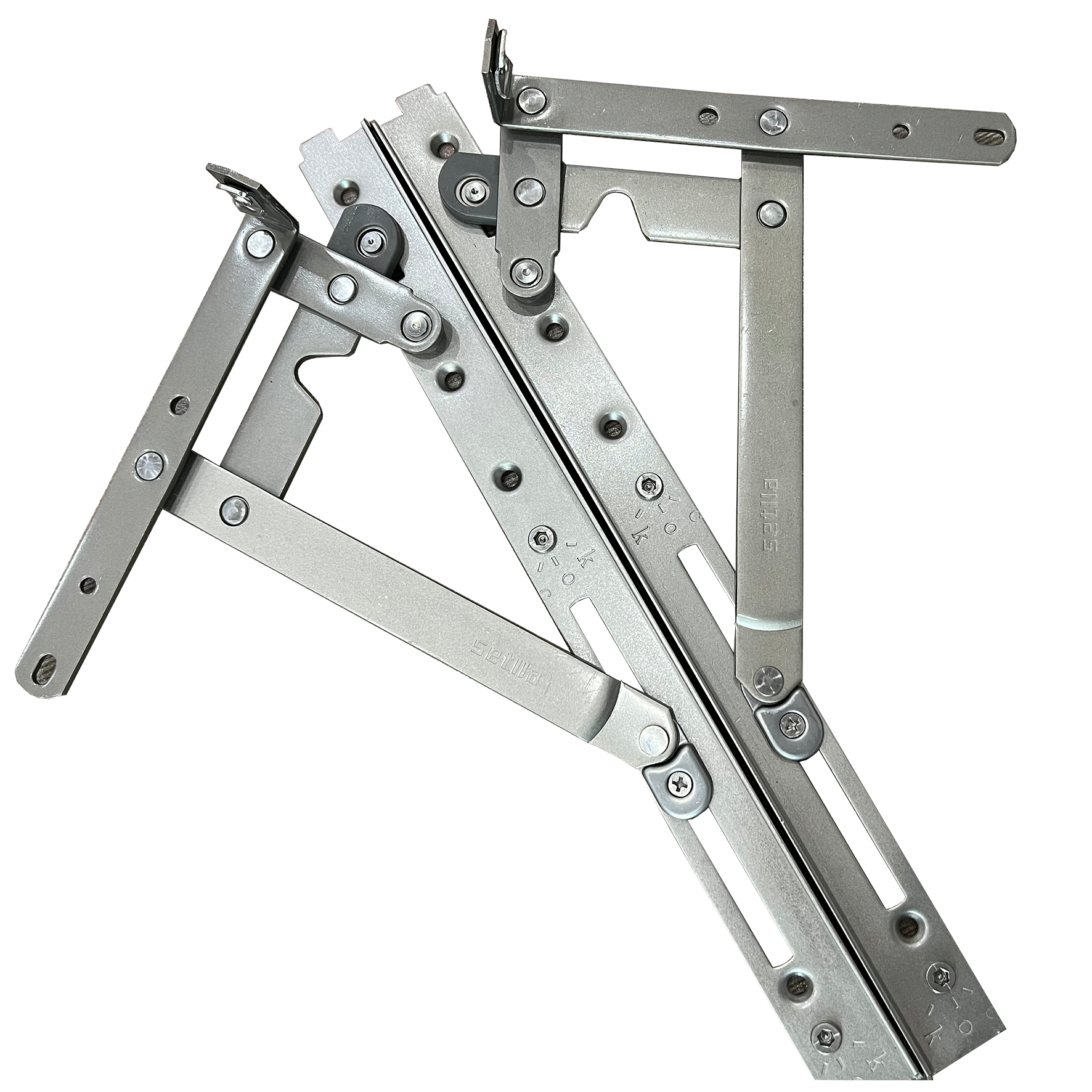
4) Torque and friction measurement (holding performance and consistency)
Even if a friction stay passes cycle and corrosion tests, it must also deliver correct “feel.” For friction hinges, the most direct performance indicators are typically torque (resistance to motion) and friction characteristics that translate into holding power at different angles.
Why torque/friction measurement matters
Holding torque accuracy: Ensuring window friction stay hinges hold at the intended opening angle with the right resistance.
Friction stability across time: Measuring whether friction changes after running cycles or after corrosion exposure.
Comparability between lots: Verifying repeatability between production batches for window and door hardware.
How torque/friction is measured
Rotational torque tests: A calibrated actuator applies a controlled rotation to the sash interface while measuring resisting torque.
Angle vs torque curves: Data is collected across a range of opening angles to generate a friction/torque profile for window hinges and window friction stay hinges.
Friction coefficient estimation: In some advanced setups, test rigs can infer effective friction from measured torque and geometry.
Key measurements and outputs
Peak torque and holding torque at defined angles
Torque relaxation behavior (if torque decreases under steady load)
Consistency metrics (standard deviation across samples)
Typical acceptance checks
Torque within tolerance bands for friction hinges
No abnormal torque spikes that could indicate binding in joint pieces
No drift in friction characteristics after environmental exposure
5) Integrated system testing (including corner pieces and joint pieces)
Because friction stays are part of an assembly, it’s common to perform tests in representative configurations that include adjacent elements like corner pieces and joint pieces.
Why integrated testing is necessary
Real loads travel through hardware networks, not isolated components.
Corner pieces may affect alignment, rigidity, and load distribution.
Joint pieces can be the failure initiators via slip, wear, fatigue, or corrosion at interfaces.
Integrated test examples
Cycle testing of the full window assembly including relevant window and door hardware
Static load with full load path including corner pieces and attachment regions
Corrosion exposure with functional interfaces protected as they would be in real installations, then re-testing torque/friction after exposure
Conclusion
Effective qualification of friction stays requires a multi-method testing approach. Cycle testing validates durability of window friction stay hinges and the long-term performance of friction hinges. Static load tests confirm strength and deformation resistance in window hinges under worst-case loads. Corrosion tests (salt spray) verify that finishes and materials protect window and door hardware, including sensitive interfaces tied to joint pieces and corner pieces. Finally, torque/friction measurement ensures the stays provide correct holding behavior and consistent “feel” across production lots and after environmental exposure. Together, these tests reduce field failures and help ensure safe, reliable operation over the lifetime of the window and door hardware system.