ARTICLE NO.117 | Glass Hardware: The Components That Make Transparency Work
ARTICLE NO.117 | Glass Hardware: The Components That Make Transparency Work
Glass is one of the most demanding materials in architecture. It is beautiful, it is transparent, it transforms spaces—but it is also heavy, fragile, and unforgiving. The hardware that supports glass must perform to an exceptional standard because glass does not offer second chances. A hinge that fails on a wooden door may cause a sag. A hinge that fails on a glass door can mean shattered panels, serious injury, and costly replacement.
This article examines the key considerations for selecting glass hardware, including glass hinges, glass door handles, glass clamps, floor springs, and the specialized components that allow architects and builders to use glass with confidence.
Glass Hinges: The Critical Connection
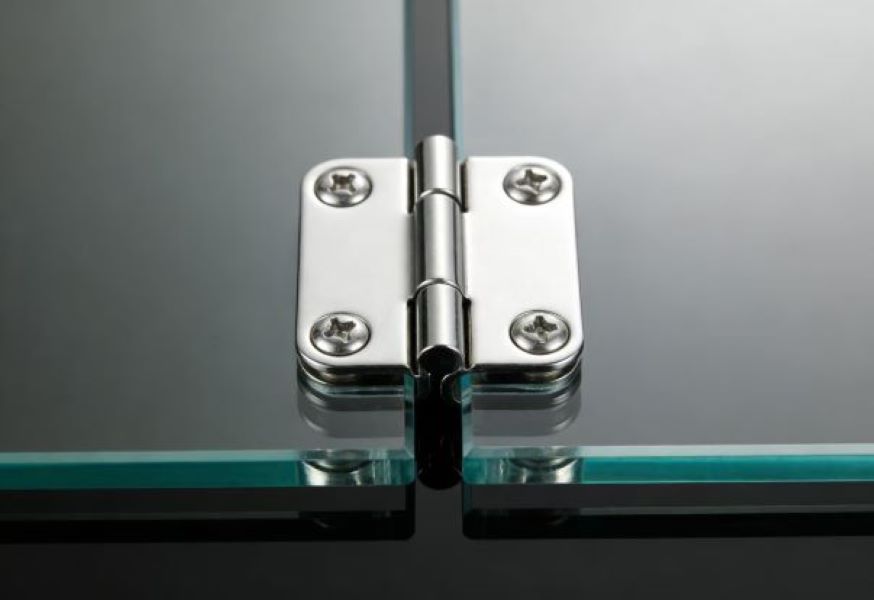
A glass hinge is perhaps the most technically demanding piece of hardware in any architectural application. It must support the full weight of a glass door—often 50 to 100 kilograms or more—while allowing smooth rotation, maintaining precise alignment, and resisting the constant forces of opening and closing.
Glass hinges come in several configurations. Floor springs mount at the top and bottom of the glass panel, allowing the door to swing from a fixed point. These are common for heavier doors and provide clean appearance with minimal visible hardware. Side-mounted hinges attach to the glass edge and to the adjacent frame or wall, offering more conventional door operation.
The critical element in any glass hinge is the glass clamp or fitting that secures the hinge to the glass. This component must hold the glass securely without causing damage. Quality glass clamps use gaskets or interlayers of soft material between the metal and the glass, distributing pressure evenly across the contact surface. The clamping force must be precisely controlled—sufficient to prevent movement, but not so high that it creates stress points that could lead to breakage.
For frameless glass doors, glass hinges must also accommodate the weight transfer and alignment requirements of the entire assembly. A poorly adjusted hinge will cause the door to sag, misalign with the lock, or drag against the floor. Over time, this misalignment creates additional stress that can compromise the glass itself.
Glass Door Handles: Function Meets Aesthetics
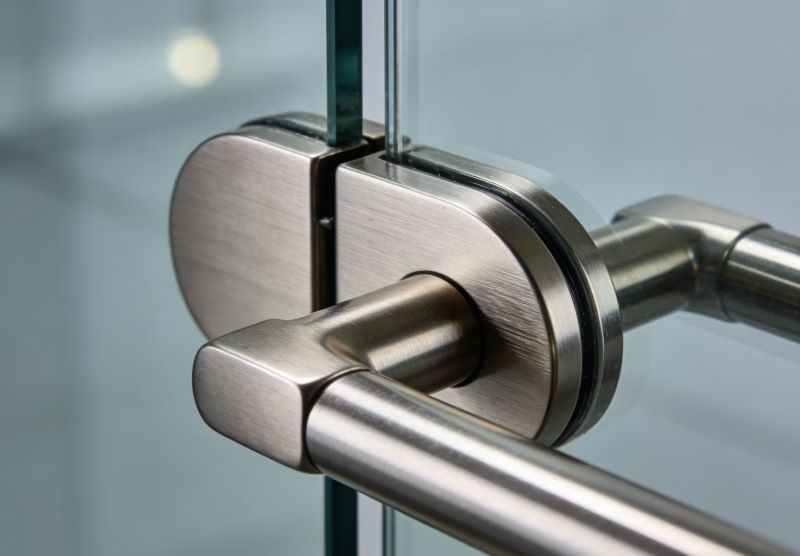
A glass door handle serves the same basic function as any door handle, but with additional considerations. Unlike handles mounted on wood or metal doors, glass door handles are typically through-bolted, with components on both sides of the glass panel sandwiching the glass between them.
The through-bolt design distributes the force of pulling and pushing across a larger area of glass, reducing stress concentrations. Quality glass door handles use rubber or silicone gaskets between the metal and the glass, providing cushioning and preventing direct metal-to-glass contact that could cause scratches or stress fractures.
The handle itself must be substantial enough to provide a comfortable grip, but the more critical consideration is the mounting hardware. The through-bolts must be of appropriate length and diameter for the glass thickness. The gaskets must be durable enough to maintain their cushioning properties over years of use. The clamping plates must be wide enough to spread the load without creating pressure points.
Common failure modes for glass door handles include loosening of through-bolts over time, compression set of gaskets that reduces clamping force, and corrosion of mounting hardware in humid or coastal environments. Quality handles address these issues with stainless steel hardware, durable gaskets, and designs that maintain clamping force despite minor compression of gasket materials.
Glass Clamps: The Universal Connector
Glass clamps are the workhorses of glass hardware. They serve as connection points between glass panels and other elements—walls, floors, ceilings, or other glass panels. A glass clamp might hold a glass panel to a wall, connect two glass panels at a corner, or secure a glass railing to a floor surface.
The design of a glass clamp is deceptively simple: two metal plates sandwich the glass, held together by bolts. But the engineering behind that simplicity is substantial. The clamp must apply even pressure across the glass surface without creating stress concentrations. The bolts must maintain consistent clamping force despite temperature changes, vibration, and the natural expansion and contraction of materials.
Quality glass clamps use stainless steel for corrosion resistance and strength. The interior surfaces that contact the glass feature rubber or silicone pads that cushion the glass and distribute pressure. The clamping bolts are typically socket head cap screws that allow precise torque control during installation.
For structural applications—such as glass railings or glass walls—glass clamps must be engineered to meet specific load requirements. Building codes typically require such hardware to be tested and certified for the intended use. Specifiers should verify that glass clamps meet applicable standards for the application.
Floor Springs: The Foundation of Heavy Doors
A floor spring is a specialized type of glass hinge designed for heavy glass doors that require controlled closing action. Unlike standard hinges that simply pivot, a floor spring contains a hydraulic mechanism that regulates the speed and force of door closure, preventing slamming and ensuring the door returns to its fully closed position.
Floor springs are installed into the floor beneath the door, making them completely concealed. This creates a clean, minimalist appearance that is particularly valued in frameless glass door installations. The floor spring bears the full weight of the door while providing smooth swing in both directions, with adjustable closing speed and latching action.
The critical component in a floor spring is the hydraulic cartridge, which must maintain consistent performance across thousands of cycles. Quality floor springs use sealed hydraulic systems with corrosion-resistant materials, ensuring reliable operation even in high-moisture environments. For exterior applications or coastal installations, floor springs constructed from stainless steel or with protected finishes are essential.
The Finishes That Last
Glass hardware is often highly visible, making finish selection important for both aesthetics and durability. The same finish principles that apply to other architectural hardware apply to glass hardware, but with additional considerations.
Stainless steel is the dominant material for glass hinges, glass clamps, floor springs, and glass door handles. It offers the strength required for structural applications and the corrosion resistance needed in environments where glass is common, including bathrooms, kitchens, and exterior installations. Grade 316 stainless steel is recommended for coastal or high-humidity applications.
Brushed and polished finishes each offer distinct aesthetics. Brushed finishes hide fingerprints and minor wear effectively, making them practical for high-touch applications like glass door handles. Polished finishes provide a more reflective, formal appearance but require more frequent cleaning to maintain their look.
Powder-coated finishes are available for glass hardware, allowing color matching to other architectural elements. However, the coating must be applied over a corrosion-resistant base material, and the durability of the coating should be verified for the intended application.
Conclusion
Glass hardware is the invisible infrastructure that makes glass architecture possible. A glass door that swings smoothly, a glass railing that stands secure, a glass partition that aligns perfectly—all depend on hardware designed specifically for the unique demands of glass.
Whether it is a glass hinge that supports the weight of a heavy door, a glass clamp that connects panels with precision, a floor spring that controls closure with hydraulic smoothness, or a glass door handle that provides the interface between user and door—each component must perform flawlessly because glass offers no margin for error.
The difference between hardware that performs and hardware that fails is not always visible at installation. It becomes apparent over time, in the resistance to loosening, the durability of finishes, the continued smooth operation. Quality glass hardware does not draw attention to itself. It simply works, day after day, allowing the glass to do what glass does best: provide transparency, lightness, and beauty without compromise.