ARTICLE NO.122|Manufacturing & Materials Engineering of Window Friction Stay Hinges (Stamping, Machining, Heat Treatment)
ARTICLE NO.122|Manufacturing & Materials Engineering of Window Friction Stay Hinges (Stamping, Machining, Heat Treatment)
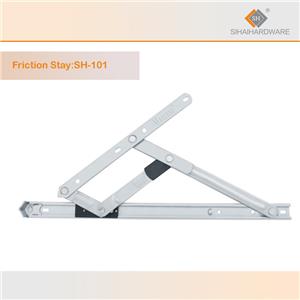
Window friction stay hinges are a specialized part of door and window hardware, designed to control how a sash opens, stops at a chosen angle, and then holds securely under everyday loads. Because these friction hinges work through repeated cycles and continuous stress, manufacturing & materials engineering is crucial. In practice, the same disciplines that produce reliable window hinges—choosing the right alloys, forming durable metal parts, machining precision components, and heat treating for strength and wear—also govern the quality of window friction stay hinges and friction hinges used across residential and commercial openings.
This article explains the key engineering decisions and the three core manufacturing processes commonly used: stamping, machining, and heat treatment.
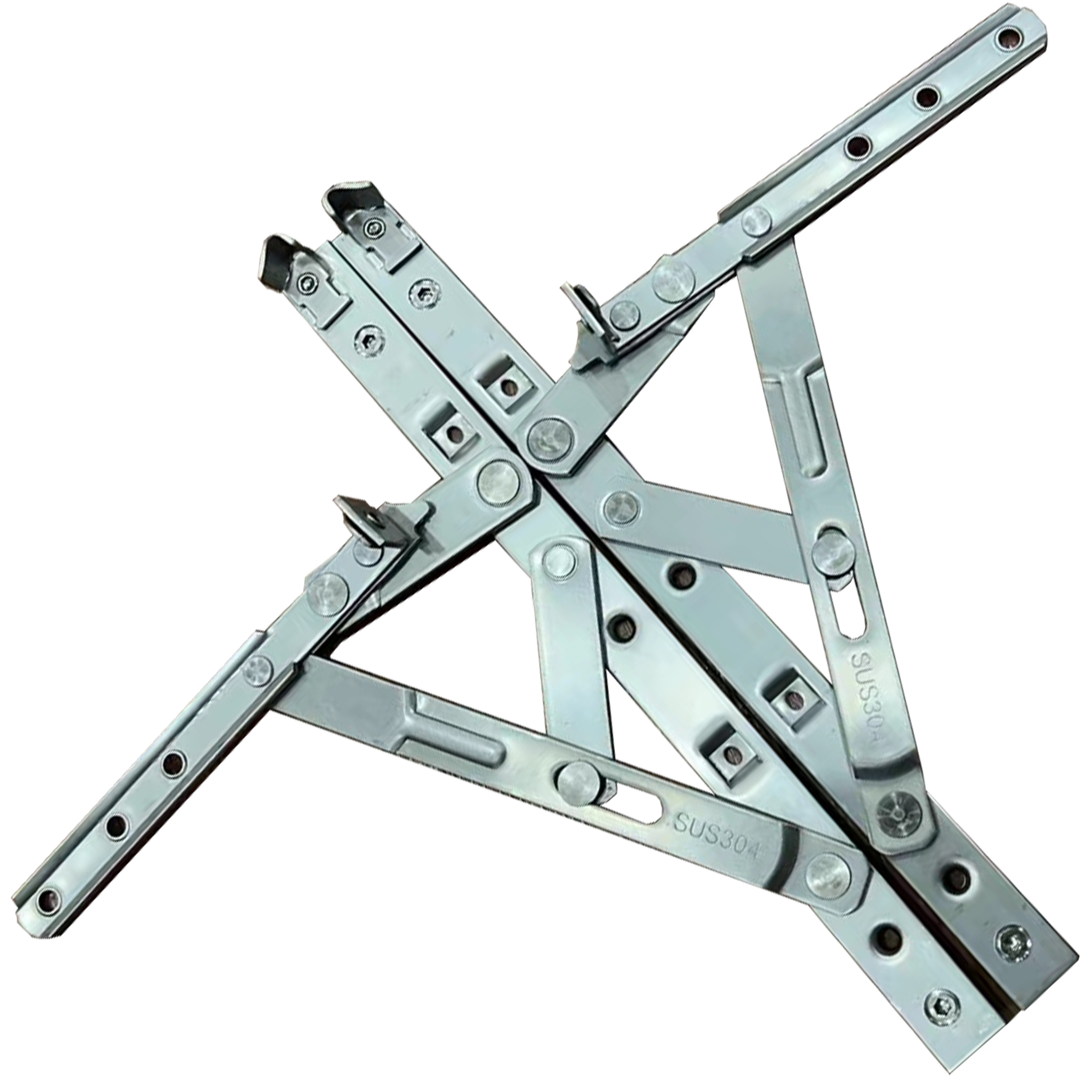
1) Materials engineering: choosing alloys and finishes for long service life
The performance of window friction stay hinges depends heavily on the base metal and protective finish. Manufacturers consider:
Corrosion resistance: Door and window hardware components are exposed to moisture, air pollutants, and often coastal salts. Many suppliers prioritize corrosion-resistant steels or steel that is plated and passivated, depending on the product spec.
Wear behavior at friction interfaces: Friction hinges rely on stable friction material behavior. Even small changes in surface finish or hardness can alter holding torque over time.
Fatigue strength: Window friction stay hinges are cycled repeatedly. The manufacturing process must create suitable microstructures so moving components withstand fatigue cracking.
Dimensional stability: Components that form the hinge geometry must not distort during later processing or during service.
In well-engineered window hingesprograms, material selection is paired with controlled surface treatments—coatings, platings, or compatible corrosion protection systems—to ensure that the friction hinges maintain consistent operation for years.
2) Manufacturing processes for friction stays: Stamping
Stamping is one of the most common and cost-effective processes for producing the sheet-metal parts that make up many window hinges and friction stay structures.
What stamping produces
In window friction stay hinges, stamping typically forms:
hinge leaves and mounting plates used in window hinges
brackets and arms that connect to the frame and sash
flat features with mounting hole patterns that integrate with door and window hardware assemblies
Why stamping is favored
High volume and repeatability: Stamping supports consistent geometry across large production runs of window friction stay hinges.
Tooling-based precision: A well-built die system can produce reliable hole locations and bending angles that help the friction staycomponents assemble without play.
Integrated forming: Embosses, ribs, and bends can strengthen the part without requiring heavy machining—important for durable friction hinges.
Engineering controls in stamping
To ensure reliable window hinges and friction hingesperformance, quality engineers often control:
blank thickness and material properties
die alignment and wear
burr formation and edge condition (which can affect assembly fit and fatigue life)
dimensional inspection of critical areas supporting friction stay hinge geometry
Because the friction stay system is sensitive to alignment, stamping accuracy directly affects how the window friction stay hinges “feel” and hold at different opening angles.
3) Machining: precision components and mating surfaces
While stamping shapes many components, machining is essential for features that demand tighter tolerances or complex geometry.
What machining produces
For window friction stay hinges, machining often provides:
pivot pin features and bearing surfaces used in window hinges
precision bores and cylindrical interfaces for smooth rotation
threaded or tapped sections (depending on design) for fastening to door and window hardware
adjustment and control parts where incremental fit changes affect holding force
In many friction hinges designs, a small tolerance difference at a pivot or a friction contact interface can translate into noticeable changes in opening torque and long-term wear.
Machining methods
Common methods include:
turning and grinding for cylindrical parts
milling for slots, flats, and alignment features
CNC machining for consistency across production
Engineering controls in machining
To maintain reliable window friction stay hingesoperation, manufacturers typically verify:
concentricity and surface finish of pivot-related surfaces
burr control after machining
alignment of machined features relative to stamped base components
assembly clearances and the resulting motion smoothness of friction hinges
4) Heat treatment: strength, wear resistance, and fatigue life
Because friction hinges and window friction stay hingesexperience repeated loading, heat treatment is a core step in materials engineering. It ensures the right balance of hardness, toughness, and fatigue resistance.
What heat treatment accomplishes
Depending on the alloy and design intent, heat treatment may deliver:
hardness for wear resistance (especially where metal contacts metal in friction hinges)
toughness to resist cracking under cyclic stress
microstructure optimization that supports fatigue life in window hinges
stress relief after machining or forming so parts remain dimensionally stable
Common heat treatment approaches
Annealing (used to soften for forming or to improve machinability)
Hardening and tempering (to achieve a controlled hardness/toughness combination)
Case hardening or surface treatments (for parts where surface wear matters more than core strength)
Quality control in heat treatment
Manufacturers often validate outcomes using:
hardness testing (to confirm target properties)
process parameter tracking (time/temperature control)
material traceability for batches used in door and window hardware production
Heat treatment is one of the main reasons high-quality friction stay hinges retain consistent holding performance as they age.
5) Integrating the processes: how stamping, machining, and heat treatment work together
The most reliable window friction stay hinges come from an integrated manufacturing chain:
Stamping creates the core geometry for window hinges and mounting components for door and window hardware.
Machining ensures precision where motion depends on tight fits (pivots, bores, and controlled adjustment features of friction hinges).
Heat treatment ensures the material state supports long-term wear resistance and fatigue strength.
Then, the assembled system is finished and inspected so the friction hinges hold smoothly, do not bind, and maintain stable torque through repeated opening cycles.
Conclusion
Manufacturing & materials engineering of window friction stay hinges is not just about making a metal part—it is about engineering reliable friction hinges that withstand corrosion, fatigue, and wear while maintaining consistent “holding feel.” By combining stamping for repeatable structure, machining for precision motion interfaces, and heat treatmentfor strength and durability, manufacturers can produce window friction stay hinges that perform reliably within broader door and window hardware systems for years of service.