ARTICLE NO.187 | How to Prevent Your Window Stay From Scratching the Window Frame
ARTICLE NO.187 | How to Prevent Your Window Stay From Scratching the Window Frame
A window friction stay is designed to hold a sash open and control its movement, not to damage the frame it is mounted to. Yet scratches on the frame surface, particularly along the path where the stay operates, are a common complaint in windows that have been in service for several years. These scratches are not merely cosmetic. They remove the protective finish from the frame, exposing the underlying metal or timber to corrosion and moisture ingress. Preventing them requires understanding what causes the stay to contact the frame in the first place, and addressing those causes before the damage accumulates.
Why the Stay Contacts the Frame
In a correctly installed and properly functioning window, the window friction stay operates within its designed clearance—the gap between the moving components and the stationary frame surfaces. This clearance is small, often only a few millimetres, but it is sufficient when everything is aligned correctly. Scratches appear when this clearance is lost. The most common cause is sash sag, where the weight of the glass and frame gradually pulls the sash downward, reducing the gap at the bottom edge. The second cause is track misalignment, where the stay track has shifted from its original position, forcing the connecting arm to travel at an angle that brings it into contact with the frame. The third cause is component wear, where a worn friction pad allows the sliding shoe to tilt, causing the arm assembly to touch the frame during operation. Each of these conditions converts a properly functioning stay into a frame-scratching mechanism.
Sash Sag and Its Effects on Clearance
The sash of a window is supported by its hinges, and over time, hinge wear allows the sash to drop. A window friction stay mounted to a sagging sash must now operate in a changed geometric relationship with the frame. The connecting arm, which was designed to travel in a plane parallel to the frame surface, now travels at a slight downward angle. As the arm extends and retracts, its lower edge may contact the frame, scraping away the finish with each cycle. The scratch pattern is distinctive: it follows the arc of the arm's travel, and it is always located at the lowest point of the arm's path. Preventing this type of scratch requires addressing the sash sag—adjusting or replacing the hinges to restore the sash to its correct position.
Track Alignment and Installation Accuracy
The track of a window friction stay must be installed parallel to the sash and at the correct height relative to the frame. If the track is mounted slightly too low, or if it tilts toward the frame at one end, the connecting arm will travel in a plane that intersects the frame surface. The point of contact is usually at the extreme end of the arm's travel, where the arm is closest to the frame. Installation accuracy is therefore critical. The track should be positioned using a template or measuring jig, not estimated by eye. After installation, the window should be operated through its full range while observing the clearance between the arm and the frame. Any point where the clearance approaches zero should be corrected before the window is put into service.
The Role of the Friction Pad in Maintaining Alignment
The friction pad inside the sliding shoe of a window friction stay does more than generate holding force. It also maintains the alignment of the shoe within the track. When the pad is new and of full thickness, it holds the shoe in the correct position, keeping the arm assembly parallel to the frame. As the pad wears, the shoe tilts within the track, and the arm assembly tilts with it. The tilt is small—often less than a degree—but over the length of the arm, a small angle produces a significant displacement at the far end. The arm tip may descend far enough to contact the frame. This is why worn friction pads are associated with frame scratches that appear only after years of service. Replacing the friction pad or the entire sliding shoe assembly restores the correct alignment and eliminates the contact.
The Specific Risk at the Rivet Joints
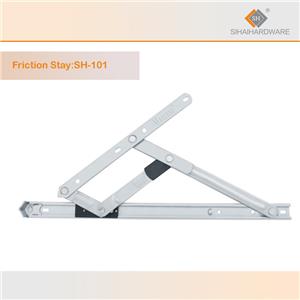
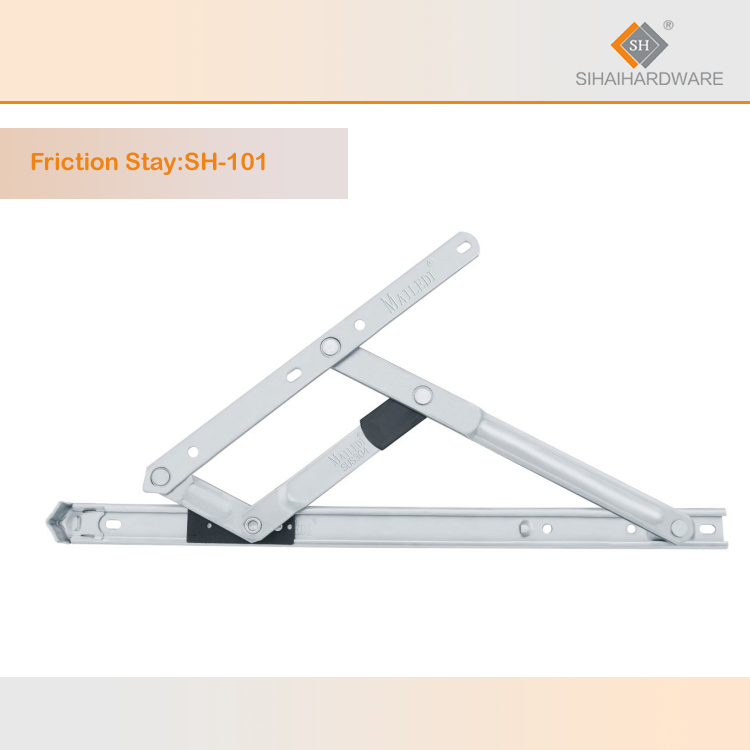
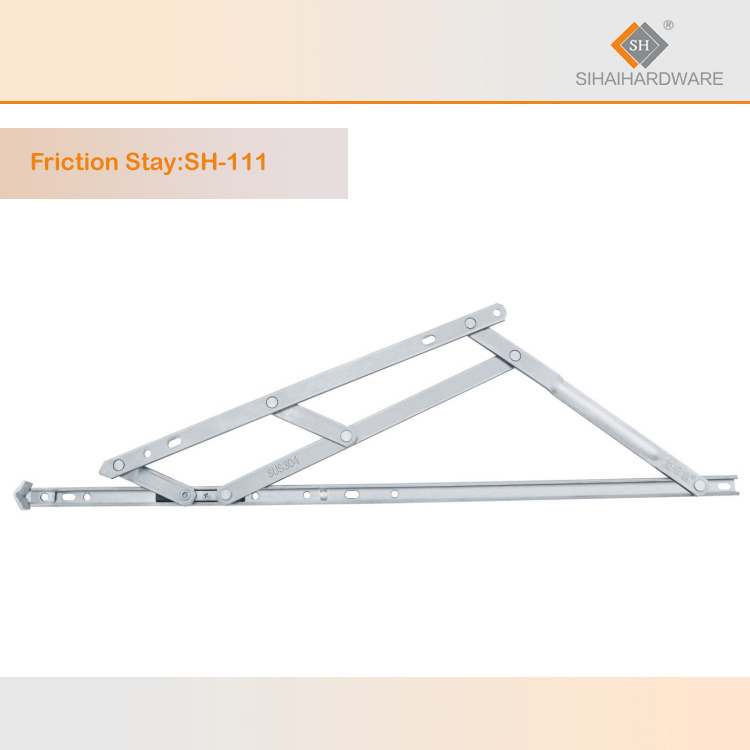
The rivets that connect the arms of a window friction stay protrude slightly from the surface of the metal. These protruding rivet heads are the most likely components to scratch the frame if the clearance is reduced. The rivet heads are harder than the frame finish, and they act as small cutting tools when dragged across the frame surface. A frame scratch caused by a rivet head is typically narrow and deep, often with a bright metallic appearance where the finish has been completely removed. Rivet heads that face toward the frame are particularly problematic. In a well-designed stay, the rivets are positioned to face away from the frame surface, but in some installations, the stay is mounted in a way that brings the rivet heads into proximity with the frame. Checking the orientation of the rivet heads during installation can prevent this specific type of damage.
Preventive Maintenance for Scratch-Free Operation
Keeping a window friction stay from scratching the frame is largely a matter of preventive maintenance. The window should be inspected periodically for signs of developing contact—polished marks on the frame surface, or accumulated metal or finish particles along the arm's travel path. If contact is detected early, the cause can be identified and corrected before significant damage occurs. Hinges should be checked and adjusted to prevent sash sag. The stay track should be checked for security of mounting and correct alignment. The friction pad should be replaced when it shows significant wear. These inspections are simple and quick, but they prevent the gradual accumulation of frame damage that is far more expensive to repair than to prevent.
Protective Measures During Installation and Maintenance
During installation or maintenance of a window friction stay, temporary protective measures can prevent accidental scratches. The frame surface adjacent to the stay can be covered with masking tape while the stay is being installed or adjusted. This is particularly important when using tools—screwdrivers and wrenches can slip and scratch the frame more easily than the stay itself. When operating the window during installation checks, the clearance between the arm and the frame should be monitored closely. If contact occurs, the source should be identified and corrected before the protective tape is removed. These temporary measures cost almost nothing and prevent the frustration of installing a new stay only to find that it has already scratched the frame.
Conclusion
A window friction stay that scratches the window frame is a stay that is operating outside its designed parameters. The root cause is almost always a loss of clearance—from sash sag, track misalignment, or component wear—rather than a defect in the stay itself. Preventing frame scratches therefore requires attention to the entire window system: hinges that support the sash correctly, a track that is installed accurately, and a friction pad that maintains its alignment throughout its service life. Regular inspection catches the early signs of contact before they become visible damage. The scratches that are prevented are not just cosmetic savings. They preserve the protective finish of the frame, extending the life of the entire window assembly.