ARTICLE NO.128 | Floor Spring: Hydraulic Dynamics, Closure Mechanics, and Structural Integration in Modern Door Systems
ARTICLE NO.128 | Floor Spring: Hydraulic Dynamics, Closure Mechanics, and Structural Integration in Modern Door Systems
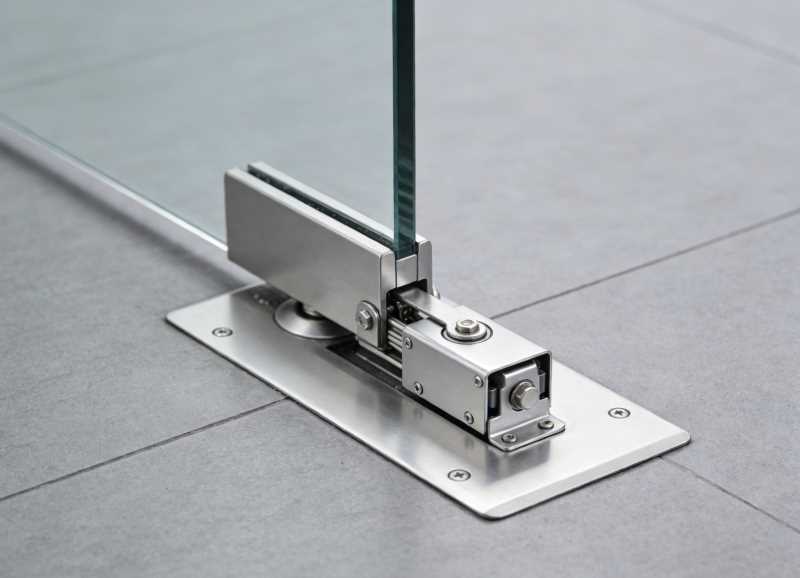
The Floor Spring occupies a singular position in architectural hardware, representing the confluence of structural engineering, hydraulic dynamics, and precision manufacturing. Unlike surface-mounted door closers that attach visibly to the door head or frame, the Floor Spring is a fully concealed unit embedded directly into the subfloor, with only the top pivot and connecting spindle visible above the finished floor level. This subterranean placement subjects the Floor Spring to a unique set of engineering challenges: it must generate sufficient closing torque to control heavy glass or timber doors weighing up to several hundred kilograms, maintain consistent performance across wide temperature fluctuations that alter hydraulic fluid viscosity, resist groundwater ingress and corrosion, and accommodate the structural deflection of the surrounding concrete slab—all while operating silently through millions of cycles without maintenance access. Understanding the detailed mechanical principles that govern spring floor closer performance is essential for specifiers, structural engineers, and installers who demand flawless operation from fully frameless glass entrances, high-traffic commercial lobbies, and heritage building restorations where visible hardware is architecturally unacceptable.
Hydraulic Circuit Design and Damping Characteristics
The hydraulic system within a Floor Spring is a masterpiece of miniature fluid dynamics. At its core lies a precision-machined piston that translates linearly within a sealed cylinder as the door rotates. The cylinder is filled with a specifically formulated hydraulic oil whose viscosity index determines the closer's temperature sensitivity. As the door opens, the piston displaces oil through a network of precisely calibrated orifices and check valves. During the closing cycle, spring force drives the piston in reverse, forcing the oil back through a separate circuit of adjustable restriction valves. This bifurcated flow path—separating the opening and closing hydraulic circuits—is the defining feature that allows a Floor Spring to offer independent adjustment of closing speed and latching speed. The closing speed valve typically controls the initial 85 percent of the door's closing arc, metering oil through a relatively large orifice to return the door quickly but without momentum. The back-check valve, which activates when the door is opened beyond approximately 70 degrees, provides hydraulic resistance to prevent the door from being thrown open violently and damaging adjacent walls or the pivot mechanism itself. The latching speed valve governs the final 15 percent of travel, restricting flow through a micro-orifice to ensure the door approaches the frame gently and engages the latch without slamming. Advanced Floor Spring designs incorporate thermostatic compensation elements—bimetallic strips or thermal expansion rods—that automatically adjust orifice sizes as oil temperature changes, maintaining consistent closing times across temperature ranges from -15°C to +50°C. Without this compensation, a Floor Spring specified for a heated lobby would close unacceptably slowly in sub-zero weather as the oil thickens, or slam dangerously in direct summer sun as viscosity decreases.
Spring Energy Storage and Torque Transmission
The energy storage mechanism of a Floor Spring relies on a heavy-duty helical compression spring, often manufactured from shot-peened chrome-silicon or chrome-vanadium spring steel for maximum fatigue resistance. As the door opens, the rotating spindle drives a cam and roller assembly that compresses this spring axially, converting the kinetic energy of the opening door into potential energy stored in the spring coils. The cam profile is critically engineered: it must provide a linear or progressive torque curve that feels natural to the user while storing sufficient energy at low opening angles to ensure reliable latching from any position. The mathematical relationship between cam lift and spring compression follows a carefully designed polynomial or piecewise curve tailored to expected door mass and width. Too aggressive a lift rate, and the door becomes difficult to open; too flat a curve, and the Floor Spring fails to close the door reliably from small angles. The spindle and cam assembly transmits torque from the door through a bottom arm or direct-drive coupling. In heavy-duty Floor Spring applications involving doors weighing over 300 kilograms, the spindle is typically forged from case-hardened alloy steel with induction-hardened bearing journals, supported by needle roller or angular contact bearings capable of withstanding combined radial and axial loads. The entire rotating assembly must maintain concentricity within micrometer tolerances to prevent oil leakage past the spindle seal—a common failure point in poorly manufactured units.
Structural Embedment and Load Transfer to the Substrate
The structural integration of a Floor Spring into the building substrate presents engineering challenges distinct from any other door hardware component. The cemented body of the Floor Spring—typically a ductile iron or fabricated steel housing—serves not only as the hydraulic reservoir and cylinder housing but also as the primary structural anchor that transfers door loads into the foundation. When a heavy glass door is held open at 90 degrees under wind load, the Floor Spring body experiences substantial overturning moment. This moment must be resisted by the surrounding concrete encasement. The design of the cement box or steel trough that receives the Floor Spring is therefore an integral part of the structural system. Key design parameters include the minimum concrete compressive strength (typically C25/30 or higher), the depth of embedment (usually 150 to 200 millimeters below finished floor level), and the provision of adequate reinforcement to prevent cracking around the unit. The top pivot, mounted in the door head or transom, completes the load path by restraining the top of the door against lateral displacement. Misalignment between the Floor Spring spindle axis and the top pivot creates parasitic lateral forces that accelerate bearing wear and can cause the door to drift from its hold-open position. Installation requires precision setting using laser alignment tools or precision jigs to maintain vertical axis alignment within 0.5 degrees.
Sealing Systems and Environmental Protection
Subterranean installation exposes the Floor Spring to a harsh and unforgiving environment. Groundwater, cleaning solutions, and de-icing salts that migrate through concrete can corrode the external housing and infiltrate internal mechanisms. The sealing system of a Floor Spring must perform under both static and dynamic conditions. The spindle seal, which operates against a rotating shaft, represents the most vulnerable interface. Premium Floor Spring designs employ multi-lip radial shaft seals manufactured from hydrogenated nitrile or fluorocarbon elastomers, often with an integrated dust lip and stainless steel garter spring to maintain consistent lip contact pressure as the seal wears. The cover plate gasket seals against the finished floor surface, preventing water ingress from routine floor cleaning. For exterior applications or below-grade installations, the Floor Spring must achieve an ingress protection rating of IP67 or higher, indicating complete protection against dust and temporary immersion. Some manufacturers offer fully submersible Floor Spring units with double-sealed spindles and corrosion-resistant stainless steel housings for flood-prone locations or marine environments. The oil itself contains corrosion inhibitors and anti-foaming agents to protect internal components and maintain consistent hydraulic performance even if minor moisture ingress occurs over the service life.
Adjustment, Commissioning, and Long-Term Stability
Commissioning a Floor Spring requires precise adjustment of multiple hydraulic valves to match the specific door characteristics and traffic patterns. The closing speed, latching speed, and back-check intensity are independently adjustable via hex-key or flathead screwdriver valves accessible from the top of the unit after removing the cover plate. Delayed action features, which hold the door open for a settable period before initiating closure, add another dimension of adjustability for accessibility compliance or luggage passage. However, the long-term stability of these adjustments depends on the quality of the valve design. Inexpensive Floor Spring units often employ needle valves that are susceptible to vibration-induced drift, where the adjustment screw gradually rotates under cyclic pressure pulsations. Premium designs use detented or friction-locked adjustment mechanisms that maintain their setting indefinitely. The oil itself degrades over time through oxidation, thermal breakdown, and contamination by wear particles. While a properly sealed Floor Spring can operate for 15 to 20 years without oil service, high-cycle installations in airports or hospitals may require scheduled oil analysis and replacement to maintain consistent closure timing and protect internal components from accelerated wear.
Conclusion
The Floor Spring represents an engineering tour de force that combines high-pressure hydraulics, precision cam kinematics, structural dynamics, and environmental sealing into a single compact package buried beneath the floor. Its ability to silently and reliably control the movement of monumental doors weighing hundreds of kilograms, while remaining entirely hidden from view, makes it an irreplaceable component in modern architecture. Successful specification demands understanding the hydraulic damping circuit that governs closing characteristics, the spring-cam energy storage system that determines operating feel, the structural embedment details that transfer loads into the foundation, and the sealing technology that protects precision internals from groundwater and contaminants. When properly selected, installed, and commissioned, a high-quality Floor Spring will deliver decades of flawless service, preserving both the aesthetic vision of the architect and the functional reliability demanded by building owners and facility managers.