ARTICLE NO.180 | The Relationship Between Slide Channel Hardness and the Wear Rate of Stainless Steel Stay Arms
ARTICLE NO.180 | The Relationship Between Slide Channel Hardness and the Wear Rate of Stainless Steel Stay Arms
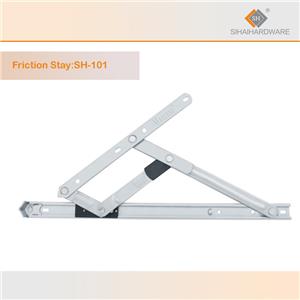
The sliding shoe of a window friction stay moves along a track countless times over the life of the window. Each pass involves contact between the shoe and the track walls, and each contact produces a tiny amount of wear. The rate at which this wear accumulates depends heavily on the relative hardness of the two surfaces in contact—the slide channel and the stainless steel stay arm. When these hardness values are properly matched, wear is minimal and the stay lasts for decades. When they are mismatched, one surface destroys the other at an accelerated rate. Understanding this relationship is fundamental to selecting and maintaining friction stay hardware.
The Mechanics of Sliding Contact Wear
Wear in a sliding contact occurs when two surfaces move against each other under load. In a window friction stay, the sliding shoe—typically a metal or polymer component—moves along the stainless steel track walls. The contact pressure between the shoe and the track wall, combined with the sliding distance and the material properties of both surfaces, determines how much material is removed from each. The relationship follows the Archard wear equation: wear volume is proportional to the normal load multiplied by the sliding distance, divided by the hardness of the softer material. This equation reveals a critical truth about sliding wear: it is almost always the softer material that wears. The harder surface remains largely unaffected, acting as the tool that gradually cuts away the softer one. In a friction stay, this means the wear rate of the stainless steel arm depends directly on whether it is harder or softer than the slide channel against which it runs.
Hardness Mismatch and Accelerated Wear
When the slide channel is significantly harder than the stainless steel window friction stay arm, the arm becomes the sacrificial wear component. The harder channel surface, with its rough asperities, acts as a file that gradually removes material from the softer stainless steel surface. The arm develops visible scoring, gradually loses cross-sectional thickness, and eventually becomes weakened to the point where it can no longer carry its designed load. Conversely, when the stainless steel arm is harder than the slide channel, the channel wears instead. The channel walls become grooved and irregular, the sliding shoe develops play, and the precision fit that maintained smooth operation is lost. Neither condition is desirable. The ideal pairing achieves similar hardness values for both surfaces, so that wear is distributed evenly and proceeds at the minimum possible rate.
Stainless Steel Hardness Range
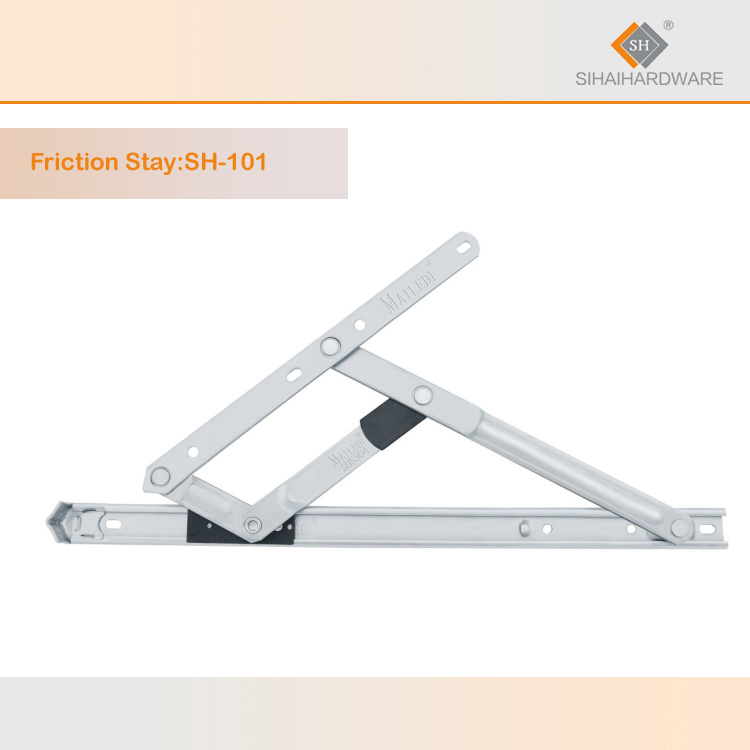
The stainless steel used in a window friction stay is typically austenitic grade 304 or 316 in the cold-worked condition. The manufacturing processes—bending, stamping, and drawing—increase its hardness through work hardening. The resulting hardness typically falls in the range of 150 to 250 on the Vickers scale, depending on the degree of cold work. The track, which experiences the most forming, is usually harder than the arm. The arm, formed with less aggressive deformation, may retain a hardness closer to the lower end of this range. These hardness values are moderate compared to hardened tool steels, which can exceed 600 Vickers, but they are appropriate for the application because the mating surface is selected to be compatible.
Slide Channel Materials and Their Hardness
The slide channel—the track wall surface against which the shoe slides—can be manufactured from several different materials. In premium window friction stay designs, the track is fabricated from the same stainless steel as the arm. Both surfaces have similar hardness, and wear proceeds slowly and evenly. In budget designs, the slide channel may be manufactured from a different material. Some use aluminium extrusions with hardness values far below that of the stainless steel arm. The arm, harder than the channel, gradually cuts into the aluminium, producing a groove that deepens with each cycle. Others use hardened steel inserts with hardness far exceeding the stainless steel arm. The hardened insert, harder than the arm, wears the stainless steel surface away. The mismatch in either direction produces the same outcome: accelerated wear of the softer component and a shortened service life for the stay.
The Role of the Friction Pad
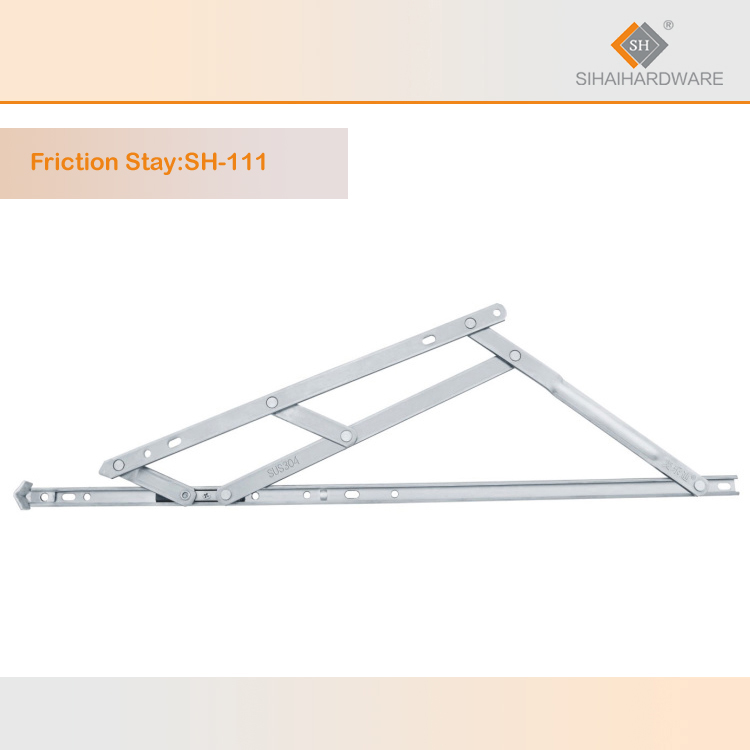
The friction pad inside the sliding shoe complicates the hardness relationship in a window friction stay. The pad is deliberately softer than both the track and the arm—a sacrificial component designed to wear in preference to the structural elements. The pad material, typically a polymer composite or sintered bronze, has a hardness far below that of stainless steel. Under ideal conditions, the pad absorbs the wear, and the metal surfaces remain untouched. The pad is replaceable, and its wear is expected and managed. However, this protective function depends on the pad maintaining its integrity. If the pad wears through or becomes contaminated with hard particles, the metal surfaces come into direct contact, and the hardness relationship between the slide channel and the arm becomes the determining factor in wear rate. This is why regular inspection of the friction pad is essential: a worn pad exposes the metal surfaces to a wear regime they were not designed to withstand.
Lubrication and Its Effect on Wear Rate
Lubrication modifies the hardness relationship in a window friction stay by separating the two surfaces. A complete lubricant film prevents metal-to-metal contact, reducing wear to nearly zero regardless of the relative hardness of the slide channel and arm. The lubricant film carries the load, and the surfaces glide past each other without touching. However, complete film lubrication is rarely achieved in a friction stay because the mechanism depends on friction to hold the sash in position. The lubricant reduces wear but does not eliminate contact. This is why the hardness relationship remains important even in a well-lubricated stay. The lubricant shifts the wear rate downward, but the relative hardness of the surfaces still determines which component wears when contact does occur.
Practical Implications for Specification
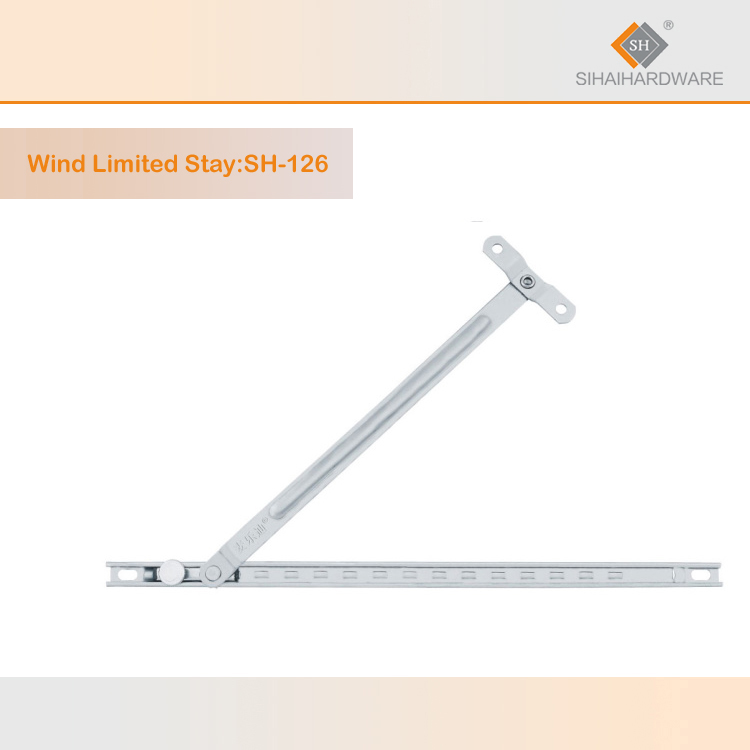
The hardness relationship between the slide channel and the stainless steel arm has practical implications for window friction stay specification. When selecting a stay, the purchaser should verify that the track and arm are manufactured from the same or similar stainless steel grades. This ensures compatible hardness values and minimises differential wear. Stays with mixed-material construction—stainless steel arms running in aluminium channels, or hardened steel inserts running against stainless steel arms—should be evaluated carefully. The initial cost saving of a mixed-material design may be outweighed by the shortened service life and the need for earlier replacement. For coastal or industrial environments where corrosion products can act as third-body abrasives, matching the hardness of both surfaces becomes even more important, as any corrosion debris will accelerate the wear of the softer component.
Conclusion
The wear rate of the stainless steel arm in a window friction stay is not determined by the arm alone. It is a property of the sliding system—the interaction between the arm, the slide channel, and the friction pad that separates them. When the slide channel and the arm share similar hardness values, wear is distributed and slow. When they are mismatched, the softer surface bears the full burden of material removal, and the stay's service life shortens accordingly. The hardness relationship is designed into the stay from the beginning, through the choice of materials for each component. Selecting a stay with compatible materials, and maintaining the friction pad that protects both surfaces, is the practical path to maximum service life from friction stay hardware.