ARTICLE NO.181 | The Effect of Surface Roughness on the Friction-Fatigue Life of a Window Stay
ARTICLE NO.181 | The Effect of Surface Roughness on the Friction-Fatigue Life of a Window Stay
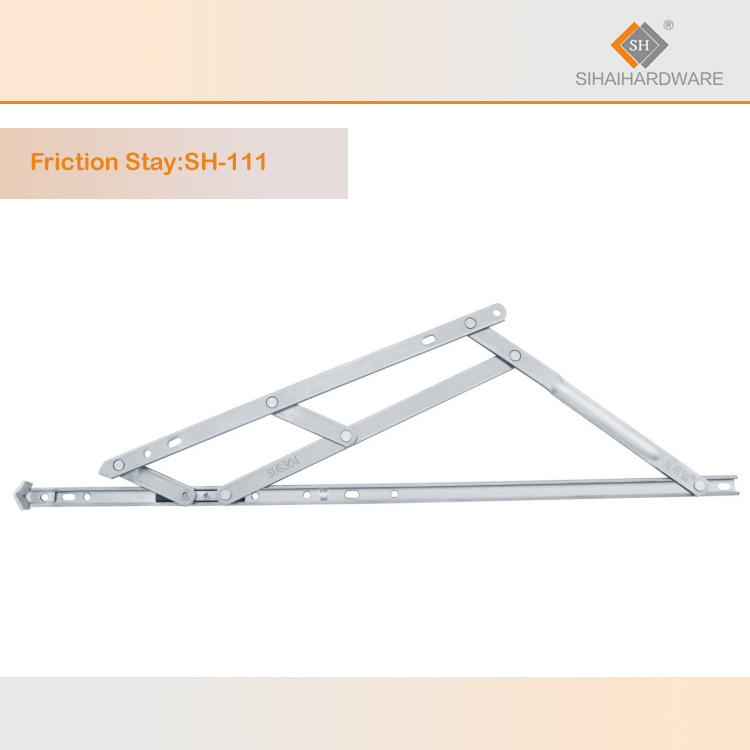
The track surface of a window friction stay is not perfectly smooth. It carries a deliberate texture—a microscopic landscape of peaks and valleys created by the manufacturing process. This surface roughness is not a defect. It is an engineering parameter, specified and controlled to within precise limits, because it directly influences how the stay performs and how long it lasts. Too rough, and the surface acts as an abrasive, cutting away the friction pad and accelerating fatigue. Too smooth, and the surface cannot retain lubricant or generate the friction that holds the sash in position. The relationship between surface roughness and the friction-fatigue life of a window stay is one of the most fundamental connections in the design of this hardware.
What Surface Roughness Measures
Surface roughness quantifies the microscopic irregularities on a machined or formed surface. The most common parameter is Ra, the arithmetic average of the absolute deviations of the surface profile from the mean line over a specified sampling length. A polished stainless steel track for a window friction stay might have an Ra of 0.2 to 0.4 micrometres—smooth to the touch but still carrying a measurable texture at the microscopic scale. A rougher surface, with an Ra of 0.8 to 1.2 micrometres, carries visible machining marks. These values seem small, but they represent differences that a friction pad can feel. The friction pad, with its own surface texture, interacts with these track irregularities in a contact dance that determines wear rate, holding force, and fatigue life.
How Roughness Increases Friction
A rough surface on a window friction stay track increases the coefficient of friction between the track and the friction pad. The peaks of the rough surface dig into the softer pad material, creating mechanical interlocking that must be overcome before sliding can occur. This increased friction has mixed consequences. In the short term, it provides stronger holding force—the stay grips the sash more firmly. But this benefit comes at a cost. The interlocking peaks also scrape material from the pad with each pass, generating wear debris and accelerating pad degradation. A track that is too rough will wear out a friction pad in a fraction of its design life. The user experiences a stay that holds firmly at first but gradually loses its grip as the pad material is consumed.

How Roughness Accelerates Fatigue
Surface roughness affects fatigue life through a mechanism known as stress concentration. Each peak and valley on the track surface of a window friction stay acts as a microscopic notch. When cyclic loads are applied—as they are with every opening and closing of the window—these notches concentrate stress. The local stress at the bottom of a valley can be several times higher than the nominal stress in the surrounding material. Under repeated loading, these concentrated stress locations become fatigue crack initiation sites. The smoother the surface, the less pronounced the stress concentration and the longer the fatigue life. This is why fatigue-critical components in aerospace and automotive engineering are polished to very low roughness values. A friction stay track with an Ra of 1.0 micrometres may have its fatigue life reduced by 30 to 50 percent compared to the same track with an Ra of 0.3 micrometres. The difference is not cosmetic. It is a matter of how many cycles the stay can survive before a crack initiates and propagates.
The Lubricant Retention Trade-Off
Surface roughness plays a crucial role in lubricant retention on a window friction stay track. A perfectly smooth surface cannot hold a lubricant film. The lubricant is squeezed out under pressure, leaving the surfaces in direct contact. A slightly rough surface, with its network of valleys, provides reservoirs where lubricant can collect and be drawn back into the contact zone as the sliding shoe passes. This is why the optimum surface roughness for a friction stay track is not zero. It is a value that balances the benefits of lubricant retention against the costs of increased friction and stress concentration. Manufacturers specify surface roughness values that provide adequate lubricant retention while minimising the fatigue penalty. The specific value depends on the lubricant type, the friction pad material, and the expected load conditions.
Manufacturing Methods and Roughness Control
The surface roughness of a window friction stay track is determined by the manufacturing process. Rolled stainless steel strip carries the surface texture of the rollers, which can be specified to produce a range of roughness values. Rolled surfaces are generally smooth and consistent, with roughness values controlled at the mill. Subsequent forming operations—bending, stamping, and punching—can alter the surface in localised areas. Bend radii, in particular, experience surface stretching that roughens the surface and creates additional stress concentrations. Machined surfaces, produced by milling or grinding, carry tool marks that align with the cutting direction. These directional marks create anisotropic roughness—the surface has different characteristics in different directions. For a friction stay track, the roughness direction relative to the sliding direction matters. Roughness perpendicular to the sliding direction creates more resistance and faster wear than roughness parallel to the direction of shoe travel.
Wear-In and Surface Evolution
The surface roughness of a new window friction stay track does not remain constant over the stay's service life. The repeated passage of the sliding shoe polishes the track surface, gradually reducing the height of the peaks and filling the valleys with wear debris. This wear-in process can reduce the effective roughness by 20 to 40 percent during the first few thousand cycles. The track becomes smoother, which reduces friction and pad wear, but also reduces lubricant retention. The polished surface may also develop a directional texture aligned with the sliding direction, which can reduce friction in that direction while increasing it in others. This evolution of the surface means that the roughness specified at manufacture is not the roughness that the stay operates with after years of service. Maintenance practices—cleaning and lubrication—interact with this evolved surface, and their effectiveness depends in part on matching the lubricant to the current surface condition.
Specification Implications
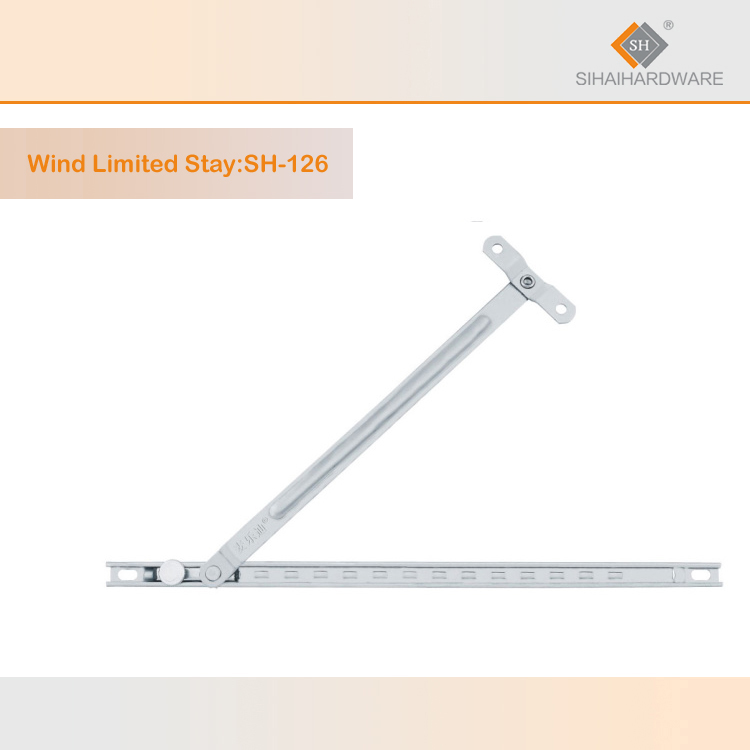
For the purchaser or specifier of window friction stay hardware, surface roughness is a parameter that is rarely printed on a data sheet but profoundly affects performance. A stay with a poorly controlled surface finish—too rough, or with roughness oriented perpendicular to the sliding direction—will wear its friction pad quickly and may develop fatigue cracks at the track surface. A stay with an overly polished finish may suffer from inadequate lubricant retention and inconsistent holding force. The practical approach is to select stays from manufacturers who control surface finish as part of their quality process, and who can provide roughness data when asked. For maintenance, the goal is to preserve the designed surface finish by cleaning with non-abrasive methods and lubricating with products compatible with the existing surface condition.
Conclusion
The surface roughness of a window friction stay track is an invisible but decisive factor in the stay's performance and longevity. It determines the friction coefficient, influences lubricant retention, concentrates stress at the microscopic scale, and evolves over the service life through wear-in. A track that is too rough wears the friction pad rapidly and shortens fatigue life through stress concentration. A track that is too smooth loses lubricant and holding consistency. The optimum is a carefully controlled intermediate value, specified at manufacture and maintained through proper cleaning and lubrication. Understanding surface roughness as an engineering parameter rather than a cosmetic afterthought reveals the depth of design that goes into a component that appears, to the casual eye, to be nothing more than a strip of formed stainless steel.