ARTICLE NO.179 | Why Your Window Stay Feels Different After a Hot Day
ARTICLE NO.179 | Why Your Window Stay Feels Different After a Hot Day
You open the window in the evening after a long, hot day, and something has changed. The window friction stay that moved with predictable resistance that morning now feels different—stiffer, looser, or simply not quite right. The change may be subtle, but it is real. Temperature affects every component of a friction stay, from the stainless steel track to the polymer friction pad to the lubricant that separates them. Understanding these thermal effects explains why a stay that performs perfectly on a cool morning can behave differently after hours of summer sun.
Thermal Expansion of the Metal Components
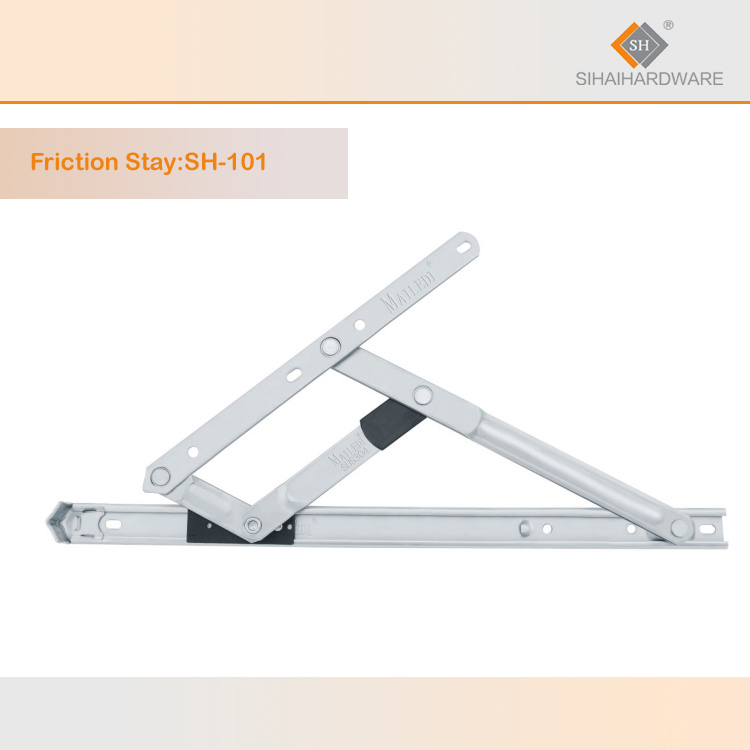
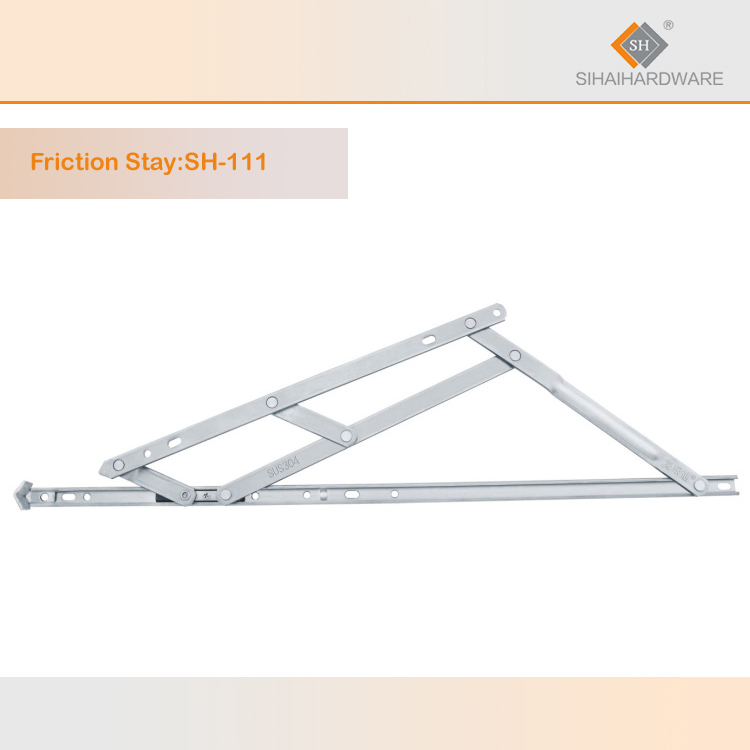
The stainless steel track and arms of a window friction stay expand when heated. The coefficient of thermal expansion for austenitic stainless steel is approximately 16 to 18 micrometres per metre per degree Celsius. A track measuring 300 millimetres that heats from 20 degrees to 60 degrees—a realistic surface temperature for a dark-finished window in direct sun—will lengthen by roughly 0.2 millimetres. This may seem negligible, but the stay is a precision mechanism. The sliding shoe runs in a track slot with carefully calculated clearances. The track expansion occurs primarily along its length, but the slot width also changes slightly as the material expands in all dimensions. A shoe that fit precisely in the slot at morning temperatures may find the slot marginally narrower in the afternoon heat. The result is a stay that feels stiffer, as the shoe experiences increased friction against the slot walls.
The Friction Pad's Temperature Sensitivity
The friction pad inside a window friction stay is typically manufactured from a polymer material—acetal, polyamide, or a proprietary composite. These polymers change their mechanical properties with temperature, and the changes are not subtle. As temperature rises, most polymers soften. The material's elastic modulus decreases, and the pad becomes more compliant. A softer pad deforms more under the clamping force, increasing the actual contact area with the track. This increased contact area can increase friction, making the stay feel stiffer. At the opposite extreme, some polymer formulations become glazed or polished at high temperatures, particularly if the pad has been in service for years and has already developed a surface sheen. A glazed pad can feel looser, as the polished surface slides more easily against the track. The specific behaviour depends on the pad material and its service history, but the underlying principle is constant: the friction pad is not dimensionally or mechanically stable across the temperature range a window experiences.
Lubricant Viscosity Changes
The lubricant in a window friction stay—whether a dry-film coating or a light grease—changes viscosity with temperature. As temperature rises, oil-based lubricants thin. A lubricant that provided adequate film strength at 20 degrees may become too thin at 50 degrees, allowing more direct contact between the friction pad and the track. The result is increased friction and a stay that feels stiffer or grittier. Dry-film lubricants, which rely on solid particles such as PTFE or molybdenum disulphide rather than oil films, are less affected by temperature. This is one reason premium friction stays specify dry-film lubricants for their track surfaces. The dry film maintains its properties across the full temperature range the window will experience, while oil-based lubricants thin and migrate away from the contact surfaces.
Residual Stress Relaxation
The metal components of a window friction stay carry residual stresses from the cold-forming processes that shaped them. These stresses are not permanent. At elevated temperatures, the metal undergoes stress relaxation—the gradual reduction of internal stress as dislocations reorganise into lower-energy configurations. A stay that has been in service for years, exposed to repeated thermal cycles, gradually loses some of the beneficial residual stresses that contributed to its spring characteristics. The return spring in the sliding shoe assembly, which depends on residual stress for its force, may deliver slightly less pressure to the friction pad after years of hot-day exposure. The change is too small to measure in a single day, but across hundreds of thermal cycles, the cumulative effect contributes to the gradual loss of holding force that characterises an ageing friction stay.
Reversible vs. Permanent Changes
Not all the changes caused by a hot day are permanent. The thermal expansion of the track, the softening of the friction pad, and the thinning of the lubricant are all reversible. When the temperature drops in the evening, the metal contracts, the polymer firms up, and the lubricant thickens again. The stay returns to its original feel, or close to it. Other changes are more persistent. Stress relaxation in the metal components is cumulative and effectively permanent. A single hot day produces a small, irreversible reduction in residual stress. Repeated hot days accumulate this damage, contributing to the slow decline in performance that all friction stays eventually exhibit. Oxidation of the lubricant also accelerates at high temperatures. Oil-based lubricants degrade more rapidly when hot, thickening into the sticky residue that eventually contaminates the track and increases friction. These permanent changes explain why a stay that has survived several summers feels different, on average, than a new stay, even on a cool day.
The Role of the Frame Material
The window frame also responds to heat, and its movement affects the window friction stay. Aluminium frames expand significantly when heated—the thermal expansion coefficient of aluminium is roughly twice that of stainless steel. A heated aluminium frame expands more than the stainless steel stay mounted to it. This differential expansion can slightly alter the alignment between the stay track and the sash bracket. The stay, mounted to the frame, and the sash, mounted to the stay, may no longer align perfectly as the frame expands. The result is a stay that feels different not because the stay itself has changed, but because the geometry of its mounting has shifted. uPVC frames, with their even higher thermal expansion coefficients, can produce more pronounced effects. This frame-related misalignment is usually reversible—the frame contracts as it cools, and the stay returns to its normal feel—but during the heat of the day, it can produce noticeable changes in operating characteristics.
What This Means for Maintenance
The temperature sensitivity of a window friction stay has practical implications for maintenance. A stay that feels stiff on a hot afternoon should not immediately be condemned as failing. The same stay may feel perfectly normal on a cool morning. Before diagnosing a problem based on how the stay feels at a single moment, the operator should test the stay under different temperature conditions. If the stay feels consistent in cool conditions but different in heat, the issue is thermal sensitivity—a characteristic of the design—rather than mechanical failure. However, if the stay feels consistently different across all temperatures, particularly if the change has developed gradually over months, a real mechanical issue may be developing. The temperature-related changes described here also suggest a maintenance practice: lubricating and inspecting friction stays during moderate temperatures, when the components are at their most stable, provides a more accurate assessment of their true condition than testing them at the extremes of a hot day.
Conclusion
A window friction stay that feels different after a hot day is responding to the predictable, physical effects of temperature on its materials. The metal expands, the polymer pad softens, the lubricant thins, and residual stresses relax—each effect altering the feel of the mechanism in subtle but real ways. Most of these changes are reversible; the stay returns to its normal feel when temperatures moderate. Some are cumulative, contributing to the slow ageing that eventually necessitates replacement. Understanding the thermal behaviour of a friction stay allows building occupants and maintenance personnel to distinguish between a stay that is simply warm and one that is genuinely wearing out. The hot-day difference in feel is not a malfunction. It is the mechanism responding to the environment in the way its materials dictate.