ARTICLE NO.170 | Why Some Window Stays Have an Extra Arm (And What It Does)
ARTICLE NO.170 | Why Some Window Stays Have an Extra Arm (And What It Does)
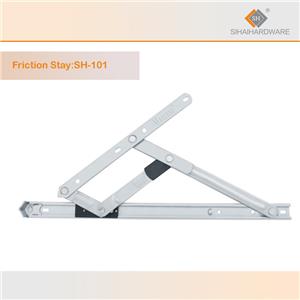
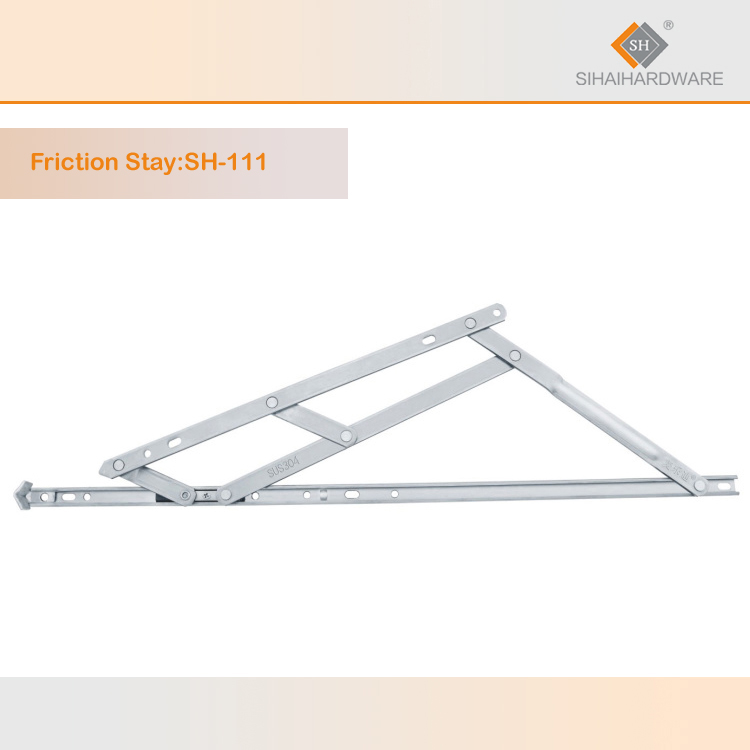
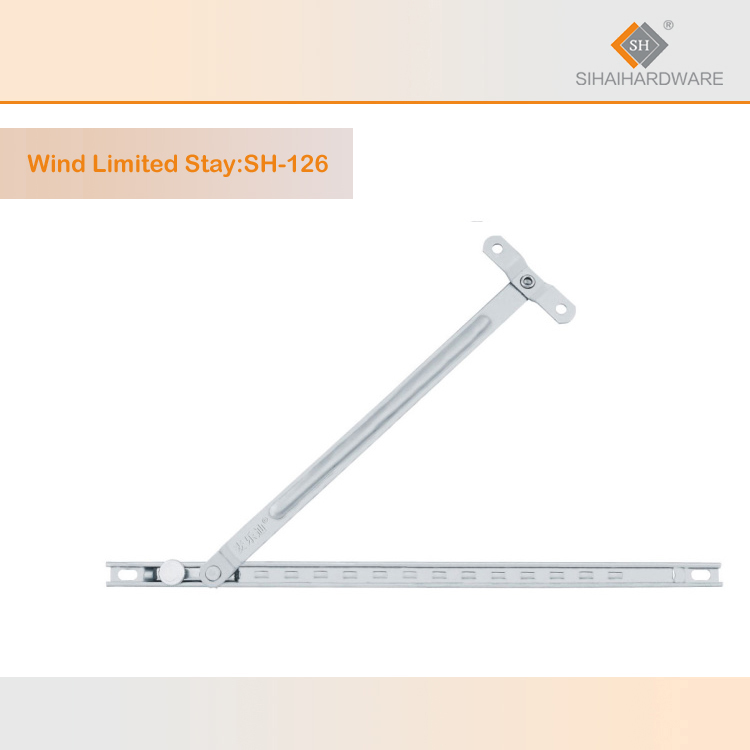
A casual glance at two different window friction stay designs might suggest that one is simply a more complex version of the same basic mechanism. One stay has a single connecting arm between the sliding shoe and the sash bracket. The other has a second, thinner arm running parallel to the first. This extra arm is not a reinforcement, not a redundancy, and not a manufacturing afterthought. It is a secondary stabilising link that fundamentally changes how the stay controls the sash throughout its range of motion. Understanding what this extra arm does reveals why it appears on higher-quality hardware and why its presence is a reliable indicator of a stay designed for precision and durability.
The Single-Arm Design and Its Limitation
A single-arm window friction stay operates with three primary components: the track, the sliding shoe, and the connecting arm that links the shoe to the sash bracket. When the window opens, the sash bracket rotates with the sash, and the connecting arm translates this rotation into linear movement of the shoe along the track. The sash bracket is attached to the connecting arm at a single pivot point. This means the angular position of the sash bracket relative to the arm is determined only by the forces acting on it—the weight of the sash, the resistance of the friction pad, and any wind load. The sash bracket can, in principle, rotate slightly around its single pivot. This rotation, if it occurs, changes the angle at which the sash meets the frame, potentially causing the sash to tilt, bind, or seal unevenly against the weatherstripping. In a well-maintained stay with tight rivet joints, this rotation is minimal. But over time, as rivets loosen and components wear, the single-arm design allows an increasing degree of uncontrolled sash rotation.
What the Extra Arm Actually Does
The extra arm in a dual-arm window friction stay is not merely a second connection following the same path as the first. It forms a four-bar linkage in conjunction with the main arm, the sash bracket, and the sliding shoe assembly. This linkage constrains the sash bracket to maintain a specific angular relationship with the track throughout the entire opening arc. The sash bracket cannot rotate independently of the arm assembly. It must follow the precise geometric path dictated by the lengths and pivot positions of both arms working together. The practical effect is that the sash remains parallel to the frame at every point in its travel. The weather seal compresses evenly. The locking points align correctly when the window closes. The sash does not tilt, twist, or bind, regardless of how the user pushes on the handle or how the wind presses against the glass. The extra arm transforms the stay from a mechanism that simply holds the sash open into one that controls the sash's orientation as well as its position.
The Kinematics of the Dual-Arm Design
The geometry of a dual-arm window friction stay is a carefully calculated linkage. The main arm and the secondary arm are of different lengths, and their pivot points on the sliding shoe and sash bracket are offset from each other. This offset creates a specific motion profile in which the angular relationship between the sash bracket and the track changes in a controlled, predictable way as the window opens and closes. The designer can tune this motion by adjusting the relative lengths of the two arms and the spacing of their pivot points. Some dual-arm stays are designed to keep the sash perfectly parallel to the frame at all times. Others introduce a slight tilt at certain opening angles—for example, tilting the sash slightly inward at the top when fully open to improve ventilation or to direct rainwater away from the interior. This level of kinematic control is not available with a single-arm design, which simply follows the path determined by the single connecting link.
Resistance to Rivet Loosening
One of the less obvious benefits of the extra arm in a window friction stay concerns the long-term integrity of the riveted joints. In a single-arm stay, the full wind load and sash weight are transmitted through a single set of rivets at each end of the connecting arm. These rivets experience the full reversing load with every cycle, and any looseness that develops immediately affects the sash alignment. In a dual-arm stay, the loads are distributed across two parallel load paths. The main arm carries the majority of the force, but the secondary arm shares the load, particularly the torsional component that tries to twist the sash bracket relative to the shoe. The rivets in a dual-arm stay each carry a smaller share of the total load, reducing the rate at which they loosen and extending the stay's service life. Furthermore, if one rivet does begin to loosen, the second arm maintains the sash alignment, preventing the cascade of misalignment and accelerated wear that follows rivet failure in a single-arm design.
Where Dual-Arm Stays Are Specified
Dual-arm window friction stay designs appear in applications where sash alignment is critical. Heavy sashes—those with triple glazing or large dimensions—benefit from the additional constraint that prevents the sash from twisting under its own weight. Windows in exposed locations, where wind loads are high and variable, benefit from the dual-arm design's resistance to wind-induced sash movement. Windows with multi-point locking systems, which require precise alignment between sash and frame to engage all locking points simultaneously, almost always use dual-arm stays because the single-arm design cannot maintain the required geometric accuracy over time. In the European window market, dual-arm friction stays are standard on tilt-turn and casement windows of medium to high quality. The single-arm design is typically reserved for smaller, lighter windows in sheltered locations where the additional cost of the dual-arm mechanism is not justified by the performance benefit.
Identifying Quality in a Dual-Arm Stay
Not all dual-arm window friction stay designs are created equal. The quality of the design can be assessed by examining the rivet joints at both ends of the secondary arm. In a well-made stay, these rivets are of the same material and setting quality as those on the main arm. The secondary arm itself should be of comparable material thickness and finish to the main arm—a noticeably thinner or flimsier secondary arm suggests a cosmetic addition rather than a functional one. The pivot points should operate smoothly without binding through the full range of motion. A dual-arm stay that is stiff or catches during operation has been poorly manufactured or incorrectly installed, negating the precision that the extra arm is intended to provide.
Conclusion
The extra arm on a window friction stay is the difference between a mechanism that simply props a window open and one that controls the window's movement with kinematic precision. It constrains the sash bracket to a defined angular path, preventing the uncontrolled rotation that leads to uneven seal compression, locking point misalignment, and eventual sash sag. It distributes loads across additional rivet joints, extending service life. It provides the geometric accuracy that heavy sashes, exposed locations, and multi-point locking systems demand. When specifying or replacing friction stays, the presence of that second arm is a quick visual indicator of a stay engineered for applications where simply holding the window open is not enough—where how the window is held matters as much as whether it is held at all.