ARTICLE NO.166 | Why Your Window Stay Binds When You Try to Close the Window
ARTICLE NO.166 | Why Your Window Stay Binds When You Try to Close the Window
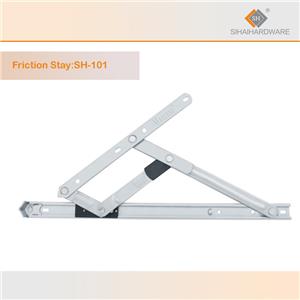
You push the window to close it, and halfway through its arc it stops. Not gradually, not with the smooth resistance of a healthy friction mechanism, but with a sudden catch that demands extra force to overcome. The window jerks past the tight spot and closes the rest of the way, but the resistance remains every time you operate it. This is binding, and in a window friction stay, it signals that something has changed in the precisely engineered relationship between the sliding shoe, the track, and the connecting arm. Binding is not a normal characteristic of a functioning stay. It is a symptom with specific mechanical causes, and identifying them is the first step toward a lasting repair.
Track Contamination and Debris
The most common cause of binding in a window friction stay is contamination of the track surface. The sliding shoe travels along a stainless steel track that must remain clean and smooth for consistent operation. Over time, airborne dust, sand particles, insect debris, and oxidised lubricant accumulate on the track. These contaminants do not distribute evenly. They concentrate at the track positions where the shoe spends the most time—typically the closed position and the most-used ventilation opening. At these locations, the debris becomes compacted by repeated shoe passage, forming a layer that effectively thickens the track surface. The shoe, designed to run with a precise clearance, encounters this thickened section and resists movement. The user feels a distinct catch or hesitation at the contaminated point. Unlike wear-related binding, contamination-induced binding often appears suddenly, corresponding to a period of high dust exposure or a season of open windows.
Track Deformation from Over-Tightened Screws
The track of a window friction stay is a thin stainless steel section, typically 1.0 to 1.5 millimetres thick. It is strong along its length but flexible across its width. When the screws that secure the track to the window frame are over-tightened, the screw heads act as localised presses, driving the track downward into the frame material. The track deforms around each screw hole, creating a depression. If multiple screws are over-tightened, the track develops a wavy profile—high spots at the screws, low spots in between. The sliding shoe, which requires a flat track to travel smoothly, encounters these undulations and binds at each high spot. The binding is predictable and repeatable, occurring at the same track positions with every cycle. This type of binding is a direct result of installation error and can be corrected only by replacing the deformed track and reinstalling the new one with properly controlled screw torque.
Worn or Damaged Friction Pad
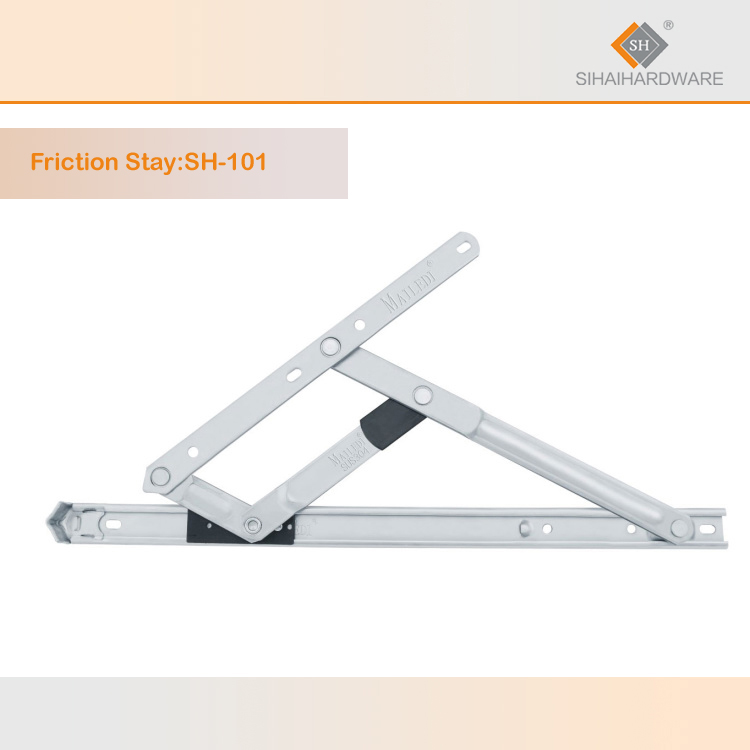
The friction pad inside the sliding shoe of a window friction stay is a consumable component. Over thousands of cycles, it wears down, losing material thickness and changing its surface characteristics. A pad that has worn unevenly—thinner on one edge than the other—causes the shoe to tilt within the track. The tilted shoe contacts the track at an angle, increasing friction on one side and potentially causing the shoe edge to dig into the track surface. A pad that has become glazed—polished smooth by repeated sliding without adequate lubrication—loses its designed friction characteristics and may alternately grip and slip, creating a jerky motion that feels like binding. Pad wear is gradual, and the associated binding develops slowly, worsening over weeks and months until the user can no longer ignore it.
Rivet Joint Looseness
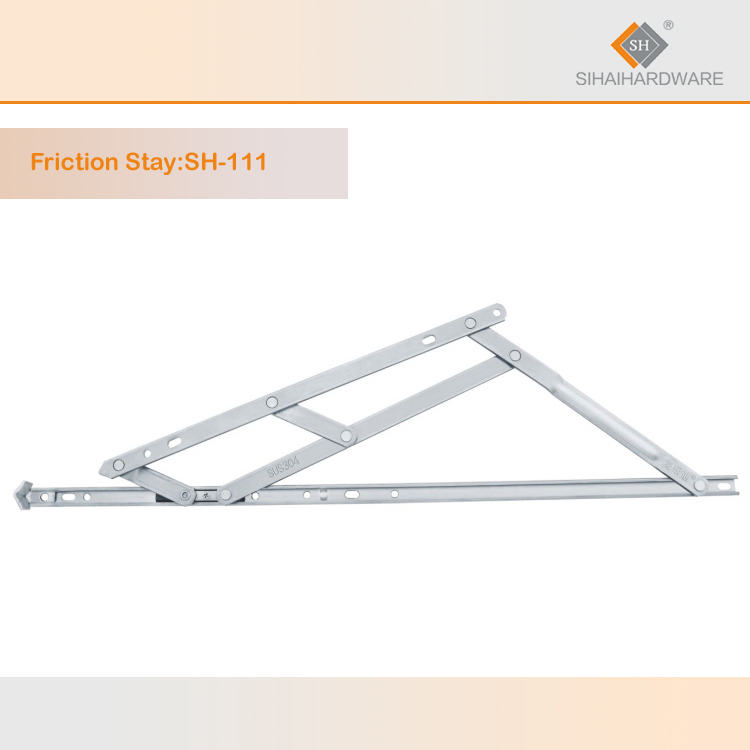
The rivets that connect the arms of a window friction stay to the sliding shoe and sash bracket are designed to remain tight throughout the stay's service life. When a rivet loosens—through cyclic fatigue, corrosion, or a single overload event—the precise geometric relationship between the components changes. The arm can now shift slightly at the joint, altering the angle at which it transmits force to the shoe. This altered angle can cock the shoe within the track, causing it to bind against the track walls. Rivet-induced binding is often inconsistent. It may come and go depending on the direction of loading, the sash angle, and whether wind pressure is acting on the sash. The intermittent nature of the binding can make it difficult to diagnose, but close inspection of the rivet joints will reveal the telltale movement or rust staining that indicates a loose connection.
Frame Settlement and Misalignment
A window is part of a building structure that settles, shifts, and responds to temperature changes over time. When the window frame distorts—even by a small amount—the relationship between the sash and the fixed frame changes. The window friction stay track, mounted to the fixed frame, and the sash bracket, mounted to the moving sash, are now operating in slightly different planes than those for which they were designed. This misalignment forces the sliding shoe to travel at an angle to the track, increasing friction and creating binding points. Frame-related binding is often seasonal, worsening in winter when materials contract and improving in summer when expansion relaxes the misalignment. It may also appear suddenly after a structural event such as foundation settlement, earthquake, or impact damage to the building.
Lack of Lubrication
The sliding surfaces of a window friction stay require a thin film of appropriate lubricant to operate smoothly. The lubricant serves two functions: it reduces wear on the friction pad and track, and it prevents the stick-slip phenomenon that occurs when static friction significantly exceeds kinetic friction. When lubrication is absent—either because it was never applied, or because it has degraded over time—the pad and track interact directly. The result is not necessarily binding in the mechanical interference sense, but a jerky, hesitant motion that users perceive as binding. The window moves in small jumps rather than a smooth glide, and it may stick at certain positions until enough force builds to overcome the static friction. This condition is the easiest to remedy: cleaning the track and applying the correct dry-film lubricant will often restore smooth operation immediately.
Diagnosing the Cause
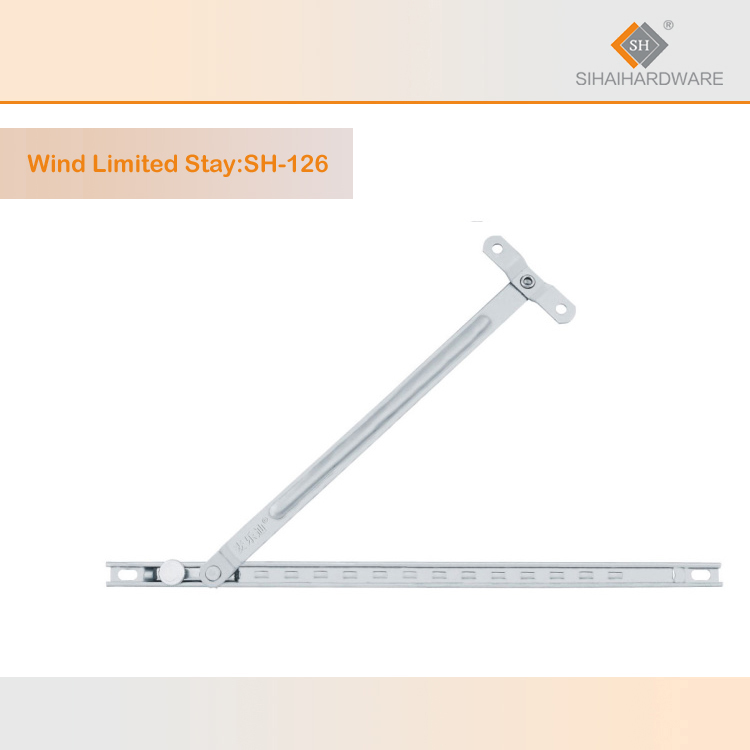
Identifying which mechanism is causing a window friction stay to bind requires systematic observation. Operate the window slowly through its full range, noting exactly where the binding occurs. If it happens at the same position every cycle, the cause is likely track contamination or deformation at that specific location. If it varies with the direction of pressure on the sash—push on the handle versus push on the frame—the cause is likely rivet looseness or frame misalignment. Inspect the track surface under good light for debris buildup, scratches, or deformation around screw holes. Check each rivet for visible movement when the sash is wiggled gently. Assess whether the binding changes seasonally or after weather events. The answers to these observations will point clearly toward the appropriate repair: cleaning, track replacement, rivet repair, frame realignment, or lubrication.
Conclusion
Binding in a window friction stay is not a characteristic to be accepted as normal aging. It is a mechanical symptom with a specific, diagnosable cause. Whether the culprit is track contamination, screw-induced deformation, uneven pad wear, loose rivets, frame misalignment, or simple lack of lubrication, the binding will not resolve itself. Left unaddressed, the forces that cause binding also accelerate wear on every component in the load path, turning a correctable condition into an irreversible failure. The window that catches halfway through its closing arc today is the window that will refuse to close at all tomorrow. Identifying and addressing the cause of binding early preserves both the stay and the window it serves.