-
20-08-2026
ARTICLE NO.182 | How Does a Concealed Hinge Hold a Heavy Door Without Being Seen
A heavy door exerts constant downward force, pulling at its hinges every moment it hangs in place. A surface-mounted hinge displays its load-bearing structure openly—thick leaves, visible screws, and a substantial knuckle that make its strength obvious. Concealed window hinges must achieve the same load capacity while remaining entirely hidden within the frame profile. This requirement—to be strong yet invisible—drives a fundamentally different approach to hinge engineering. The concealed hinge cannot simply be a surface hinge relocated into a cavity. It must be designed from the outset to carry heavy loads through geometry and materials that leave nothing visible when the window is closed.
-
15-07-2026
ARTICLE NO.164 | Why Modern Windows Prefer Concealed Hinges for a Clean Look
The way a window hinge meets the eye has shifted decisively over the past two decades. Where once visible hinge leaves and exposed screw heads were accepted as the necessary mechanics of an operable window, contemporary architecture increasingly treats such visible hardware as a compromise. Concealed window hinges have emerged as the standard specification for modern projects not because surface-mounted hinges stopped working, but because the definition of what a window should look like has changed. Clean sightlines, uninterrupted frames, and the disappearance of mechanical clutter now drive hardware selection as much as load ratings and cycle counts.
-
08-07-2026
ARTICLE NO.161 | Why Would You Choose a Concealed Hinge Over a Standard One?
The choice between standard surface-mounted hinges and concealed window hinges is not simply a matter of appearance. It affects weather sealing, security, maintenance, and the long-term durability of the entire window assembly. While standard hinges have served reliably for generations and remain the cost-effective choice for many applications, concealed hinges offer specific advantages that make them the preferred specification in demanding architectural contexts. Understanding these advantages—and the trade-offs that accompany them—enables an informed decision based on project requirements rather than habit or assumption.
-
05-07-2026
ARTICLE NO.160 | What Is a Concealed Window Hinge? The Hinge That Hides Inside the Frame
When a casement window swings open, the hinges on most windows are plainly visible. They sit on the surface of the frame and sash, their metal leaves and screw heads exposed to view. Concealed window hinges take a different approach. They are designed to disappear entirely within the frame profile when the window is closed, leaving nothing visible from inside or outside. This hidden installation is not merely an aesthetic preference—it changes how the hinge carries loads, how the window seals against weather, and how the hardware is protected from the environment.
-
15-05-2024
ARTICLE NO.54|The Importance of Professional Inspections for Window Friction Stay Hinges: A Maintenance Guide
Window hinges, especially friction stay hinges, play a critical role in the smooth operation and longevity of windows. To ensure their optimal performance and address any potential issues, scheduling professional inspections is crucial. This article highlights the importance of professional inspections for window friction stay hinges, providing guidance on how often these inspections should be scheduled to maintain the functionality and safety of your windows.
-
11-05-2024
ARTICLE NO.51|Some additional details about the different types of aluminum window hinges commonly used in architectural applications
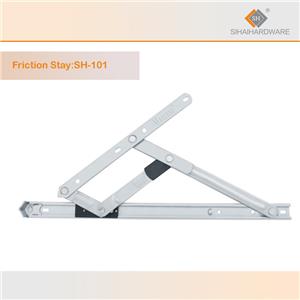
Friction hinges, also known as stay hinges or friction stays, are widely used in aluminum windows. They consist of two plates connected by a friction mechanism that allows the window to be opened and held in position at various angles. The friction can be adjusted to control the opening force and the resistance to window movement. Friction hinges provide smooth operation, excellent stability, and the ability to hold the window in any desired position.