ARTICLE NO.182 | How Does a Concealed Hinge Hold a Heavy Door Without Being Seen
ARTICLE NO.182 | How Does a Concealed Hinge Hold a Heavy Door Without Being Seen
A heavy door exerts constant downward force, pulling at its hinges every moment it hangs in place. A surface-mounted hinge displays its load-bearing structure openly—thick leaves, visible screws, and a substantial knuckle that make its strength obvious. Concealed window hinges must achieve the same load capacity while remaining entirely hidden within the frame profile. This requirement—to be strong yet invisible—drives a fundamentally different approach to hinge engineering. The concealed hinge cannot simply be a surface hinge relocated into a cavity. It must be designed from the outset to carry heavy loads through geometry and materials that leave nothing visible when the window is closed.
The Hidden Load Path
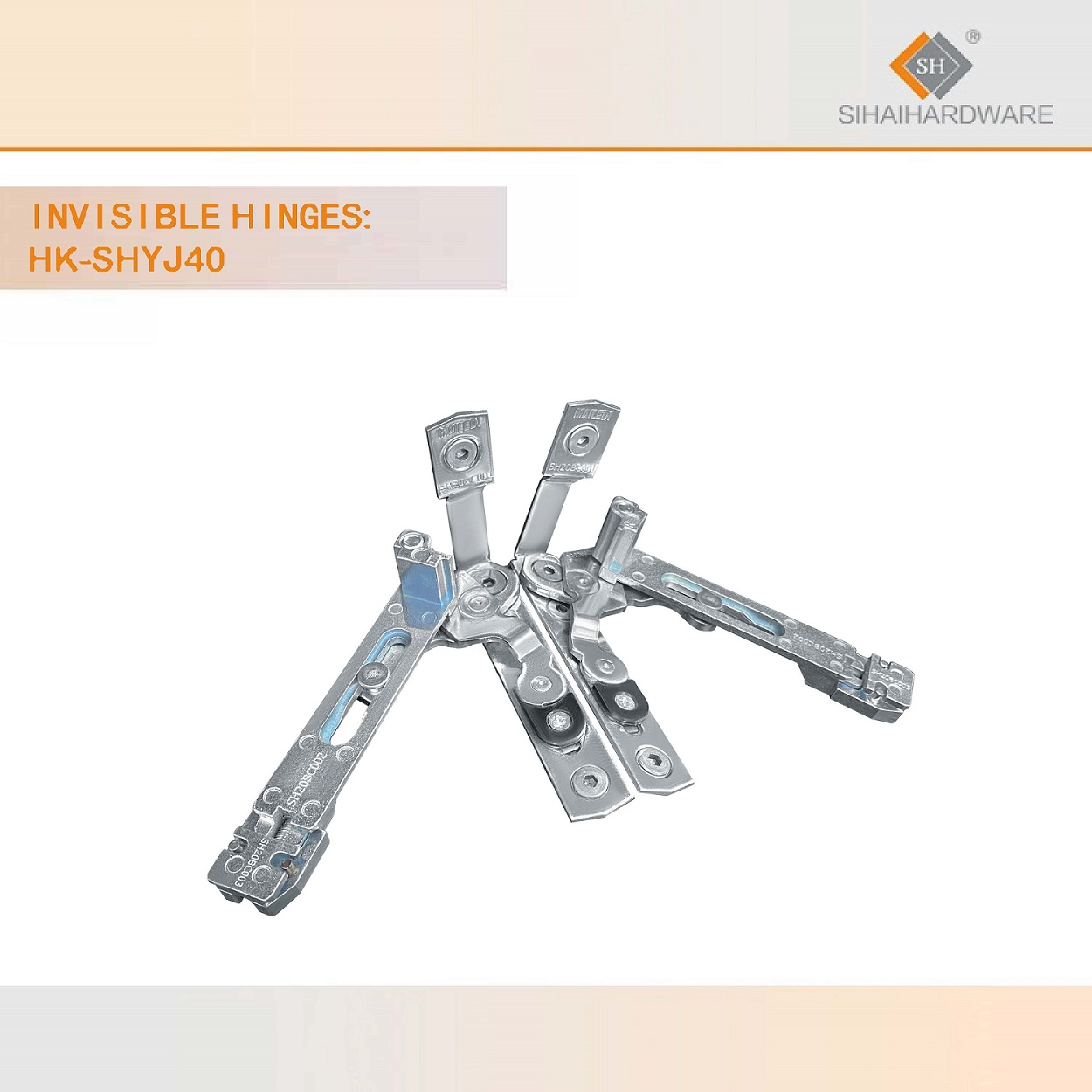
A concealed window hinge transfers the weight of the sash through a load path that runs entirely inside the frame cavity. The sash bracket, recessed into the sash profile, captures the weight of the moving panel. This load travels through the connecting arm mechanism—a series of pivoting links that convert the sash's rotation into controlled movement—and enters the track, which is secured inside the frame extrusion. The track distributes the load along its length, transferring it into the walls of the extrusion rather than concentrating it at surface-mounted fasteners. This load path is deeper and more distributed than that of a surface hinge, which bolts to the visible face of the frame and concentrates stress at each screw point. The concealed hinge's internal load path explains why it can carry heavy doors despite having no visible structural bulk. The strength is in the frame, and the hinge is designed to engage that strength.
The Track as the Hidden Backbone
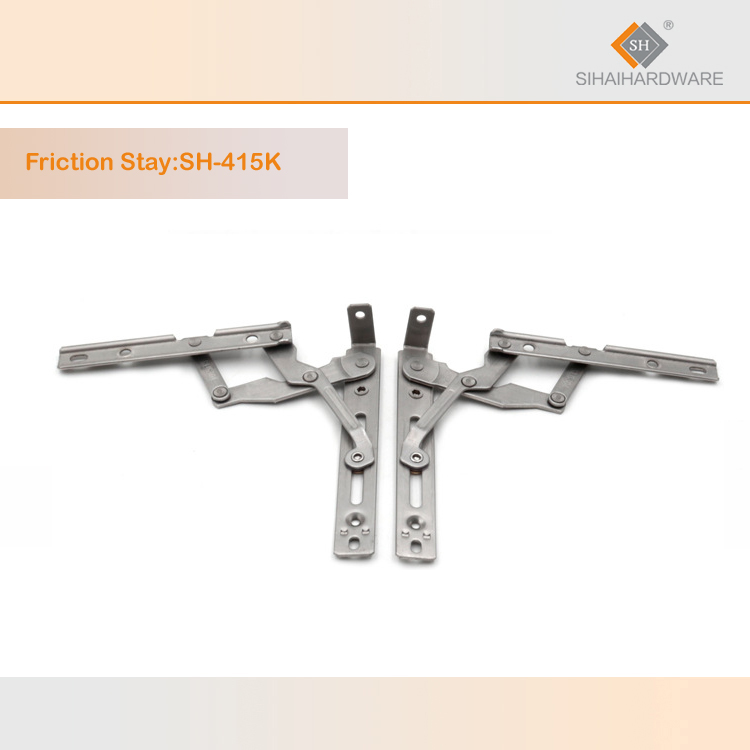
The track inside a concealed window hinge serves as the primary structural element. It is not a simple guide rail. It is an engineered load-bearing component, typically manufactured from hardened stainless steel or high-strength aluminium, with a cross-section designed to resist bending and torsional deformation. The track is installed within a precisely machined slot in the frame profile, where it is supported along its full length by the surrounding extrusion walls. This continuous support distinguishes the concealed hinge from a surface-mounted design, where the hinge leaf is attached only at discrete screw points. The continuous support allows the track to carry heavier loads without the local deformation that would occur if the load were concentrated at a few fasteners. The track also provides multiple mounting points along its length, distributing the door's weight across many load-transfer locations rather than relying on two or three screws at the top and bottom of the hinge.
The Arm Mechanism and Mechanical Advantage
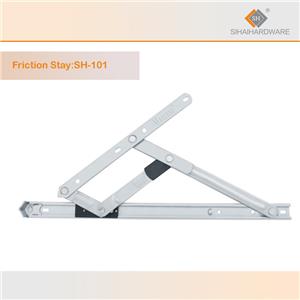
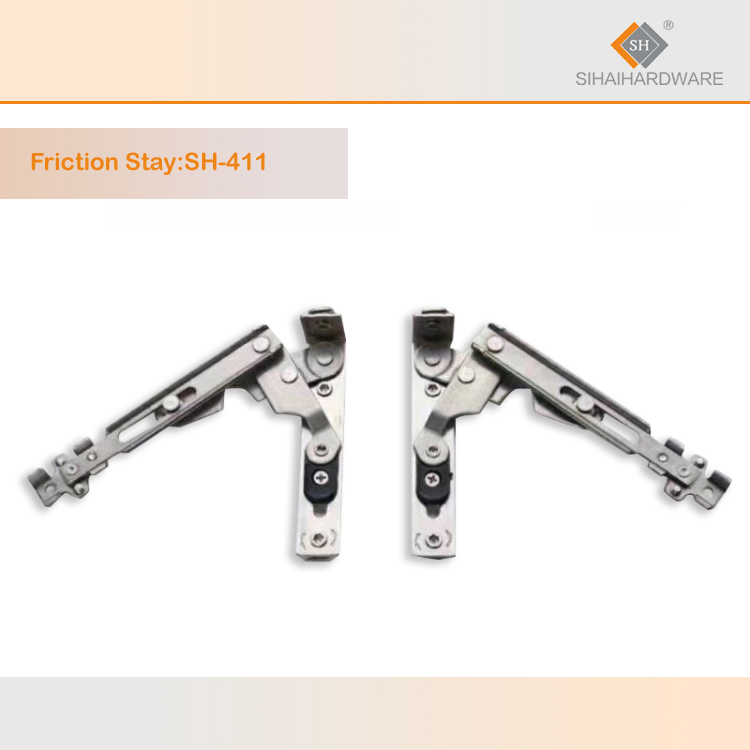
The connecting arm of a concealed window hinge is the moving component that links the sash to the track. In a heavy-duty concealed hinge, this arm is not a single thin link. It is often a complex assembly of multiple pivoting elements arranged to provide mechanical advantage. The geometry of the arm mechanism determines how the sash's weight is translated into forces within the hinge. A well-designed arm mechanism keeps the load vectors aligned with the strongest axes of the track and frame, minimising the bending moments that would otherwise concentrate stress at the pivots. The arm pivots themselves are engineered bearings—hardened steel pins running in precision-machined bushings or needle roller bearings—designed to carry heavy cyclic loads without developing play. The number of pivots, their spacing, and their bearing types are all selected to match the load rating of the hinge.
Material Selection for Invisible Strength
The materials in a concealed window hinge must deliver high strength within a compact, hidden envelope. Stainless steel is the dominant material for the track and arm components. Grades 316 and 304 provide the necessary yield strength and corrosion resistance, with the cold-worked condition increasing strength still further. The pivot pins are typically manufactured from hardened martensitic stainless steel or high-carbon steel with corrosion-resistant coatings, providing the wear resistance needed for millions of cycles. The sash bracket, which must capture the load from the sash and transfer it into the arm mechanism, is often a complex die-cast or investment-cast component. Zinc alloys such as Zamak 5 offer a good balance of strength and formability for this application, while high-specification hinges may use stainless steel investment castings. The material selection reflects a simple principle: every component must carry its share of the load while fitting within the narrow profile of the concealed hinge envelope.
The Frame as the Real Structure
A concealed window hinge relies on the frame itself for much of its strength. The track is only as strong as the extrusion that supports it. This is why concealed hinges are specified as part of an integrated frame system, not as standalone hardware. The frame profile is designed with internal channels, walls, and screw ports specifically shaped to receive the concealed hinge and transfer its load into the larger frame structure. The wall thickness of the extrusion at the hinge mounting location is increased to handle the concentrated load. The screw ports are reinforced with thicker sections or metal inserts to provide secure fastening. This integration explains why concealed hinges cannot be retrofitted into arbitrary frame profiles. The frame must be built from the outset to accommodate the hinge and to participate in the load-carrying function. When correctly integrated, the combined hinge-and-frame system achieves a load capacity that neither component could match alone.
Testing and Certification
Heavy-duty concealed window hinges undergo testing that verifies their hidden strength. Static load tests apply calibrated weights to a test sash, verifying that the hinge holds the specified load without deformation. Cycle tests subject the hinge to tens of thousands of open-close cycles under load, confirming that the bearings and pivots maintain their performance over time. Corrosion tests verify that the materials withstand the intended environment. These tests provide the assurance that the concealed hinge, despite its hidden nature, meets the same performance standards as visible hardware. The certification is the visible evidence of the invisible engineering. When a specifier selects a certified concealed hinge, they are selecting hardware whose load capacity has been independently verified rather than claimed by a manufacturer's marketing material.
Conclusion
Concealed window hinges hold heavy doors through a combination of internal load distribution, continuous frame support, engineered arm geometry, and high-strength materials—all confined within a hidden envelope. The hinge is not simply hidden. It is integrated into the frame, relying on the extrusion as a structural partner. The track distributes the load along its full length. The arm mechanism translates the sash weight into forces aligned with the strongest axes of the system. The materials deliver strength without bulk. The result is a hinge that carries the weight of a heavy door while leaving nothing visible but the clean line of the closed window. The hidden hinge is not weaker than its visible counterpart. It is stronger in a different way—through geometry, integration, and design rather than through visible mass.