ARTICLE NO.176 | How to Store Spare Window Stays Without Damaging Them
ARTICLE NO.176 | How to Store Spare Window Stays Without Damaging Them
A spare window friction stay kept in a storeroom or van is an insurance policy against future hardware failure. When a window stay wears out or is damaged, having a replacement on hand eliminates the delay of ordering and waiting for delivery. But a stay that has been improperly stored can arrive at its installation date in worse condition than the one it replaces. Corrosion, mechanical damage, and contamination can all occur during storage, silently degrading the stay until it is no longer fit for service. Proper storage is simple, costs almost nothing, and ensures that the spare stay performs as intended when it is finally called into service.
Why Storage Matters
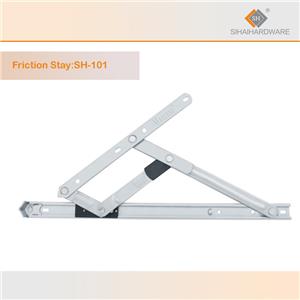
A window friction stay is a precision mechanism. The sliding shoe must travel smoothly along the track. The friction pad must maintain its engineered surface characteristics. The riveted joints must remain tight and free of corrosion. The track must stay straight and flat. Each of these requirements can be compromised by poor storage conditions. Moisture in the storage environment initiates corrosion, particularly at the rivet joints and on the track surface. Physical contact with other hardware items can scratch the track or bend the arms. Dust and airborne contaminants can settle on the lubricated surfaces and form a grinding paste when the stay is eventually operated. Weight placed on top of a stored stay can bend the track or arm assembly. The damage accumulates invisibly, and the first indication of a problem may be when the stay fails to operate smoothly after installation.
The Ideal Storage Environment
The ideal storage environment for a window friction stay is clean, dry, and temperature-stable. The stay should be stored indoors, away from sources of moisture such as exterior doors, windows, or plumbing. Relative humidity should be kept below 60 percent to prevent condensation from forming on metal surfaces. Temperature fluctuations should be minimised, as cycling between warm and cool conditions can cause condensation even when the average humidity is moderate. The storage area should be free of airborne contaminants such as construction dust, chemical fumes, or salt-laden air. A climate-controlled storeroom is ideal, but a clean, dry cupboard or sealed storage container in an interior room is sufficient for most conditions. The key principle is that the storage environment should not be more aggressive than the environment the stay is designed to operate in.
Protection from Physical Damage
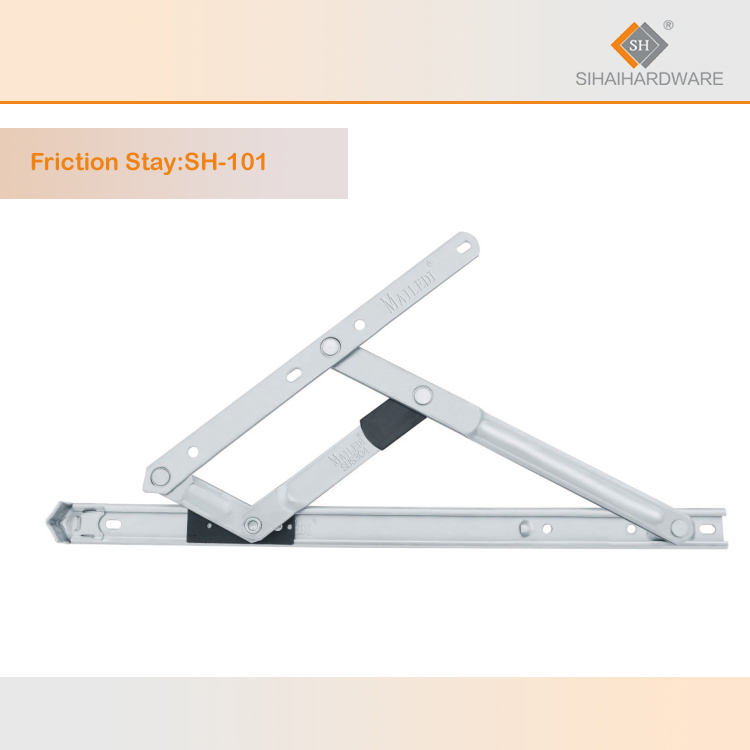
A window friction stay is vulnerable to physical damage during storage because its components are relatively thin and can be bent or deformed by surprisingly small forces. The stay should be stored flat, supported along its full length, with nothing stacked on top of it. If multiple stays must be stored in a stack, they should be separated by layers of cardboard or foam sheet to prevent metal-to-metal contact. The connecting arm assembly should be in the closed or folded position to minimise the risk of the arm being caught and bent. Stays should not be stored loose in a box or bin with other hardware items. Screws, bolts, brackets, and tools can scratch the track surface or strike the arm assembly with enough force to cause a bend. Each stay should be individually protected, ideally in its original packaging, which is designed to support the stay and protect it from contact damage during transit and storage.
Protection from Corrosion
Even stainless steel window friction stay components can corrode in storage if the conditions are unfavourable. The original protective oil or lubricant applied during manufacturing provides some defence, but this can degrade over time or be wiped away by handling. For long-term storage, particularly in humid or coastal environments, additional corrosion protection should be applied. A light coating of a corrosion-inhibiting oil or a vapour-phase corrosion inhibitor product can protect exposed metal surfaces for months or years. The stay should be wrapped in corrosion-inhibiting paper or placed in a sealed plastic bag with a desiccant packet to absorb any moisture trapped inside. Stainless steel stays of different grades should be stored separately to prevent galvanic corrosion if moisture does enter the packaging. A 304 stainless steel stay in contact with a 316 stay will not itself corrode, but if both are in contact with a carbon steel component—a screw or a tool that finds its way into the package—the resulting galvanic cell can damage the stainless surfaces.
Maintaining the Friction Pad
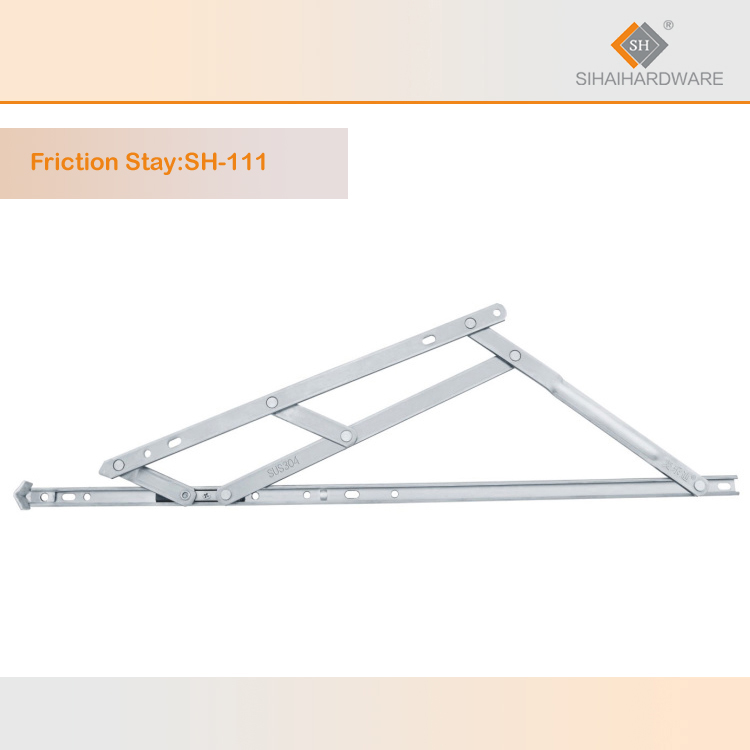
The friction pad in a window friction stay is a consumable component even when the stay is not in use. Polymer-based friction pads can degrade over time through oxidation, UV exposure, or chemical attack from airborne contaminants. The pad surface can harden, crack, or develop a glaze that changes its friction characteristics. Storage in a dark, sealed container eliminates UV exposure. Keeping the container away from sources of ozone—electric motors, fluorescent light ballasts, and some air purification equipment—protects rubber and polymer components from ozone cracking. The lubricant on the pad and track should not be removed before storage, as it provides a protective film. If the original lubricant has been cleaned off during handling, a fresh application of the manufacturer's specified lubricant before storage will protect the pad and track surfaces.
Organisation and Identification
A stored window friction stay that cannot be identified when needed might as well not exist. Each stay should be labelled with its specification—length, weight rating, material grade, and any relevant standard numbers. The label should be attached to the packaging, not directly to the stay, to avoid adhesive residue on the metal surfaces. If multiple sizes or types are stored, they should be organised so that the correct stay can be retrieved without disturbing the others. A simple inventory list showing the location, quantity, and specification of each stored stay prevents the wrong hardware from being installed. Installation of a stay with the wrong load rating or dimensions can be worse than no stay at all, creating a false sense of security while the hardware is inadequate for the sash it supports.
Pre-Installation Inspection
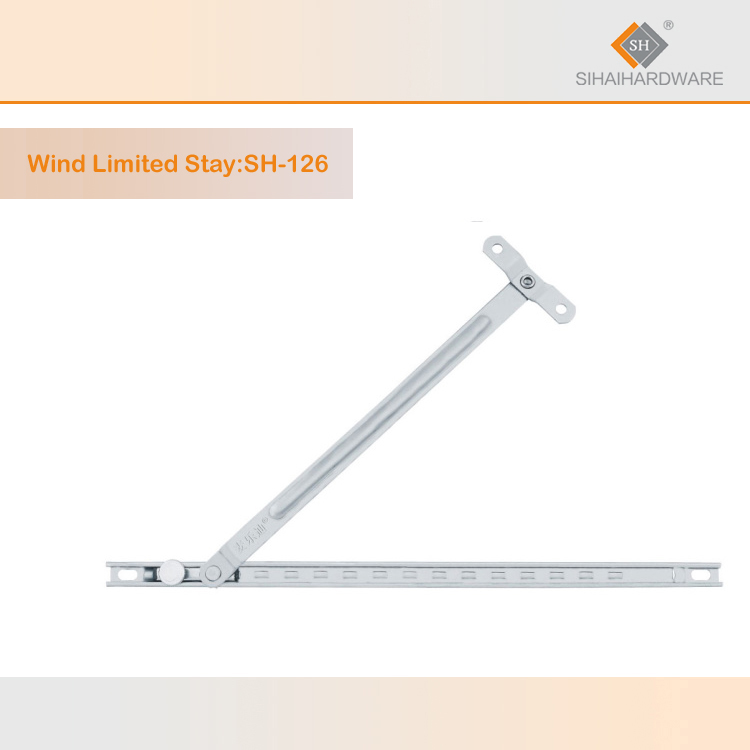
A window friction stay that has been in storage should be inspected before installation, regardless of how carefully it was stored. The inspection should verify that the track is straight, the sliding shoe moves smoothly through its full range, the rivets are tight and free of corrosion, and the friction pad generates consistent resistance. Any sign of corrosion, however minor, should be addressed before installation. Surface rust can be cleaned with a stainless steel cleaner and a soft cloth. The stay should be cycled through its full range of motion several times to distribute the lubricant and confirm smooth operation. If the stay shows any functional deficiency—binding, inconsistent friction, loose rivets—it should not be installed. A stored stay that fails pre-installation inspection is a disappointment. A stay that fails after installation is a callback, a warranty claim, and potentially a safety hazard.
Conclusion
Storing a spare window friction stay correctly is an investment of minutes that pays off in reliable hardware when it is needed. The requirements are simple: a clean, dry, temperature-stable environment; protection from physical contact with other items; corrosion protection appropriate to the storage duration and environment; and clear labelling for identification. A stay stored according to these principles will emerge from its packaging in the same condition it entered, ready to perform as designed. A stay thrown into a damp toolbox or wedged behind other hardware in an unheated shed may look acceptable but carry hidden damage that turns a straightforward replacement into a repeated failure. In hardware storage, as in hardware specification, the details that are easiest to overlook are the ones that determine performance.