ARTICLE NO.175 | Why Your Window Stay Is Hard to Move After Painting
ARTICLE NO.175 | Why Your Window Stay Is Hard to Move After Painting
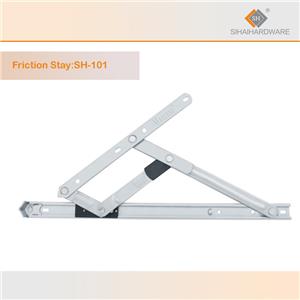
Painting a window frame is a routine maintenance task that can unexpectedly disable the hardware. The window friction stay is particularly vulnerable because its mechanism operates with tight clearances and depends on clean, uncontaminated surfaces to function. A single careless pass with a paintbrush can deposit paint where it does not belong, transforming a smoothly operating stay into a stiff, jerky, or completely immovable mechanism. Understanding where paint causes problems, how to prevent paint contamination, and what to do when paint has already found its way into the stay can save both the hardware and the window from permanent damage.
Where the Paint Goes
When a window frame is painted, the window friction stay is exposed to paint in three ways. The most obvious is direct application: the painter paints over the stay track, the sliding shoe, or the rivet joints because masking was inadequate or omitted entirely. The second is paint migration into the narrow gap between the track and the frame. Even if the stay itself is masked, paint applied to the adjacent frame surface can flow along the edge of the masking tape and wick into the track slot by capillary action. The third is overspray, where atomised paint droplets from spray application settle onto the stay surfaces, creating a fine, even coating that may not be immediately visible but is thick enough to interfere with the sliding shoe's movement. Each of these contamination paths produces a different type of problem, and each requires a different approach to correct.
Paint in the Track Slot
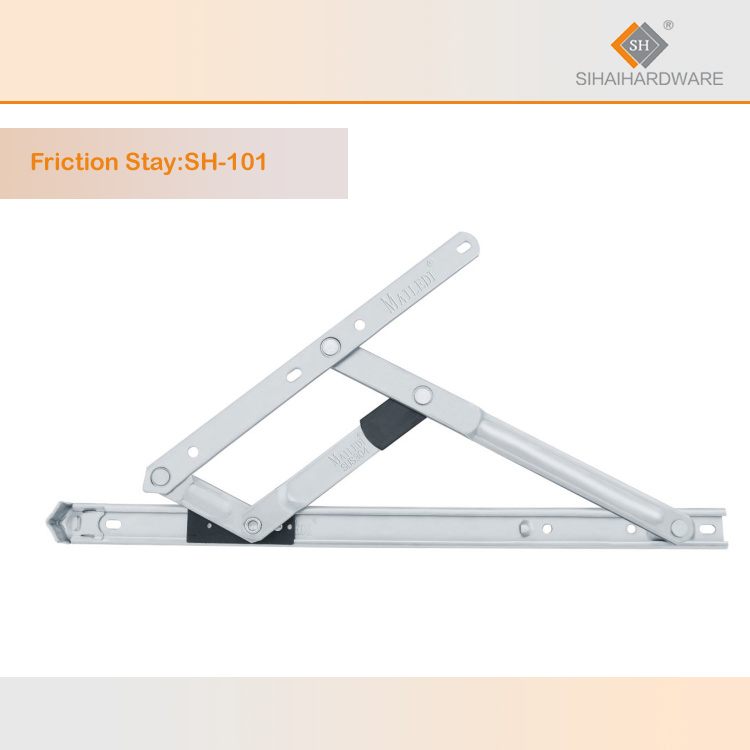
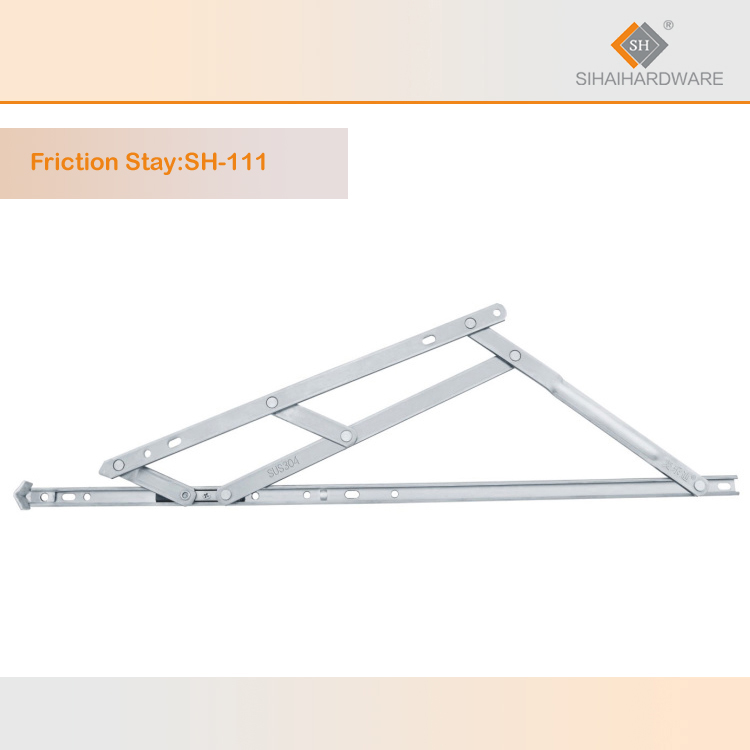
The track slot is the groove in which the sliding shoe of the window friction stay travels. It is a precision channel with carefully controlled width and surface finish. Paint that enters this slot—whether from direct brushing, capillary migration, or overspray—reduces the available width. The shoe, designed to run with a running clearance measured in tenths of a millimetre, now encounters a narrower passage. The friction pad, which should contact only the designated running surfaces, now drags against paint deposits on the slot walls. The result is dramatically increased operating force. The window becomes stiff to open and close, and the user must apply significantly more effort than the stay was designed to require. In severe cases, where paint has accumulated in thick layers at specific points, the shoe may jam completely, preventing the window from moving past that position.
Paint on the Friction Pad
The friction pad inside the sliding shoe of a window friction stay is engineered to provide a specific coefficient of friction against the stainless steel track. Its surface texture, material composition, and hardness are all selected to generate consistent, predictable holding force throughout the stay's service life. Paint that contaminates the friction pad changes its surface characteristics completely. A thin film of dried paint on the pad surface can either increase or decrease friction, depending on the paint chemistry, but in either case the result is a stay that no longer performs as designed. Paint that increases friction makes the stay stiff and difficult to operate. Paint that decreases friction reduces the holding force, allowing the sash to drift from its set position. Once paint has bonded to the friction pad material, it is extremely difficult to remove without damaging the pad. The solvents that dissolve paint also attack many polymer friction pad materials. Mechanical removal—scraping or sanding—alters the pad surface and changes its friction characteristics. A paint-contaminated friction pad often requires replacement of the entire sliding shoe assembly.
Paint in the Rivet Joints
The riveted connections in a window friction stay rely on clean metal-to-metal contact between the connected layers. Paint that penetrates into a rivet joint can act as an adhesive, bonding the layers together in a way that prevents the slight relative movement the joint design requires. When the stay is operated, the paint bond must be broken before the joint can move, resulting in a characteristic cracking sound and a sudden release of resistance. Alternatively, paint can act as a spacer, holding the riveted layers slightly apart and reducing the clamping force that keeps the joint tight. Over time, the reduced clamping force allows the rivet to work loose, introducing play into the mechanism. Paint in rivet joints is particularly difficult to remove because the joint geometry prevents access to the contaminated surfaces. Disassembly is usually required, and in many cases the rivets must be drilled out and replaced.
Prevention During Painting
Preventing paint contamination of a window friction stay is far easier than correcting it. The stay should be completely masked before any painting begins. Masking tape must be applied carefully to the edges of the stay, pressed firmly into the junction between the stay and the frame to prevent paint migration underneath. The entire stay assembly—track, shoe, arms, and rivets—should be covered. For spray application, masking must extend well beyond the stay to capture overspray, as atomised paint can travel surprising distances. If the stay can be removed from the frame without difficulty, this is the safest approach. A removed stay eliminates any possibility of contamination and can be safely stored until painting is complete and all paint is fully cured. If removal is impractical, the stay should be operated through its full range of motion immediately after unmasking, before any paint that may have migrated has time to cure. This can help break any thin paint films that have formed in the track slot before they harden completely.
Correcting Paint Contamination
If a window friction stay has already been contaminated with paint, the correction method depends on the type and extent of contamination. For light overspray that has not fully cured, a solvent-dampened cloth wiped along the track surfaces may remove the paint without damaging the stay. The solvent must be selected carefully: it must dissolve the paint without attacking the friction pad material or the stay's lubricant. Mineral spirits are generally safe for stainless steel but should be tested on an inconspicuous area first. For heavier paint deposits in the track slot, a wooden or plastic scraper can be used to remove the bulk of the paint, followed by solvent cleaning of the residue. Metal scrapers must never be used, as they will scratch the track surface. For paint that has cured hard and resists solvent removal, replacement of the affected components—or the entire stay—is often more cost-effective than attempting to restore paint-contaminated hardware. The labour required to clean a severely painted stay frequently exceeds the cost of a new unit.
Long-Term Effects of Paint Exposure
Even when paint contamination of a window friction stay appears to have been successfully cleaned, the stay may have suffered permanent changes. The solvents used to remove paint can strip the lubricant from the track and shoe, leaving the surfaces unprotected. If not re-lubricated with the correct dry-film lubricant, the stay will operate with increased friction and accelerated wear. Paint that has been scraped from the track may have left microscopic scratches that increase surface roughness and provide anchor points for future contamination. The cleaning process itself may have introduced abrasive particles or solvent residues that continue to affect performance. After any paint remediation, the stay should be thoroughly cleaned, correctly lubricated, and tested through its full range of motion. If the stay does not return to smooth, consistent operation, it should be replaced.
Conclusion
A window friction stay that is hard to move after painting is a stay that has been contaminated by paint in one or more critical areas. The track slot, the friction pad, and the rivet joints are each vulnerable, and each produces a different type of operational problem. Prevention through careful masking or removal is the most reliable approach. When prevention fails, prompt action before the paint fully cures offers the best chance of successful remediation. Once paint has fully hardened, particularly in the friction pad or rivet joints, replacement is often the practical choice. The lesson for anyone painting around window hardware is straightforward: the time spent masking a friction stay is measured in minutes. The time spent correcting paint contamination, or replacing a paint-damaged stay, is measured in hours and costs far more than the masking tape that would have prevented it.