ARTICLE NO.173 | How to Choose a Handle That Matches Your Door Thickness
ARTICLE NO.173 | How to Choose a Handle That Matches Your Door Thickness
A door handle must do more than look right and feel comfortable in the hand. It must fit the door on which it is installed, and the most critical dimension in that fit is the door thickness. A handle designed for a 35-millimetre door will not necessarily work on a 44-millimetre door, and attempting to force the fit creates problems ranging from poor operation to complete functional failure. Matching the handle to the door thickness is not complicated, but it requires understanding which dimensions matter, how the spindle interacts with the door, and what adjustments are available when standard sizes do not align.
Why Door Thickness Matters
The thickness of the door determines the distance between the two sides of the handle assembly. The handles are mounted on opposite faces of the door, connected by a spindle that passes through the lock body or latch mechanism. For the handles to operate correctly, the spindle must engage both handles to the correct depth, and the handles must sit flush against the door faces without being forced into a position that preloads the mechanism. If the door is too thick for the handle set, the spindle may not reach far enough into one or both handles, resulting in inadequate engagement and a handle that slips or disengages during use. If the door is too thin, the spindle may bottom out in the handle sockets before the handles are tight against the door face, leaving the handles loose and rattling. In both cases, the handle feels wrong and operates unreliably.
Standard Door Thicknesses
Most residential interior doors are 35 millimetres thick. Exterior doors are typically 44 millimetres, and some high-security or fire-rated doors can be 54 millimetres or more. European and British standards have historically used 35 millimetres for interiors and 44 millimetres for exteriors, while older buildings may have non-standard door thicknesses that do not match any current standard. The handle must be specified to match the actual measured thickness of the door, not an assumed standard. Measuring the door thickness with calipers or a precise rule, at the point where the handle will be mounted, is the essential first step.
Spindle Length and Engagement
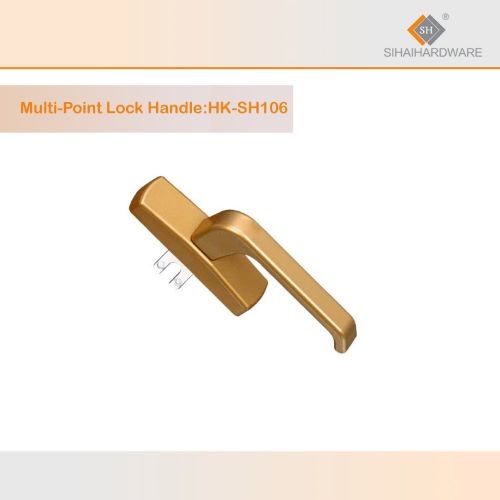
The spindle is the component that most directly determines whether a handle will fit a given door thickness. The spindle must be long enough to span the door thickness plus the depth of the handle sockets on both sides, with enough additional length to ensure full engagement of the square or splined section into each handle. Standard spindle lengths are typically available in increments that correspond to common door thicknesses. A spindle that is too short can sometimes be replaced with a longer one without changing the handles themselves, provided the handles accept a standard spindle profile. Some handle designs incorporate a floating spindle that self-adjusts to the door thickness within a certain range. These designs use spring-loaded mechanisms or sliding collars that accommodate minor variations in door thickness without requiring different spindle lengths.
Backplate and Rose Fit
The rose or backplate of a handle must sit flat against the door surface. If the door is significantly thicker or thinner than the handle design anticipates, the angle at which the rose meets the door changes. On a thin door with a handle designed for a thicker one, the roses may not draw tight against the door face before the internal mechanism bottoms out. On a thick door with a handle designed for a thinner one, the roses may need to be forced against the door, placing the internal springs and spindle under constant tension. This preload accelerates wear on the return springs and can cause the handle to feel stiff or to fail to return to its rest position. Some handle designs include adjustable roses that can be set to different depths to accommodate a range of door thicknesses, but this adjustment has limits and must be verified against the actual door measurement.
Through-Bolt and Screw Length
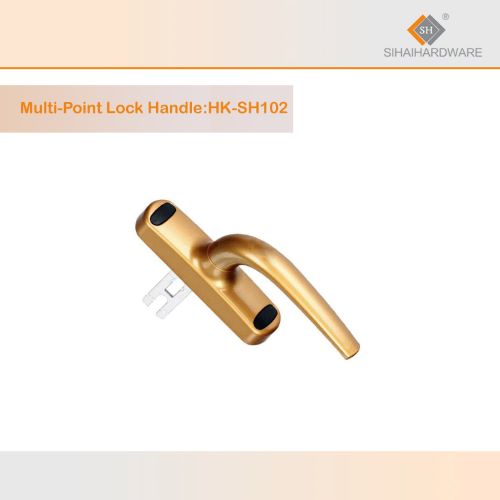
Handles that use through-bolts—long screws that pass all the way through the door and thread into the opposite handle—are particularly sensitive to door thickness. The bolts must be long enough to engage the opposite handle but not so long that they bottom out before the handles are tight. Through-bolts are typically supplied in lengths matched to standard door thicknesses, and using bolts intended for a 35-millimetre door on a 44-millimetre door will result in insufficient thread engagement. Conversely, using bolts that are too long will leave the handles loose. Some manufacturers supply multiple bolt lengths with a single handle set, allowing the installer to select the appropriate length for the specific door.
Adjustment Mechanisms and Their Limits
Many modern handle designs incorporate adjustment features that extend their compatibility across a range of door thicknesses. Split spindles, threaded roses that can be wound in or out, and spring-loaded spindle extensions all allow a single handle model to fit doors of different thicknesses. However, these adjustments have defined limits. A handle that adjusts from 35 to 44 millimetres will not fit a 54-millimetre door, no matter how the adjustments are set. The manufacturer's specified thickness range is a hard limit, not a suggestion. Exceeding it, even by a few millimetres, results in the problems described above—inadequate spindle engagement, preloaded mechanisms, or handles that cannot be tightened against the door face.
Measuring and Matching Step by Step
Selecting a handle that fits begins with a precise measurement of the door thickness at the point where the handle will be installed. This measurement should be taken with the door closed, using a caliper if available, and recorded in millimetres. The second step is to verify the lock or latch case dimensions, as the spindle hole through the lock body must align with the handle spindle height. The third step is to select a handle model whose specified thickness range includes the measured door thickness, with a margin of at least 2 millimetres on either side to accommodate manufacturing tolerances in both the door and the handle. The fourth step is to verify that the spindle length, whether fixed or adjustable, is appropriate for the door thickness. Finally, during installation, the handles should draw up firmly against the door faces without forcing, and the spindle should engage both handles to a depth of at least 8 to 10 millimetres. If any of these conditions cannot be met, the handle is not the correct model for that door.
Conclusion
A door handle that does not match the door thickness will never feel right and will never operate reliably. The spindle will slip, the roses will not sit flush, the return springs will work against a constant preload, and the handle will fail early. Matching the handle to the door requires nothing more than measuring the door accurately, understanding the three or four critical dimensions that determine fit, and selecting a handle whose specified range includes the measured thickness with room to spare. This is not a matter of brand or price. A correctly specified budget handle on the right door will outperform an incorrectly specified premium handle every time. The fit between the handle and the door is the foundation on which all other handle performance rests.