ARTICLE NO.172 | Why Your Handle Turns but the Door Won't Open
ARTICLE NO.172 | Why Your Handle Turns but the Door Won't Open
You press the lever down. The handle moves through its full arc with normal resistance. The familiar click of the latch retracting reaches your ears. Yet when you push or pull, the door refuses to budge. The handle has done its job—or at least it has gone through the motions—but somewhere between the lever and the latch, the mechanical chain has broken. This situation is both frustrating and diagnostically specific. The fact that the handle moves normally narrows the possible causes to a defined set of mechanical failures, each located at a different point in the path from hand to bolt.
The Handle Spindle: The First Link in the Chain
The spindle is the square or splined shaft that connects the handle lever to the lock body or latch mechanism. When the handle turns, the spindle rotates, and this rotation operates the mechanism inside the lock. If the spindle is intact and correctly engaged, the handle movement transfers directly to the lock. If the spindle is broken, stripped, or too short, the handle turns but the spindle does not transmit the rotation. A broken spindle typically occurs at the point where it exits the lock body, where the highest torsional stress concentrates. A stripped spindle—one where the square section has been rounded off by wear or by a loose handle repeatedly operated under load—allows the handle to rotate around the spindle rather than turning it. A spindle that is too short may partially disengage from the lock body when the handle is mounted, engaging enough to move the handle return spring but not enough to operate the lock mechanism. Spindle problems are the most common cause of a handle that turns without opening the door, and they are usually the easiest to diagnose: remove the handle and inspect the spindle ends for rounding, cracking, or inadequate engagement length.
The Lock Body: Where the Motion Should Become Action
When the spindle is sound and the handle still turns without opening the door, the next point of investigation is the lock body itself. The lock body contains the mechanism that converts the spindle's rotation into movement of the latch bolt and any additional locking points. Inside a typical multipoint lock, a gear or cam driven by the spindle engages a series of sliding bars that retract the hooks, rollers, or deadbolts around the door perimeter. If this gear has stripped, if the cam has worn, or if one of the internal links has broken, the spindle rotates but the lock mechanism does not respond. This failure often announces itself with a change in the feel of the handle—it may turn more freely than normal, with less resistance, because it is no longer driving the lock mechanism against its springs. In some cases, the lock body fails in a partially engaged state, where the latch bolt retracts but the locking points remain extended, holding the door closed. Lock body failures generally require replacement of the entire lock mechanism.
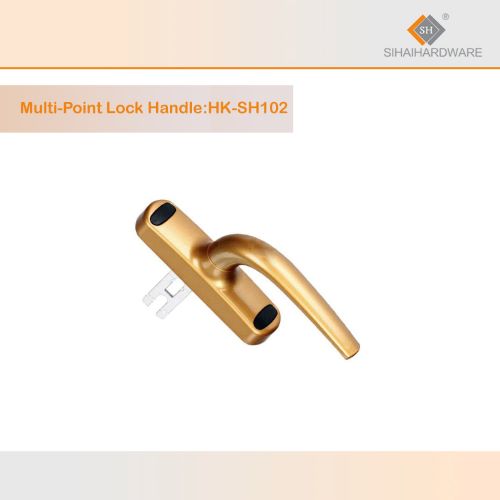
The Latch Bolt: Stuck in the Strike Plate
A handle that turns and retracts the latch bolt should release the door. But if the latch bolt retracts and the door still will not open, the problem is not with the handle or the lock body—it is with the relationship between the latch bolt and the strike plate. The most common cause is misalignment. If the door has sagged, the latch bolt may no longer align with the strike plate opening. The bolt retracts when the handle is turned, but the door remains wedged against the strike because the misalignment prevents the bolt from clearing the plate edge. This condition can often be identified by observing the gap between the door edge and the frame: an uneven gap, wider at the bottom than the top, indicates door sag. A less common but equally frustrating cause is a strike plate that has loosened and shifted, partially blocking the bolt even when retracted. Tightening or repositioning the strike plate resolves this. In some cases, paint or varnish buildup on the strike plate or the bolt itself creates enough friction to hold the door closed even after the bolt is retracted.
The Door Warping Factor
Door warping creates a particular kind of failure in which the handle and lock function perfectly but the door still will not open. A warped door does not sit flat against the frame. Even with the latch bolt fully retracted, the warped section of the door binds against the frame, holding it closed by friction and mechanical interference. This condition often develops gradually, with the door becoming progressively harder to open over weeks or months before finally refusing to open at all. The handle operates normally throughout this progression. The problem is not in the hardware but in the door leaf itself. Warping can be caused by moisture absorption in timber doors, thermal distortion in uPVC doors, or physical damage that has bent the door out of plane. A warped door may require adjustment of the hinges, planing of the door edge, or in severe cases, replacement of the door leaf.
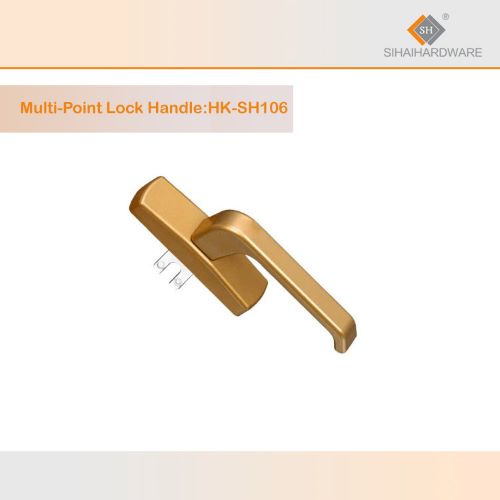
Multi-Point Locking System Failures
Doors equipped with multi-point locking systems present additional failure modes where the handle turns but the door remains secured. These systems use a central gearbox operated by the handle to drive locking points at the top, bottom, and sometimes the middle of the door. If one of these locking points jams—a hook that has seized in its guide, a roller that has come loose, a shoot bolt that has bent—the entire mechanism can lock up. The handle may still turn because the gearbox has some internal free play, but the jammed locking point prevents the door from opening. In some cases, the handle may move partially through its travel before stopping abruptly as the free play is taken up and the jammed component resists further movement. In other cases, the jam is subtle enough that the handle completes its full travel, but one locking point remains partially engaged, catching on the strike plate and holding the door closed.
Diagnosing the Problem Step by Step
Systematic diagnosis of a handle that turns without opening the door follows a logical sequence. First, remove the handle and inspect the spindle. If the spindle is damaged or too short, replace it. If the spindle is sound, reinstall the handle and operate it while observing the latch bolt through the gap between door and frame. If the bolt retracts, the problem is door alignment or warping. If the bolt does not retract, the problem is inside the lock body. If the door has a multi-point locking system, check whether the handle moves through its full travel or stops partway. A partial travel suggests a jammed locking point. Check the door for visible sag by measuring the gap between door and frame at the top and bottom on the latch side. An uneven gap indicates hinge wear or door warping. This systematic approach isolates the failure to a specific component, avoiding the wasted effort of replacing parts that are not at fault.
Conclusion
A handle that turns but fails to open the door is not a mystery. It is a symptom with a finite set of possible causes, each located at a specific point in the chain from lever to latch. The spindle may be broken or stripped. The lock body may have failed internally. The latch bolt may be aligned incorrectly with the strike plate. The door itself may be warped. In a multi-point system, a single jammed locking point may hold the entire door closed. Identifying which link in the chain has broken requires nothing more than systematic observation—remove, inspect, operate, and observe. The answer is there, and it is almost always simpler than the frustration of the stuck door suggests.