ARTICLE NO.161 | Why Would You Choose a Concealed Hinge Over a Standard One?
ARTICLE NO.161 | Why Would You Choose a Concealed Hinge Over a Standard One?
The choice between standard surface-mounted hinges and concealed window hinges is not simply a matter of appearance. It affects weather sealing, security, maintenance, and the long-term durability of the entire window assembly. While standard hinges have served reliably for generations and remain the cost-effective choice for many applications, concealed hinges offer specific advantages that make them the preferred specification in demanding architectural contexts. Understanding these advantages—and the trade-offs that accompany them—enables an informed decision based on project requirements rather than habit or assumption.
The Aesthetic Argument
The most immediately obvious reason to choose concealed window hinges is visual. A window equipped with concealed hinges presents clean, uninterrupted lines from both inside and outside. No hinge leaves break the plane of the frame. No screw heads dot the visible surfaces. No protruding knuckles interrupt the shadow lines of the sash meeting the frame. In contemporary architecture, where minimalism and visual simplicity are often central design principles, the absence of visible hardware allows the window to function as a transparent aperture rather than a mechanical assembly. This aesthetic is particularly valued in high-end residential projects, boutique commercial spaces, and heritage renovations where modern hardware on a traditional window would appear anachronistic. The concealed hinge provides modern performance without visible intrusion.
Weather Sealing Continuity
A standard surface-mounted hinge creates an unavoidable interruption in the window's weather seal. The hinge leaf must pass from the frame to the sash, crossing the line of the gasket or seal. The seal must either be cut to accommodate the hinge, leaving a potential air and water path, or compressed beneath the hinge leaf, creating uneven sealing pressure that can relax over time. Concealed window hinges eliminate this problem by residing entirely within the frame cavity. The weather seal runs continuously around the full sash perimeter without any breaks or deviations. This continuous seal improves resistance to air infiltration and water penetration, contributing to better energy performance and reduced risk of water damage within the frame. For buildings targeting passive house certification, net-zero energy performance, or simply superior occupant comfort, this sealing advantage can be decisive.
Security Enhancement
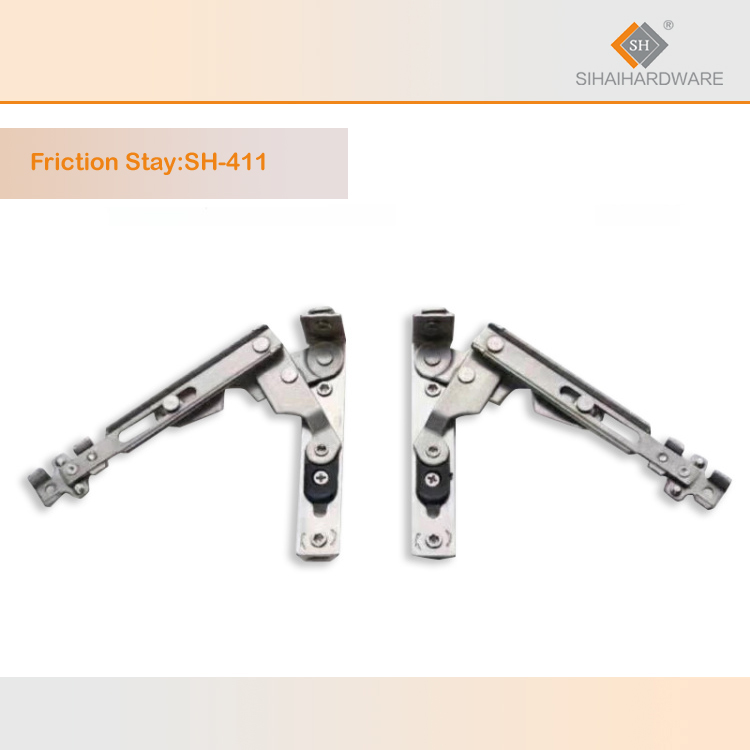
Security is another domain where concealed window hinges outperform their exposed counterparts. A standard hinge on an outward-opening window presents visible and accessible fasteners. The hinge pin can be attacked with a hammer and punch. The exposed screws can be removed with common tools. While determined intruders have many potential entry points, an exposed hinge represents one of the more vulnerable. A concealed hinge, recessed entirely within the frame with no visible fasteners when the window is closed, removes this vulnerability. The hinge cannot be tampered with without first forcing the window open, which would require overcoming the locking mechanism and creating visible, audible evidence of forced entry. For ground-floor windows, accessible balcony doors, and any opening reachable without a ladder, this inherent security feature can satisfy insurance requirements or simply provide peace of mind.
Protection from the Environment
Standard hinges live on the outside of the frame. They are exposed to rain, ultraviolet radiation, airborne salt, urban pollutants, and the condensation that forms on cold metal surfaces. Over years of exposure, even quality stainless steel hinges can develop surface corrosion, particularly around screw heads and at the knuckle joints where moisture lingers. Concealed window hinges are protected within the frame cavity. They are shielded from direct rain and sun. They operate in a more stable thermal environment, reducing condensation formation. This protection translates directly to longer service life and more consistent performance. In coastal environments, where salt-laden air accelerates corrosion of exposed hardware, the protective advantage of concealed hinges is particularly significant. A concealed hinge in marine-grade stainless steel, operating within the protected frame cavity, can outlast an exposed hinge of the same material by a considerable margin.
The Cost and Complexity Trade-Off
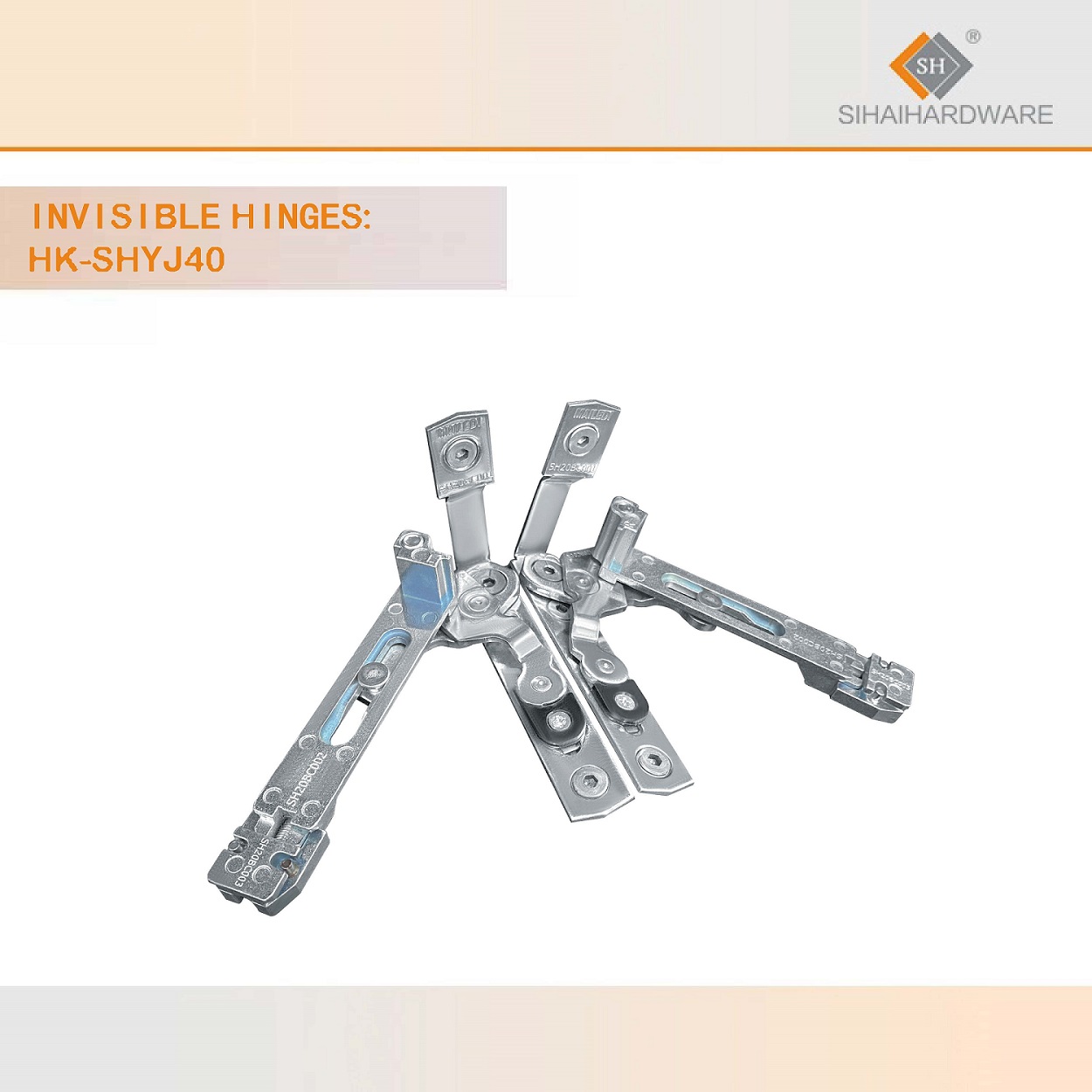
Choosing concealed window hinges involves accepting certain costs and complexities that standard hinges avoid. The hinges themselves are typically more expensive than equivalent-quality surface-mounted alternatives. The frame profiles must be designed or machined to accept the concealed mechanism, adding a manufacturing step that standard surface-mounted hinges do not require. Installation demands greater precision, as the concealed hinge has less tolerance for misalignment than an exposed hinge whose position can be adjusted after mounting. Replacement of a failed concealed hinge is more involved and may require sash removal. These factors make concealed hinges a more expensive choice both in initial cost and in long-term maintenance complexity. For projects where budget is the primary constraint and the advantages of concealed hinges are not required by code or performance specification, standard hinges remain a rational and reliable choice.
Architectural Context and Code Requirements
In some contexts, concealed window hinges are not a preference but a requirement. Certain historic district regulations prohibit visible modern hardware on traditional window styles, and concealed hinges allow contemporary performance without visible anachronism. Some security specifications for government or institutional buildings mandate that no window hardware fasteners be accessible from the exterior, a requirement that concealed hinges satisfy inherently. High-performance building standards increasingly demand continuous air seals, which standard hinges interrupt. In these contexts, the choice between concealed and standard hinges has already been made by the project requirements. The specifier's task is not to choose, but to select a concealed hinge of appropriate quality and capacity.
Conclusion
The choice between standard hinges and concealed window hinges comes down to priorities. If initial cost and installation simplicity are the dominant concerns, and the windows are not subject to extreme weather exposure or elevated security requirements, standard surface-mounted hinges continue to offer proven performance at the lowest price point. If design aesthetics, weather sealing integrity, long-term corrosion resistance, or security against external tampering are higher priorities, concealed hinges justify their additional cost through measurable performance improvements. The concealed hinge is not universally superior—it is a specialised solution for applications that demand what it uniquely provides. Understanding what those applications are, and honestly assessing whether a given project falls within them, is the essence of good hardware specification.