ARTICLE NO.156 | Can a Window Stay Be Too Long for Your Window Frame?
ARTICLE NO.156 | Can a Window Stay Be Too Long for Your Window Frame?
A window friction stay is often chosen by matching its length to the window sash dimensions. A wider sash calls for a longer stay, or so the standard guidance suggests. But this relationship has limits, and exceeding them creates problems that are easy to miss during specification and immediately obvious once the window is installed. A stay that is too long will not simply perform poorly—it may not fit within the frame profile at all, or it may create interference that damages both the stay and the window. Understanding the constraints that govern maximum stay length is essential for anyone selecting hardware for new windows or troubleshooting problems with existing installations.
How Stay Length Is Measured
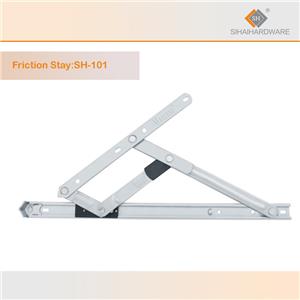
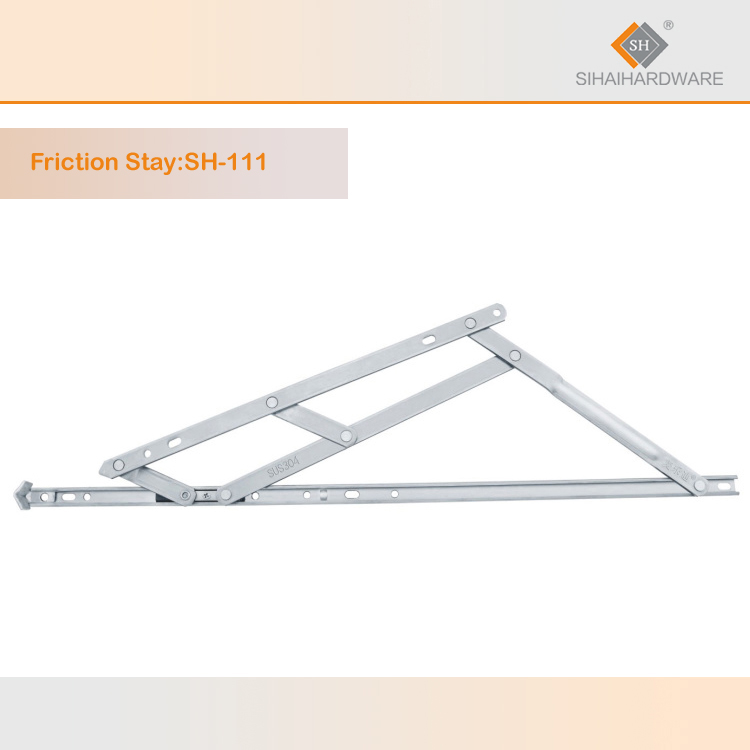
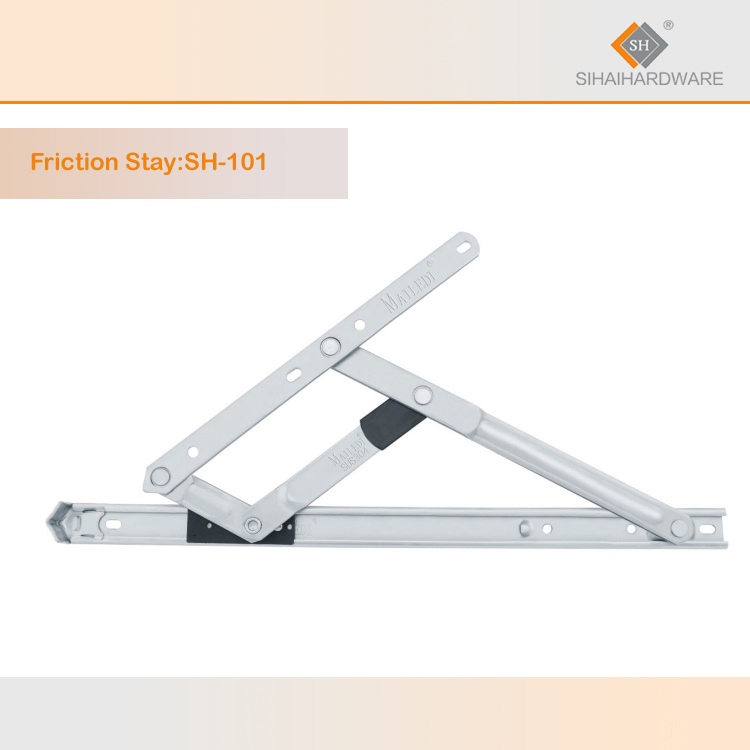
The length of a window friction stay is typically specified as the overall length of the track—the stainless steel channel that mounts to the fixed frame. Common residential sizes range from 200 millimetres for small fanlight windows to 400 millimetres for full-height casement sashes. Commercial and heavy-duty stays can extend to 500 or even 600 millimetres. The track length determines the maximum travel of the sliding shoe, which in turn limits how far the sash can open. A longer track allows a longer connecting arm, and a longer arm produces a wider opening angle for the same sash width. This is the appeal of specifying a longer stay: more ventilation, easier cleaning access, and in some cases, compliance with egress requirements that mandate a minimum clear opening. But the track length is only one dimension that matters. The overall length of the assembled stay, including the sash bracket and the arm in its folded position, often exceeds the track length significantly. It is this assembled length, not the track alone, that determines whether the stay will fit within the available frame space.
The Profile Depth Constraint
Every window frame has a finite depth—the distance from the outer face of the fixed frame to the innermost surface of the sash profile. A window friction stay mounts within this depth, and the entire mechanism must fit without protruding beyond the frame interior. When the stay is too long for the frame depth, the sliding shoe cannot travel its full distance. The shoe reaches the end of the track—or worse, hits the closed end of the frame channel—before the sash is fully open. The result is a window that cannot achieve its designed opening angle. The user feels a sudden hard stop partway through the opening arc, often accompanied by a metallic clunk as metal parts collide. This interference not only limits ventilation; it subjects the stay to impact loads at every opening cycle. The shoe hammering against the track end stop or the frame will eventually loosen rivets, deform the track, or crack the end stop itself. A stay that physically collides with the frame on every opening is on a countdown to premature failure.
The Folded Position Clearance
When the window is closed, the window friction stay folds into its most compact configuration. The connecting arm lies nearly parallel to the track, and the sash bracket nests close to the track end. If the stay is too long for the frame, this folded stack may be thicker than the gap between the sash and the fixed frame. The window then cannot close completely—a persistent gap remains between the sash and the frame, visible as daylight at the hinge side or felt as a draught. Alternatively, the stay may force the sash outward, stressing the hinges and compressing the weather seal unevenly. In severe cases, the interference prevents the locking mechanism from engaging. The window appears closed but is not secured, creating both a security vulnerability and a weather sealing failure. This condition often escapes notice during installation because the installer, focused on getting the sash to close, may not realise that the stay is the obstruction. The symptom is misdiagnosed as a warped sash or a faulty lock, leading to unnecessary adjustments that never address the root cause.
The Opening Angle Trade-Off
A longer window friction stay produces a wider opening angle for a given sash width, but this benefit has a geometric limit. As the track length increases, the connecting arm length increases proportionally. The arm in its fully extended position projects further into the room. For inward-opening casement windows, this projection can create a hazard—a rigid metal arm at approximately head height that occupants can walk into. For outward-opening windows, the extended arm may collide with external obstacles such as shutters, fly screens, or adjacent building elements. Beyond these practical concerns, there is a mechanical limit: the linkage geometry that governs the friction stay cannot maintain stable operation beyond a certain arm-to-track length ratio. When the arm is too long relative to the track, the mechanical advantage becomes unfavourable. The stay loses its ability to hold the sash securely at intermediate positions, and the friction pad experiences uneven loading that accelerates wear. The maximum practical ratio of arm length to track length is approximately 1.2 to 1.3. Beyond this, the stay's behaviour becomes increasingly unpredictable.
Track Mounting Position and Frame Interference
The position where the window friction stay track mounts on the frame is as important as the track length itself. A long track requires a correspondingly long flat section of the frame profile for mounting. If the frame has drainage slots, reinforcement channels, or corner cleats that interrupt the mounting surface, a long track may not have sufficient continuous support along its full length. The track ends up bridging over gaps or voids, unsupported at critical points. Under the cyclic loading of window operation, an unsupported track section flexes. This flexing alters the alignment between the shoe and the track, causing uneven pad wear and eventual binding. The mounting screws may also lack adequate substrate engagement if they happen to align with a void in the frame profile. A stay that is appropriately sized for the sash but too long for the available continuous mounting surface on the frame will fail prematurely, regardless of its load rating or material quality.
The Weight Factor
A longer window friction stay is necessarily heavier than a shorter one of the same specification. The longer track, longer arm, and additional fasteners add mass to the moving assembly. This additional mass increases the inertia that the stay must control during opening and closing. It also increases the static load on the hinge side of the frame. For lightweight aluminium or uPVC frames, this additional mass may be insignificant relative to the sash weight. For heavy timber sashes or triple-glazed units, the combined mass of the sash and an oversized stay can approach the capacity limits of the hinges. The hinges, not the stay, then become the limiting factor. A stay that is perfectly capable of controlling the sash may be paired with hinges that are marginally rated for the combined load, creating a system-level weakness that only manifests after years of service when hinge wear begins.
Selecting the Correct Maximum Length
Determining the maximum usable length for a window friction stay requires measuring three frame dimensions. The available mounting surface length along the bottom or top frame member, measured between any obstructions such as corner braces or drainage features, sets the absolute maximum track length. The frame profile depth—the distance from the outer face of the fixed frame to the inner face of the sash when closed—must accommodate the folded height of the stay assembly. The sash opening clearance—the distance from the hinge axis to the nearest obstruction on the frame interior—must exceed the projection of the fully extended stay. These three dimensions should be compared to the manufacturer's dimensional drawings for the specific stay model. A stay that clears all three constraints by a margin of at least 3 millimetres will fit and function. A stay that approaches or exceeds any of these limits creates an installation that is compromised from day one.
Conclusion
A window friction stay can indeed be too long for a window frame, and the consequences range from inconvenient to destructive. A stay that exceeds the available mounting length cannot be properly supported. A stay that exceeds the profile depth prevents the window from closing fully. A stay that projects too far into the room creates a physical hazard. These failures are entirely preventable through careful measurement and specification. The maximum usable stay length is not simply a function of sash width—it is bounded by the physical dimensions of the frame into which the stay must fit. Measuring those dimensions, comparing them to the manufacturer's specifications, and allowing a sensible clearance margin ensures that the stay specified is not just adequate for the sash weight, but actually fits the window it is intended to operate.