ARTICLE NO.153 | How to Clean a Window Stay Without Ruining Its Friction Performance
ARTICLE NO.153 | How to Clean a Window Stay Without Ruining Its Friction Performance
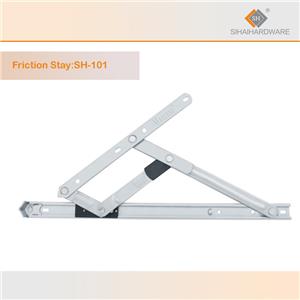
A window friction stay operates on a simple but delicate principle: a friction pad presses against a stainless steel track with a precisely calibrated force, generating the resistance that holds a window open at any angle. Cleaning this mechanism would seem straightforward—remove the dirt and apply fresh lubricant. Yet many well-intentioned cleaning attempts end with a stay that performs worse than before. The wrong cleaner dissolves the friction pad material. The wrong lubricant turns the track into a slip surface with no holding power. Aggressive scrubbing scores the track and creates new wear points. Cleaning a friction stay correctly requires understanding what must be removed, what must be preserved, and what must never touch the mechanism at all.
Understanding What You Are Cleaning
The track of a window friction stay accumulates several distinct types of contamination, and each requires a different approach. Loose surface dust and airborne particles settle on the track and can be removed with minimal intervention. Embedded debris—fine grit that has been pressed into the track surface by the sliding shoe—requires more effort but can still be addressed. Oxidised lubricant forms a dark, sticky residue that traps additional particles and gradually thickens into a gum-like deposit. Corrosion products from the track itself, or from nearby hardware, create rough patches that interfere with smooth shoe travel. The friction pad itself also sheds material over time, leaving worn polymer or sintered bronze particles in the track. Identifying which type of contamination is present determines the cleaning method. A track with only loose dust needs a completely different approach than one with oxidised lubricant and embedded grit.
What Never to Use
Several common cleaning products will damage a window friction stay irreversibly. Abrasive cleaners, including cream cleansers and scouring powders, scratch the stainless steel track surface. These scratches create stress concentrations and provide new anchor points for future debris accumulation. Solvent-based degreasers, including brake cleaner and acetone, can attack the friction pad material if they migrate into the sliding shoe. Many friction pads are manufactured from polymer composites that soften or swell when exposed to strong solvents, permanently altering their friction characteristics. WD-40 and similar penetrating oils are perhaps the most frequently misused products on friction stays. While excellent for displacing moisture and freeing seized components, these light oils leave a low-friction film that drastically reduces the holding force of the stay. A stay lubricated with WD-40 may slide beautifully but will fail to hold the window open in even a light breeze. Silicone sprays present a similar problem: they provide excellent lubrication for sliding surfaces but reduce the friction coefficient below the level required for the stay to perform its holding function.
The Correct Cleaning Sequence
Cleaning a window friction stay properly follows a logical sequence that protects the friction pad while removing contaminants from the track. Begin by opening the window fully to expose the entire track length. Use a soft-bristled brush—a clean paintbrush or a dedicated detailing brush—to remove all loose dust and debris from the track surface, the sliding shoe exterior, and the rivet areas. This dry brushing prevents loose particles from becoming suspended in cleaning solution and redepositing elsewhere. Next, dampen a clean, lint-free cloth with warm water and a small amount of mild dish soap. Wipe the track surfaces along their length, applying gentle pressure to lift oxidised lubricant and surface grime. Avoid scrubbing aggressively; let the soap and water do the work. Rinse the cloth frequently to avoid redistributing the removed contamination. After cleaning with soap solution, wipe the track with a cloth dampened with clean water to remove any soap residue. Soap left on the track will attract moisture and accelerate corrosion. Dry the track thoroughly with a clean, dry cloth. Any remaining moisture in the track slot can initiate corrosion or mix with the fresh lubricant and degrade its performance.
Cleaning Around the Friction Pad
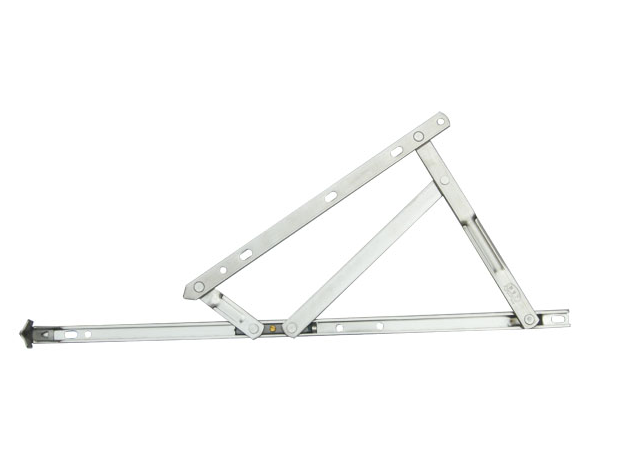
The sliding shoe of a window friction stay contains the friction pad, and this area requires particular care. The pad material is designed to wear gradually, transferring material to the track in a controlled manner that maintains consistent friction. Aggressive cleaning of the pad itself can remove this engineered surface layer and alter the friction characteristics. The exterior of the sliding shoe can be wiped gently with a damp cloth to remove accumulated dust, but no cleaning solution should be directed into the shoe interior where it could contact the pad. The pad should not be scrubbed, scraped, or treated with any chemical cleaner. If the pad has become contaminated with lubricant overspray or other substances, it is often safer to replace the entire shoe assembly than to attempt cleaning the pad material itself. The track slot—the channel in which the shoe rides—can be cleaned using a thin, soft implement such as a wooden toothpick or a plastic trim tool wrapped in a lint-free cloth. Metal tools must never be inserted into the track slot, as they will scratch the stainless steel and create burrs that interfere with the shoe.
Lubrication: The Critical Final Step
Lubricating a window friction stay after cleaning requires selecting a product specifically formulated for friction stay mechanisms. The lubricant must reduce wear on the sliding surfaces without reducing the friction coefficient below the level required for holding performance. Dry-film PTFE lubricants, applied as a spray that dries to a thin, non-tacky coating, provide excellent wear protection without creating a slippery surface. These products are widely available from hardware suppliers and are often sold specifically for window and door hardware. Apply the lubricant sparingly—a short burst directed at the track surface is sufficient. Immediately after application, cycle the window through its full range of motion several times to distribute the lubricant evenly along the track and into the shoe-track interface. Wipe away any excess lubricant with a clean cloth, as excess product will attract dust and create the same contamination problem the cleaning was intended to solve. The track should feel clean and dry to the touch after lubrication, not wet or greasy.
Preventive Maintenance Schedule
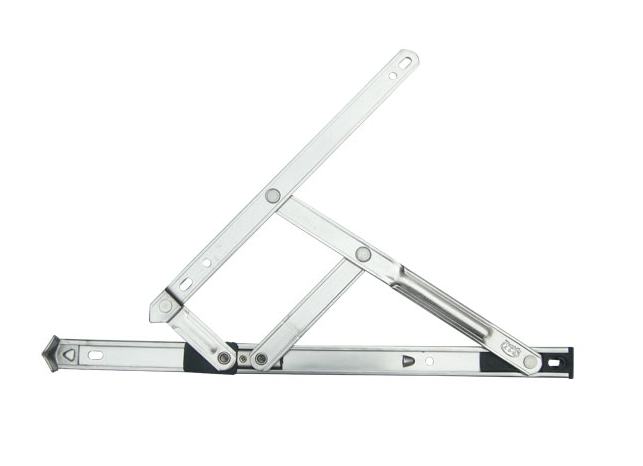
Regular light cleaning of a window friction stay prevents the heavy contamination that requires intensive intervention. For windows in normal residential environments, cleaning the track surface with a dry brush every six months removes loose dust before it can combine with lubricant to form deposits. Annual cleaning with mild soap solution and reapplication of correct lubricant maintains optimal performance. In coastal environments, more frequent attention is required: salt deposits should be rinsed with fresh water every three months, and lubrication checked and renewed accordingly. In industrial or high-dust environments, quarterly cleaning may be necessary to prevent abrasive particle accumulation. The time required for these preventive measures—perhaps five minutes per window—is trivial compared to the cost and disruption of replacing a stay that has failed due to neglected maintenance.
Conclusion
Cleaning a window friction stay without damaging its performance is about restraint as much as technique. Remove the loose dust before it becomes embedded grit. Use mild soap and water rather than aggressive solvents. Never apply metal tools to the track surface. Select a dry-film lubricant specifically formulated for friction stay mechanisms, and apply it sparingly after thorough drying. Avoid the products that seem like obvious choices—WD-40, silicone spray, and heavy greases—which compromise the very friction the stay depends upon. A correctly cleaned and lubricated friction stay will operate smoothly and hold reliably for years. One that has been cleaned with the wrong products may look spotless but fail at its essential function the moment a breeze catches the open sash.