ARTICLE NO.152 | Can a Bent Window Stay Be Straightened? The Honest Answer
ARTICLE NO.152 | Can a Bent Window Stay Be Straightened? The Honest Answer
Discovering a bent arm on a window friction stay is a moment of frustration. The window no longer closes properly, the sash sits crooked in its frame, or the mechanism binds at a particular point in its travel. The immediate question is whether the bent component can be straightened and returned to service, or whether the entire stay must be replaced. The honest answer depends on understanding what bending does to the metal, where the bend has occurred, and what hidden damage may already exist. In most cases, straightening is a temporary fix at best and a safety risk at worst.
What Bending Does to Stainless Steel
The arms of a window friction stay are manufactured from stainless steel, typically grade 304 or 316, which gains much of its strength from cold working during the forming process. When an arm bends beyond its elastic limit, the metal undergoes permanent plastic deformation. The crystal structure of the steel changes at the bend location. Dislocations—line defects in the atomic lattice—multiply and move, allowing the metal to take on a new shape. This plastic deformation is not reversible by simply bending the metal back. Attempting to straighten the arm introduces a second episode of plastic deformation in the opposite direction. The combined effect of bending and reverse bending creates a complex residual stress field at the bend location. The outer fibres of the arm, which were in tension during the first bend, go into compression during straightening, while the inner fibres experience the opposite stress reversal. This stress state makes the metal at the bend site fundamentally different from the surrounding undamaged material.
The Fatigue Problem
A straightened window friction stay carries hidden damage that cannot be seen. The bending and reverse bending process creates microscopic cracks on the surface of the metal at the bend location. These cracks may be far too small to detect without specialised equipment, but they are present and they are permanent. Under the cyclic loading of normal window operation—repeated opening and closing, wind gusts pushing against the sash—these micro-cracks become fatigue initiation sites. Each cycle causes the crack to advance by a tiny increment. What begins as a surface imperfection invisible to the naked eye grows into a crack that propagates through the arm cross-section. The fatigue life of a straightened arm is reduced by 50 to 80 percent compared to an undamaged arm of identical material and geometry. The arm may perform adequately for months or even a year after straightening, but its long-term reliability has been fundamentally compromised.
Where the Bend Occurred Matters
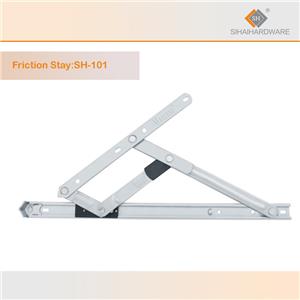
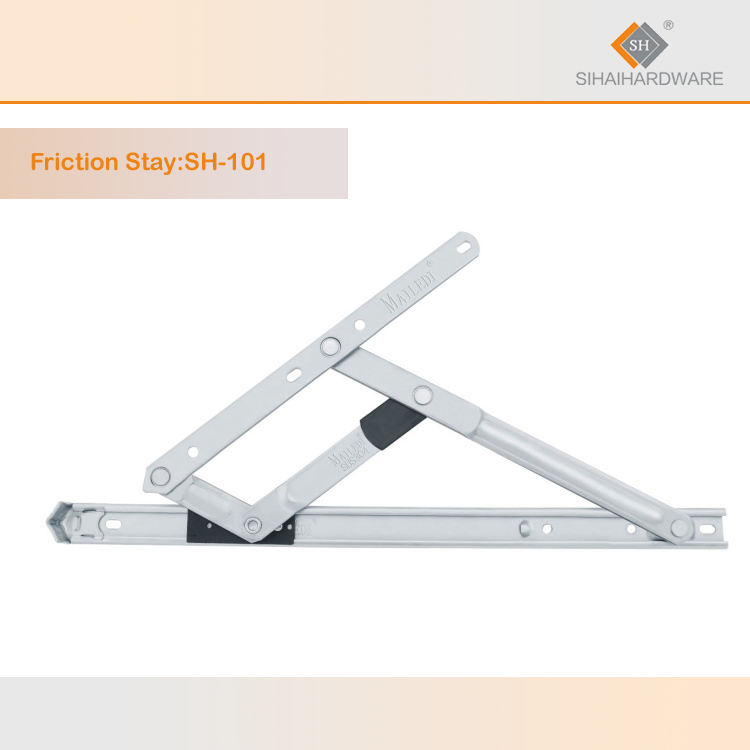
Not all bends in a window friction stay carry the same risk. A bend near the middle of the connecting arm, away from any rivet holes or stress concentrators, is the least dangerous location. The stress concentration at this point is relatively low, and the arm experiences primarily axial loading with moderate bending. Straightening a mid-arm bend has the highest chance of providing a temporary repair that lasts long enough to schedule a proper replacement. A bend at the rivet connection—where the arm meets the sliding shoe or the sash bracket—is far more serious. The rivet hole acts as a stress concentrator, and bending at this location amplifies the local stress by a factor of two to three. The reverse bending during straightening introduces additional plastic strain at a point already weakened by the original damage. Micro-cracks initiated during straightening at a rivet hole can propagate rapidly under the combined effects of cyclic loading and the residual clamping stress from the rivet. A stay bent at a rivet connection should never be straightened; it should be replaced immediately.
The Track Deformation Problem
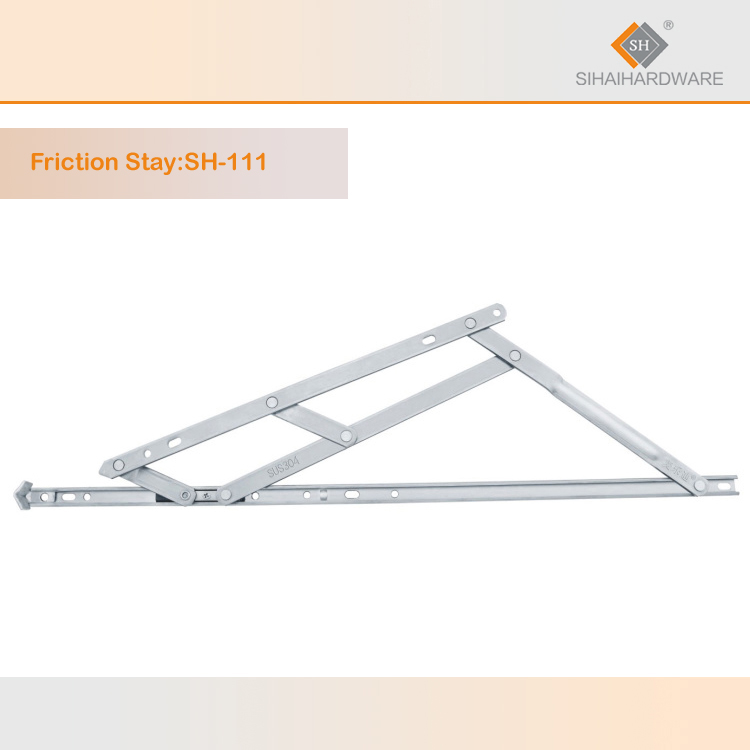
A bent track on a window friction stay presents a different and more difficult challenge. The sliding shoe must travel along a track that is straight and parallel within tight tolerances. Even a slight deviation from flatness—a bow of 0.5 millimetres over the track length—causes the shoe to bind or catch. Straightening a bent track is extremely difficult to accomplish accurately without specialised fixturing. The track is a thin, slender section that resists straightening by hand because it springs back toward its deformed shape. An installer attempting to straighten a track without removing it from the frame will almost certainly leave residual curvature that interferes with shoe travel. The friction pad will wear unevenly against the distorted track, and the holding force will vary unpredictably along the opening arc. A bent track is a definitive replacement indicator.
The Rivet Loosening Consequence
Bending in a window friction stay does not only affect the obviously bent component. The force that bent the arm or track also transmitted through the riveted connections, overloading the rivets themselves. A rivet that has experienced an overload event may appear intact but has lost a portion of its clamping force. The rivet shank may have yielded slightly, reducing the residual tension that holds the joined layers together. After straightening, these partially loosened rivets will continue to degrade under normal operation. They will develop play more quickly than rivets that have never been overloaded. The play then accelerates wear on the surrounding components and allows misalignment that further stresses the straightened section. A stay that has been bent and straightened often exhibits multiple points of developing looseness within months, as the rivet damage from the original overload event progressively manifests.
When Straightening Might Be Acceptable
There is one narrow set of circumstances in which straightening a window friction stay may be acceptable: a minor, gradual bend in the middle of the connecting arm, away from all rivet connections, caused by a single identifiable event such as a wind gust catching an open window. If the bend is less than approximately 5 degrees from straight, if the arm material shows no visible cracking or necking at the bend location, and if the stay is needed for continued operation only until a replacement unit can be sourced and installed, then careful straightening can provide a short-term functional repair. The straightened arm must be inspected closely for surface cracks using a magnifying glass or dye penetrant if available. The window should be operated gently after straightening, and the stay should be replaced at the earliest opportunity. This is not a permanent solution. It is an interim measure with a defined endpoint.
The Safety Risk
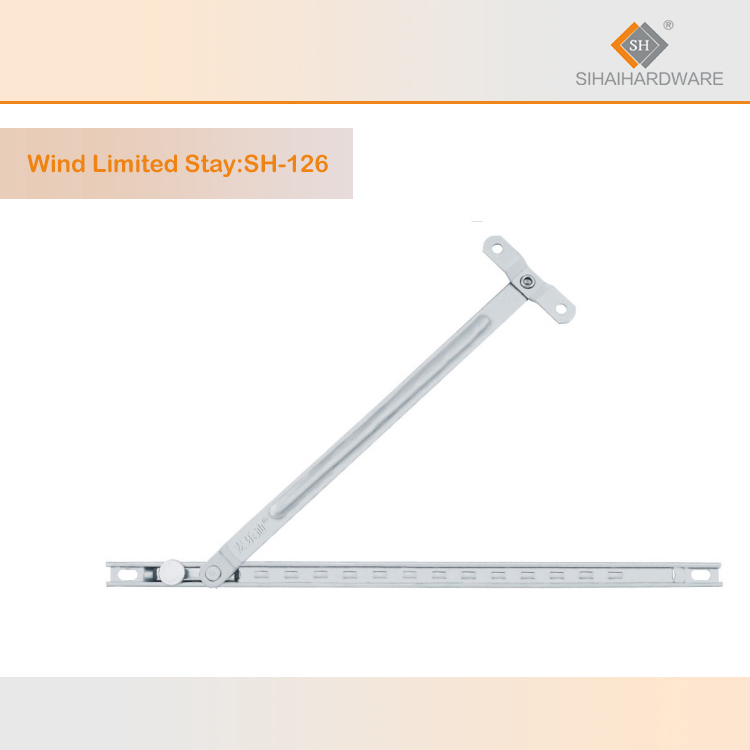
A window friction stay that has been straightened and subsequently fails in service creates a genuine safety hazard. The stay is the component that holds the sash open against wind loads. If the straightened arm fractures, the sash is released to swing freely. A heavy casement sash, particularly a double-glazed or triple-glazed unit weighing 30 to 80 kilograms, can cause serious injury if it slams shut on a person's hand, arm, or head. The risk is highest in upper-floor windows where a falling sash can strike someone reaching out to close or adjust the window. Building codes and workplace safety regulations impose a duty of care on building owners to maintain window hardware in safe operating condition. A straightened stay that subsequently fails and causes injury represents a liability that far exceeds the cost of timely replacement. The economic argument for straightening—saving the cost of a new stay—collapses when measured against the potential human and legal costs of a failure.
Conclusion
A bent window friction stay can sometimes be straightened enough to function temporarily. It cannot be restored to its original strength, its original fatigue life, or its original reliability. The metal at the bend site has been permanently altered. Micro-cracks initiated during the bending and straightening process will grow with continued use. Rivets overloaded during the bending event will loosen progressively. A straightened stay is not a repaired stay. It is a stay with a documented damage history and a compromised future. The honest answer to the question of whether a bent stay can be straightened is: yes, temporarily, in limited circumstances, as an interim measure while a replacement is arranged. The honest answer to the question of whether it should be straightened, rather than replaced, is no.