ARTICLE NO.114|Types of Friction Stays: Top-hung, Side-hung, Casement, Awning, Tilt-and-Turn, Restrictor Friction Stays
ARTICLE NO.113|Types of Friction Stays: Top-hung, Side-hung, Casement, Awning, Tilt-and-Turn, Restrictor Friction Stays
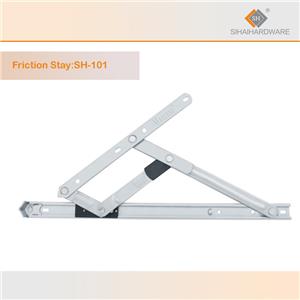
Friction stay hinges are a critical component of modern window hardware, providing controlled opening, holding force, and safe operation for a wide range of window types. Often referred to simply as window hingesor window friction stay, these mechanisms combine pivot geometry and friction-generating elements (pads, springs, adjustable screws) to hold a sash at selected angles without the need for additional stays or props. This article explains the common types of friction stays, their typical uses, and considerations for selecting the right product—particularly when specifying aluminum window and door hardware.
- Description: Top-hung friction stay hinges are mounted at the top of the sash and frame so the window opens outward from the bottom, pivoting around the top edge. They are commonly used in outward-opening awning-style windows and top-hung casements.
- Function: The friction in the stay holds the sash open at the desired angle and resists wind loads that might push or pull the sash. Some designs incorporate a limiting arm or restrictor to prevent excessive opening.
- Typical applications: Residential and commercial buildings for ventilation, where a downward-sloping opening sheds rain and provides weather protection.
- Considerations: Ensure sufficient corrosion resistance and appropriate load ratings—especially for larger aluminum sashes used in commercial applications.
2. Side-hung (casement) friction stays
- Description: Side-hung friction stays are fitted to one side of the window sash and frame, allowing the sash to swing outward or inward like a door. These are a common form of window hingesfor casement windows.
- Function: The friction mechanism keeps the sash at the chosen opening angle and provides smooth, adjustable resistance for safe operation. Many side-hung stays are adjustable so installers can tune the holding force on site.
- Typical applications: Single- or double-casement windows in homes, offices, and light commercial buildings.
- Considerations: For heavier or larger aluminum sashes, choose stays with higher load ratings and reinforced fixing points in the frame. Compatibility with multipoint locking hardware and weather seals must be checked.
3. Casement friction stays (general)
- Description: “Casement” is a broad category covering side-hung and sometimes top-hung designs intended for casement windows. Casement friction stays are engineered specifically to support the sash while allowing full or partial opening.
- Function: Designed for reliable repeated operation, casement friction staysbalance low opening torque with the holding power required at different angles.
- Typical applications: Residential and commercial casement windows where unobstructed opening and good ventilation are desired.
- Considerations: When specifying aluminum window and door hardware, verify that the stay’s casing, mounting holes, and screw types suit the profile system and any reinforcements inside the frame.
4. Awning friction stays
- Description: Awning friction stays are used on awning windows—usually top-hinged windows that open outward from the bottom. They are similar to top-hung stays but may be specifically optimized for wider sashes and frequent ventilation use.
- Function: These stays hold the window open as a horizontal canopy, offering weather protection while allowing airflow. Their friction mechanism prevents uncontrolled closing during wind gusts.
- Typical applications: Bathrooms, kitchens, or building facades where ventilation with rain protection is needed.
- Considerations: Select stays with durable weather-resistant finishes, and ensure the friction mechanism can handle the sash weight and wind loads typical for the installation height and location.
5. Tilt-and-turn friction stays
- Description: Tilt-and-turn windows incorporate a dual-action hinge system that allows the sash to either tilt inward from the top (for secure ventilation) or swing fully inward like a casement door. Friction staysfor tilt-and-turn windows are part of a more complex multi-point hinge and hardware assembly.
- Function: In tilt position the hinge must provide stable, low-opening torque with secure holding to prevent accidental movement; in turn position it must act as a full-load-bearing hinge with reliable friction behaviour during transition and operation.
- Typical applications: European-style residential and commercial projects where ventilation flexibility and easy cleaning are priorities.
- Considerations: Tilt-and-turn assemblies are more complex and often require coordinated selection of multiple components. For aluminum window and door hardware, compatibility with reinforcement plates, multi-point locks, and weather seals is essential. Ensure manufacturers’ torque and cycle life specifications are met.
6. Restrictor friction stays
- Description: Restrictor friction stays are a subtype designed to limit the maximum opening of the sash for safety or security reasons. They are commonly integrated into other stay types (side-hung, top-hung, awning) or added as an independent restrictor.
- Function: They provide the friction-holding function while incorporating a mechanical stop or limited-angle feature to prevent the sash from opening beyond a safe gap. Some restrictors are adjustable and can be set to permit different opening ranges.
- Typical applications: Child-safety installations, high-rise or balcony windows where fall prevention is required, and secure ventilation in schools or public buildings.
- Considerations: Ensure the restrictor complies with local safety standards (child safety, anti-fall). For aluminum windows, confirm that the restrictor mounting and load paths do not concentrate stresses that could deform the profile.
Selection and specification tips for aluminum window and door hardware
- Match the stay to the sash weight and dimensions: Friction stay hinges are rated for specific sash weights and sizes. Overspecifying for heavier sashes or underspecifying for large or wind-loaded openings will reduce performance and service life.
- Corrosion resistance: For longevity, particularly in coastal or industrial environments, choose stays with stainless steel components, suitable surface treatments (passivation, high-quality plating), or durable coatings.
- Fixing compatibility: Aluminum window and door hardwareoften uses different screws and reinforcing methods than uPVC. Verify screw types, pilot hole sizes, and reinforcement requirements from the profile manufacturer.
- Adjustability and maintenance: Adjustable friction stays allow on-site tuning, which can simplify installation and improve user comfort. Consider ease of maintenance (replacement friction pads, accessible adjustment screws).
- Standards and testing: Where applicable, select products tested to relevant standards for cycles, corrosion resistance (salt spray), and holding torque. This supports performance claims and regulatory compliance.
- Integration with locks and seals: Ensure the hinge geometry and mounted position do not interfere with multi-point locking, weatherstrips, or other hardware elements.
Conclusion
Friction stay hinges are versatile window hinges that provide controlled, secure, and adjustable operation for a wide variety of window types. The main categories—top-hung, side-hung (casement), awning, tilt-and-turn, and restrictor friction stays—cover most residential and commercial needs. Correct selection, especially for aluminum window and door hardware, requires attention to sash weight, corrosion resistance, fixing methods, and compatibility with locking and sealing systems. By matching the right type of window friction stay to the application, installers and specifiers can ensure safe, durable, and user-friendly window operation.