ARTICLE NO.165 | The Wobble That Turns into a Fall: How 1mm of Play Destroys a Window Stay
ARTICLE NO.165 | The Wobble That Turns into a Fall: How 1mm of Play Destroys a Window Stay
A single millimetre is a tiny distance. It is the thickness of a credit card, the gap between a well-fitted door and its frame, a measurement so small that the human eye barely registers it. Yet in the mechanism of a window friction stay, one millimetre of unwanted movement at a rivet joint or between the sliding shoe and track is not a minor imperfection. It is the beginning of an accelerating process of wear that can end with the stay losing its grip on the sash entirely. Understanding how such a small amount of play grows into a functional failure reveals why precision in manufacture and prompt attention to early symptoms are the keys to friction stay longevity.
Where the Play Begins
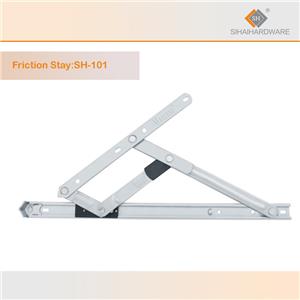
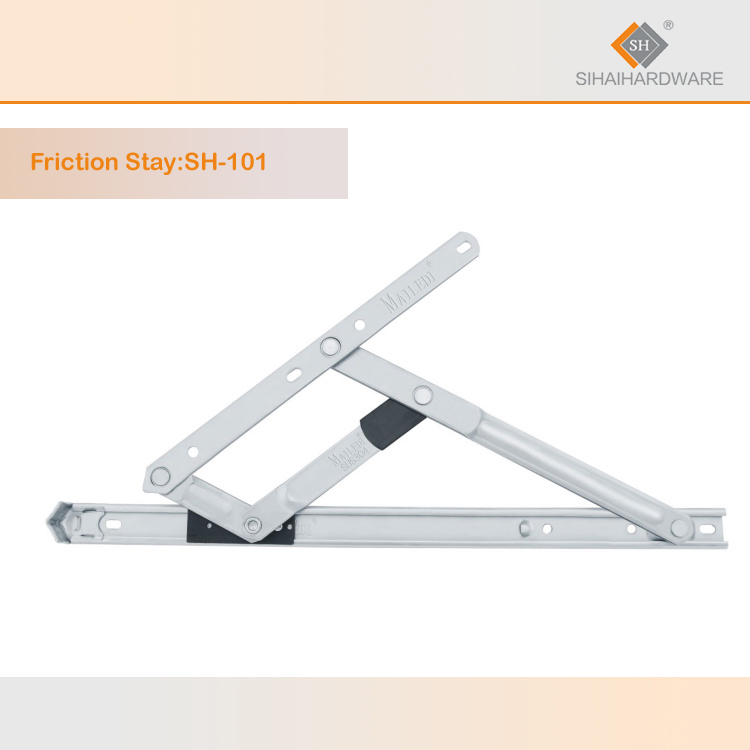
Play in a window friction stay does not appear randomly. It originates at specific locations where repeated loading gradually overcomes the initial tight fit of the assembled components. The most common initiation point is the rivet connection between the connecting arm and the sliding shoe. Each time the window opens or closes, the rivet experiences a reversal of load direction. The rivet shank presses against one side of its hole when the sash opens, then against the opposite side when wind pushes the sash toward closure. In a new stay, the rivet fills its hole completely, and this load reversal happens without movement. Over thousands of cycles, the repeated bearing stress between the rivet shank and the hole wall begins to deform the softer of the two materials. A tiny clearance opens up—perhaps only a few hundredths of a millimetre at first. This is the birth of play.
How 1mm Changes the Load Path
Once play reaches approximately one millimetre at a rivet connection in a window friction stay, the entire load transfer mechanism changes. Instead of the rivet bearing steadily against the hole wall and transmitting force smoothly through the joint, the rivet now accelerates across the clearance gap before impacting the far side of the hole. What was a static bearing load becomes a dynamic impact load. The force that was distributed across the full rivet-hole contact area now concentrates on a small impact zone. The peak stress at impact can be three to five times higher than the original static bearing stress. This impact loading creates a hammering effect at the joint, with each window cycle delivering a small but destructive blow to the rivet and the surrounding material.
The Accelerating Wear Cycle
The one millimetre of play in a window friction stay does not remain at one millimetre. The impact loading that begins once clearance exists accelerates the rate at which the hole elongates and the rivet shank wears. The hole, initially round, becomes oval. The rivet, initially a tight fit, becomes loose enough to rotate. Each increment of additional play increases the acceleration distance before impact, which increases the impact force, which increases the wear rate. This is a classic positive feedback loop in mechanical wear: the worse it gets, the faster it gets worse. A stay that took five years to develop its first millimetre of play may develop its second millimetre in eighteen months and its third in six. The degradation follows an exponential curve, not a linear one.
The Effect on Friction Pad Contact
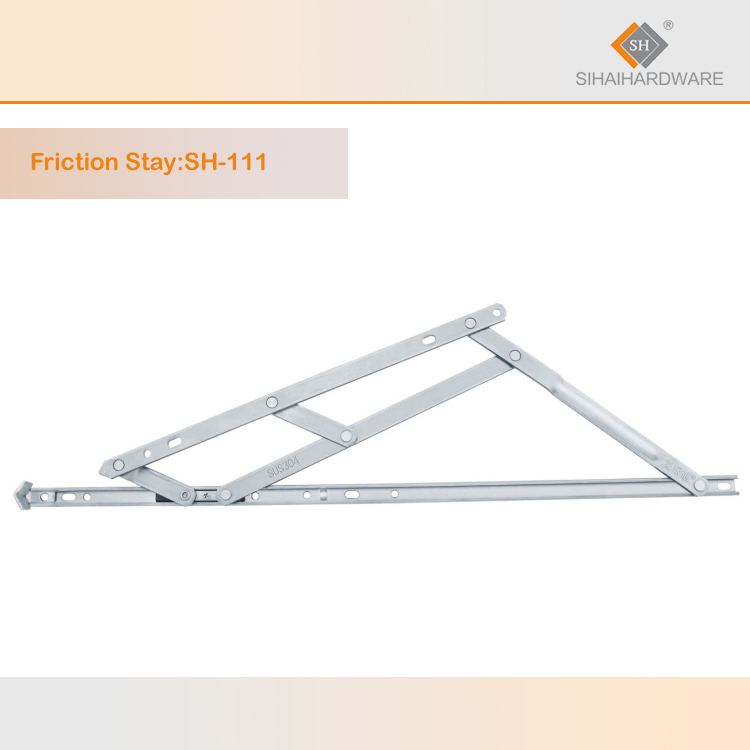
The sliding shoe of a window friction stay must maintain precise alignment with the track for the friction pad to generate consistent holding force. When play develops at the rivet connection between the arm and the shoe, this alignment is compromised. The shoe can now tilt slightly within the track, lifting one edge of the friction pad while the opposite edge digs in. The contact area between pad and track—which was designed to be uniform and predictable—becomes uneven and variable. The holding force, which depends on consistent friction across the full pad surface, becomes erratic. The window may hold at some angles but drift at others. The pad itself wears unevenly, developing a tapered profile that further compromises alignment. What began as a mechanical looseness in a single rivet joint has now degraded the primary functional interface of the entire stay.
From Wobble to Functional Failure
The progression from one millimetre of play to complete functional failure follows a predictable sequence. In the early stage, the user notices a slight looseness when operating the window—a subtle click or hesitation that was not present when the window was new. At this point, the play may be detectable by a maintenance technician but does not yet affect holding performance. In the intermediate stage, the play has increased to the point where the friction pad alignment is affected. The window now drifts from certain positions, particularly when subjected to wind pressure. The user may compensate by closing the window more firmly or avoiding the affected opening angles. In the advanced stage, the play has grown to the point where the rivet joint is structurally compromised. The friction pad no longer makes consistent contact with the track. The stay cannot reliably hold the sash at any angle. The window is effectively unsecured when open—a single gust of wind can slam it shut with enough force to shatter the glass or injure a person. At this stage, the stay has failed not gradually but catastrophically in terms of its safety function, even if the components remain physically connected.
Why Early Intervention Matters
The one-millimetre threshold in a window friction stay is significant because it represents the point at which the wear process transitions from linear to accelerated. Before play reaches this level, the degradation is slow, and simple maintenance—checking and tightening accessible fasteners, cleaning the track—can extend the stay's service life. Once play exceeds approximately one millimetre, the wear rate accelerates beyond what maintenance can arrest. The stay is on an irreversible path toward failure. Identifying and replacing a stay at the early stage of play development, before the wear curve steepens, is the most cost-effective maintenance strategy. The stay is replaced before it causes secondary damage to the window frame, the glass unit, or the user.
Conclusion
One millimetre of play in a window friction stay is not an annoyance to be tolerated. It is a mechanical warning that the stay's load transfer mechanisms have begun to degrade from static bearing to dynamic impact. The self-accelerating nature of impact wear means that this single millimetre will not remain single for long. It will grow, and as it grows, the forces that drive it will intensify. The wobble that begins as a barely perceptible looseness ends, if unaddressed, as a fall—a sash that drops, slams, or detaches because the stay that was supposed to hold it has quietly destroyed itself from the inside. The lesson for maintenance is clear: when a friction stay begins to rattle, it has already begun to fail. The question is not whether it will need replacement, but how soon.