ARTICLE NO.148 | Can You Overtighten a Window Stay? What Happens When You Do
ARTICLE NO.148 | Can You Overtighten a Window Stay? What Happens When You Do
The instinct to tighten something that feels loose is deeply ingrained. When a casement window develops a wobble or fails to hold its position, the natural response is to reach for a screwdriver and tighten every visible fastener on the window friction stay. This approach often seems to work at first—the window feels firmer, the stay holds better—but the apparent fix can set in motion a chain of mechanical consequences that accelerates wear and may ultimately destroy the stay. Overtightening is not just possible; it is one of the most common causes of premature friction stay failure. Understanding what happens when fasteners are torqued beyond their design limits explains why restraint, not force, is the correct approach to window stay maintenance.
The Fastener Load Path
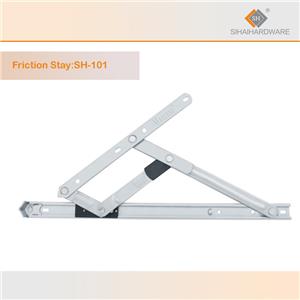
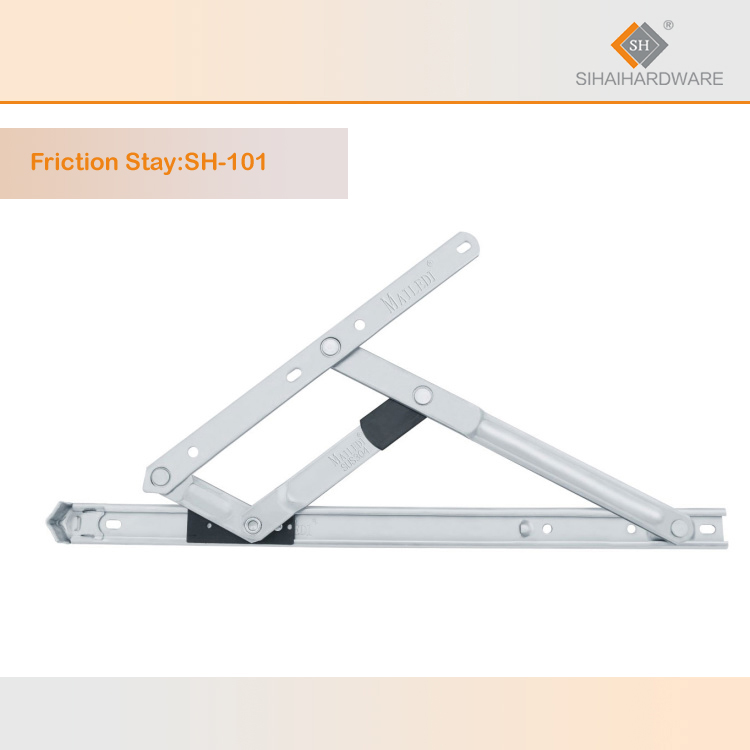
Every screw in a window friction stay serves a specific engineering purpose. The track screws anchor the stay to the window frame, transferring wind loads and holding forces from the sash into the surrounding structure. The rivets that join the connecting arm to the sliding shoe and sash bracket are pre-set during manufacturing to precise clamping forces. When a user tightens the track screws, the force travels through the screw threads into the frame material—typically aluminium, uPVC, or timber. The screw head bears down on the track surface, creating a compressive clamp load that holds the track firmly against the frame. In a correctly installed stay, this clamp load is calibrated to keep the track rigid without deforming it. The track must remain perfectly flat and parallel for the sliding shoe to travel smoothly along its entire length. The moment the screw torque exceeds the design specification, this careful balance is disrupted.
Track Deformation: The First Consequence
The track of a window friction stay is a relatively thin section of stainless steel, typically 1.0 to 1.5 millimetres thick. It is strong in tension along its length but quite flexible in bending across its width. When a track screw is overtightened, the screw head acts as a localised press, driving the track downward into the frame material. The track deforms around the screw hole, creating a depression that can measure 0.1 to 0.3 millimetres deep—enough to be invisible to the naked eye but mechanically significant. This localised depression interrupts the flat running surface that the sliding shoe requires. As the shoe passes over the deformed area, it encounters a dip that momentarily reduces the normal force between the friction pad and the track. The holding force drops at that specific position. If multiple screws along the track are overtightened, the track develops a wavy profile, with high spots at the screw locations and low spots in between. The shoe no longer slides smoothly; it chatters, catches, and releases unpredictably as it traverses these undulations.
Shoe Binding and Uneven Pad Wear
A deformed track creates binding conditions for the sliding shoe in a window friction stay. The shoe is designed to travel within parallel track walls with a precise running clearance. When the track cross-section is distorted by overtightening, the track slot narrows at the screw locations. The shoe, which must pass through these narrowed sections, experiences increased friction or, in severe cases, mechanical interference that prevents it from moving freely. The user notices increased operating effort, particularly when opening or closing the window through the affected portion of the travel. This binding also concentrates wear on the friction pad. Instead of wearing evenly across its full surface, the pad develops grooves and high spots corresponding to the deformed track sections. Uneven pad wear reduces the effective contact area, which in turn reduces the overall holding force of the stay. A pad that would have provided years of uniform service can be ruined within months by operating against a distorted track. The damage is self-reinforcing: the deformed track wears the pad unevenly, the uneven pad transmits irregular forces back to the track, and both components degrade faster together.
Fastener Failure in Soft Substrates
The frame material into which a window friction stay is screwed plays a decisive role in what happens when fasteners are overtightened. In aluminium frames, the screw threads engage the relatively soft aluminium directly, or they engage steel reinforcement inserts within the profile. Overtightening into aluminium strips the threads, reducing the screw's pull-out strength to a fraction of its design value. A stripped screw may feel tight when checked with a screwdriver but provides almost no clamping force. The track then works loose under cyclic loading, gradually opening a gap between the track and the frame. In uPVC frames, overtightening crushes the plastic locally, creating a permanent depression around the screw head. The plastic cold-flows away from the clamping zone, and the screw loses its preload over time without any further rotation. In timber frames, overtightening splits the wood fibres around the screw shank. The split may be invisible beneath the track, but it provides a path for moisture ingress and dramatically reduces the screw's withdrawal resistance. In all three substrate materials, the result is the same: a fastener that has been overtightened once will not hold its torque reliably, and the stay will require repeated re-tightening as it loosens progressively faster with each cycle.
Rivet Damage: The Hidden Consequence
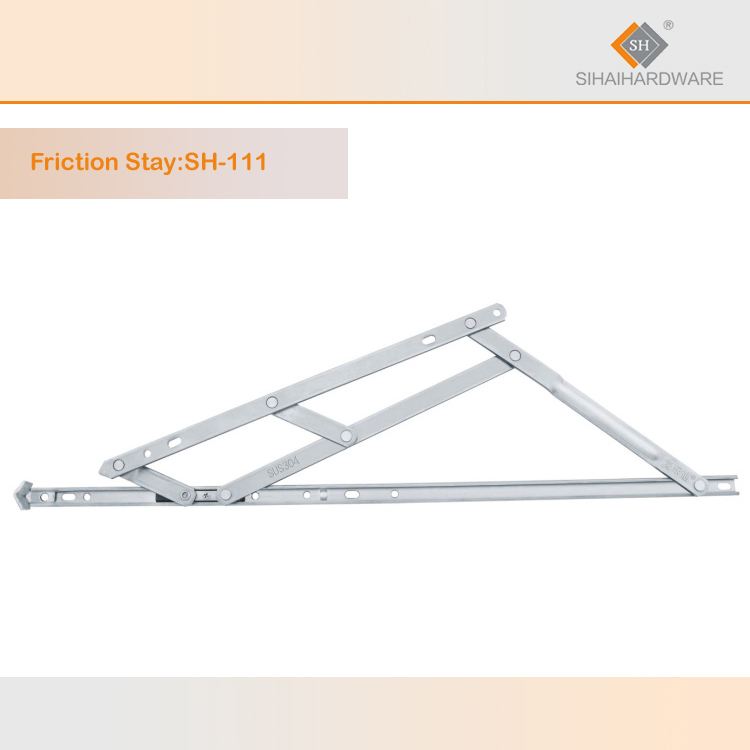
While track screws are the most accessible fasteners on a window friction stay, the rivets that join the connecting arms to the sliding shoe and sash bracket are also vulnerable to overtightening damage, though through a different mechanism. When the track is deformed by overtightened screws, the resulting misalignment forces the connecting arm to operate at a slight angle relative to its designed plane of motion. This angular misalignment places bending loads on the rivets that they were never designed to carry. Rivets are intended to resist shear and tension along their axis, not bending moments across their heads. Under repeated cycling with misalignment, the rivet heads begin to work loose. The joint develops play, which appears as sloppiness in the stay mechanism. This play is often misdiagnosed as a loose screw somewhere on the assembly, prompting yet more tightening—a cycle of intervention that compounds the original error.
The Correct Tightening Procedure
The proper installation and maintenance of a window friction stay begins with respecting the specified torque values. For typical M4 or M5 machine screws into aluminium or steel reinforcement, the recommended tightening torque is usually in the range of 2.5 to 3.5 newton-metres—equivalent to firm pressure with a manual screwdriver, not the full force an adult can apply. The screws should be tightened in a sequence that ensures even clamping: start with the centre screw of the track, then work outward toward the ends, tightening each screw to approximately half the final torque on the first pass and then to full torque on a second pass. After initial installation, the screws should be checked for tightness after approximately 50 door cycles, as the components settle into their final positions. This check should involve verifying that the screws have not loosened, not applying additional torque beyond the specification. If a stay has become loose in service, the correct response is to remove the screws, inspect the track for deformation and the frame holes for thread damage, and if both are sound, reinstall with fresh screws to the specified torque. Applying thread-locking compound to the screw threads during installation prevents vibration-induced loosening without relying on overtightening.
Conclusion
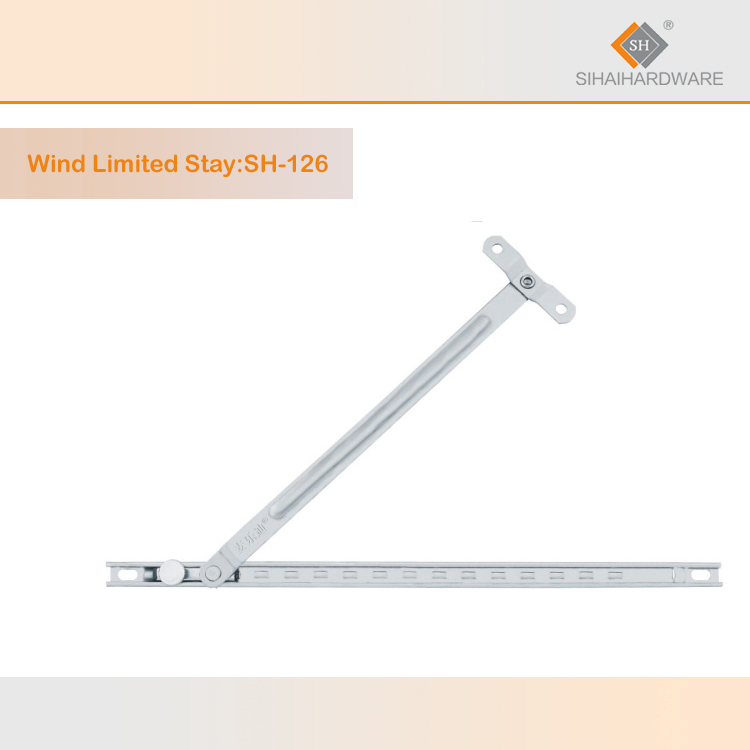
A window friction stay is a precision mechanism, not a structural joint that benefits from maximum clamping force. Its performance depends on a flat track, a freely sliding shoe, and fasteners torqued to their design specification. Overtightening disrupts all three. The track deforms, the shoe binds, and the fasteners lose their grip in the substrate. The irony is that overtightening—usually performed in an effort to fix a loose or poorly performing stay—creates the very conditions that cause the stay to loosen and perform worse. The correct maintenance philosophy is restraint: tighten to specification, verify after bedding-in, and if problems persist, investigate the root cause rather than applying more torque. A torque wrench is a more valuable tool for window stay maintenance than a heavy hand.