ARTICLE NO.144 | The Difference Between Visible and Hidden Screws on a Handle Base
ARTICLE NO.144 | The Difference Between Visible and Hidden Screws on a Handle Base
The way a handle is fixed to a door or window reveals more than an aesthetic preference. Whether the screws are visible on the rose plate or concealed beneath a snap-on cover reflects a deliberate engineering choice with consequences for security, installation efficiency, long-term maintenance, and resistance to tampering. What appears to be a minor design detail actually separates budget hardware from premium specification, and understanding the difference helps architects, installers, and building owners make informed decisions about the hardware they specify and use every day.
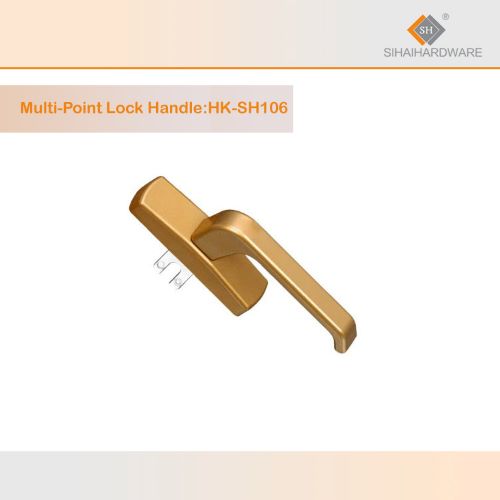
Visible Screws: Direct and Serviceable
A handle with visible screws mounts with its fasteners exposed on the surface of the rose or backplate. The screw heads are immediately accessible to anyone with a suitable screwdriver. This design has been the standard for generations of door and window hardware, and it persists for several practical reasons. Installation is fast and requires no special technique beyond aligning the handle, inserting the screws through pre-drilled holes, and tightening them to the recommended torque. When the handle develops play over time—as all handles eventually do—tightening the visible screws is a thirty-second task that requires no disassembly and no special knowledge. For maintenance teams managing hundreds of units across a commercial building, this accessibility translates directly to reduced labour time. The trade-off is equally clear: visible screws are visible to everyone. In spaces where hardware is exposed to the public—schools, hospitals, retail environments—accessible fasteners invite unauthorised removal, whether from curiosity, mischief, or deliberate tampering. A handle can be removed in under a minute by anyone with a basic tool.
Hidden Screws: Concealment and Security
A handle with hidden screws conceals its fasteners beneath a removable cover, a snap-on rose, or a grub screw mechanism accessible only from an inconspicuous position. The visual result is clean and uninterrupted—no visible screw heads to collect dust, corrode, or interrupt the architectural line of the hardware. This aesthetic advantage is significant in high-end residential and commercial projects where every visible detail is scrutinised. The functional advantages extend beyond appearance. Concealed fasteners resist casual tampering because the method of access is not immediately obvious. A snap-on cover requires a specific prying technique or a special tool to remove without damage. A grub screw hidden on the underside of the rose is invisible unless the viewer knows to look for it and has access to the correct hex key. These features make hidden-screw handles the standard choice for public buildings, educational facilities, and any environment where hardware is subject to unauthorised interference. The compromise is in maintenance accessibility. Tightening a loose handle with hidden screws involves removing the cover—a step that risks scratching the finish, breaking plastic clips, or losing small components—before reaching the fasteners beneath.
Installation Complexity and Cost
The installation process for a handle with hidden screws involves additional steps compared to a visible-screw design. After the spindle is engaged with the lock mechanism and the handle positioned correctly, the base plate or rose must be fixed to the door surface. With visible screws, this is the final step. With hidden screws, the fixings are secured first, and then a cover plate is snapped or pressed into place over them. This cover must align perfectly with the base, and the attachment mechanism—whether spring clips, an interference fit, or a small locking grub screw—must engage reliably. If the cover is removed and replaced multiple times during the handle's service life, the retaining clips can fatigue or break. A cover that no longer snaps securely into place creates a new problem: a handle that appears intact but rattles or shifts under use. Hidden-screw handles therefore demand greater care during both initial installation and any subsequent maintenance. The additional manufacturing precision required for the cover mechanism also contributes to a higher unit cost, typically 15 to 30 percent more than an equivalent visible-screw model from the same product range.
Security Implications
The security dimension of visible versus hidden screws on a handle extends beyond simple tamper resistance. On an entrance door, externally accessible screws represent a potential defeat point for the entire locking system. If an intruder can remove the handle from the outside, they may gain access to the spindle, the lock body, or the cylinder, depending on the hardware configuration. Building standards for security-rated doorsets often mandate that no fixings be accessible from the exterior face. Hidden-screw handles satisfy this requirement by placing all fasteners on the interior side, or by concealing them behind covers that require a tool and deliberate effort to remove. For internal doors, the security concern shifts from intrusion to operational reliability. A handle in a busy corridor that can be unscrewed by a passer-by creates an ongoing maintenance burden and a potential safety hazard if the handle detaches while someone is using it. Hidden-screw designs reduce this risk considerably, though they do not eliminate it entirely—a determined individual with the right tool can still defeat most concealed fixings.
Long-Term Maintenance Considerations
Over a handle's service life, the choice between visible and hidden screws directly impacts maintenance routines. Visible screws allow quick tightening when the handle develops its characteristic wobble—an almost inevitable consequence of the cyclic loading from thousands of operations. Maintenance staff can address the issue during a routine walk-through, often without disrupting room occupants. Hidden screws require a more deliberate intervention. The cover must be removed, the underlying screws tightened, and the cover replaced without damage. In a building with hundreds of identical handles, the cumulative time difference is significant. There is also the question of spare parts. A lost or broken cover clip on a hidden-screw handle may render the entire unit unsightly or non-functional, and replacement covers are not always stocked by facilities teams. Visible-screw handles have no such consumable components—the screws themselves are standard items available from any hardware supplier.
Choosing Between the Two
The decision between visible and hidden screws on a handle should be guided by the specific application rather than a blanket preference. For high-end residential projects where aesthetics are paramount and security is not compromised by interior installation, hidden-screw handles provide the cleanest appearance. For commercial entrance doors, particularly those on external facades, hidden screws with tamper-resistant features are a security requirement, not a choice. For internal office doors, school classrooms, and hospital patient rooms, hidden screws prevent casual disassembly and the associated maintenance calls. For plant rooms, storage areas, and back-of-house applications where appearance is secondary and maintenance access is frequent, visible screws offer practical advantages in speed and simplicity. The most sophisticated specification approach treats the screw visibility not as a binary choice but as a parameter matched to the risk profile and usage pattern of each door.
Conclusion
The visible screw and the hidden screw represent two different philosophies in handle design, each with legitimate engineering justifications. Visible screws prioritise maintainability and installation speed. Hidden screws prioritise security, aesthetics, and resistance to unauthorised access. Neither design is universally superior, and the best specification matches the fixing method to the context. A handle that perfectly suits a hotel guest room may be entirely wrong for a fire escape stairwell, and the difference often comes down to those small fasteners on the rose plate. In handle selection, as in most hardware decisions, the details that are easiest to overlook are the ones that determine long-term performance.